Is an Automatic Pet Feeder Worth It?
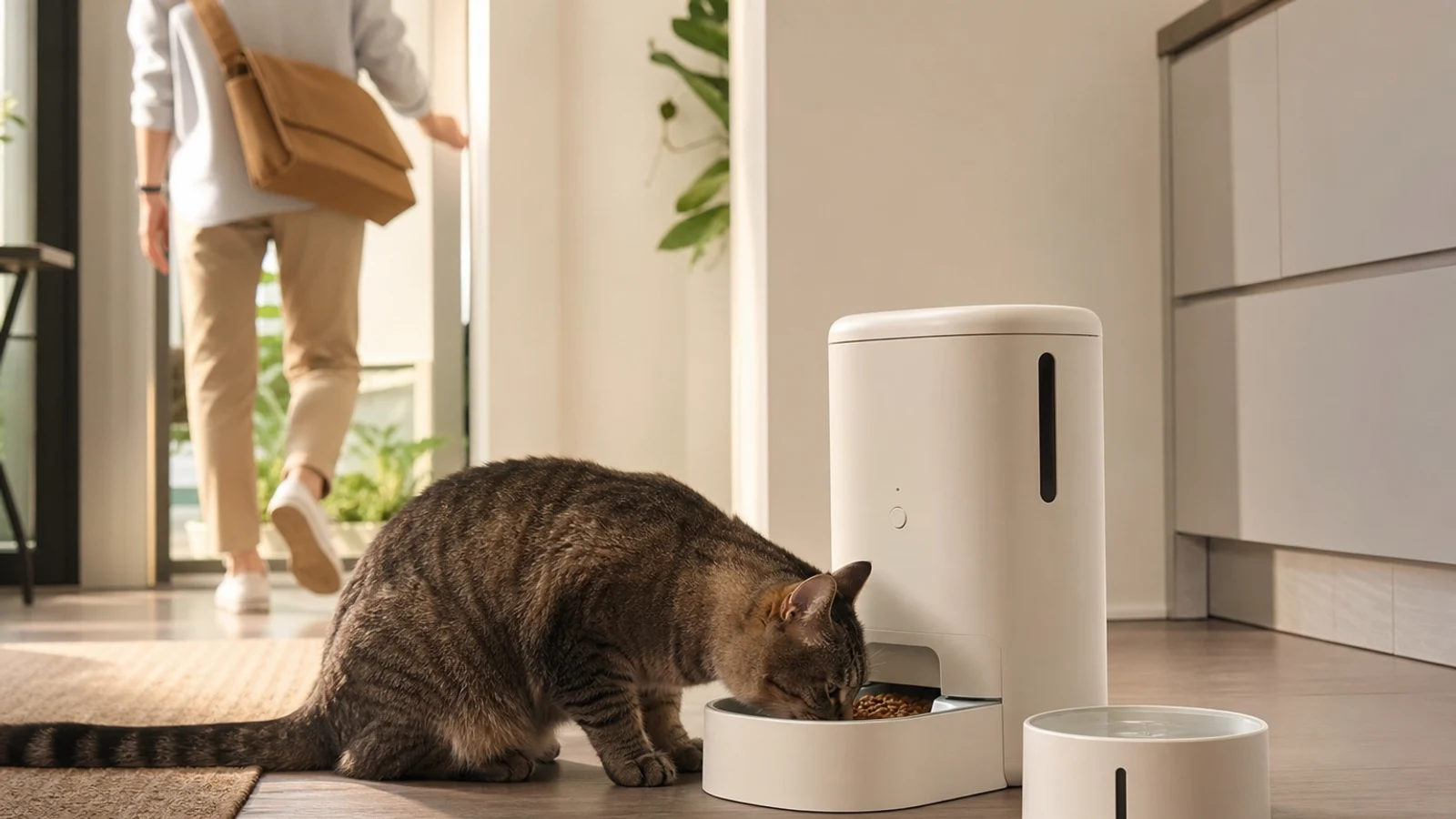
Automatic Feeder Vs. Manual Feeding
| Decision Point | Automatic Feeder | Manual Feeding |
|---|---|---|
| Meal timing | Consistent scheduled meals, including small portions throughout the day | Flexible and easy to adjust in the moment |
| Portion routine | Can reduce scooping guesswork, but settings still need calibration | Depends on careful measuring at every meal |
| Convenience | Useful during workdays, commute delays, and irregular schedules | Requires someone to be present for each meal |
| Food type | Most basic models are designed primarily for dry kibble | Works with dry food, wet food, fresh food, and prescription diets |
| Pet monitoring | Some models provide alerts or video, but cannot assess health reliably | Offers a direct opportunity to notice appetite, behavior, and symptoms |
| Multi-pet control | Specialized access-controlled models may limit food theft | Direct supervision is usually simpler for pets with different diets |
| Failure risk | Can jam, lose power, run empty, or be defeated by a determined pet | Fewer device-related failure points |
| Best fit | Predictable dry-food routines and owners who need scheduling help | Wet-food routines, medically complex feeding, or pets needing close observation |
The short answer is yes—sometimes. An automatic pet feeder earns its place when it fixes a recurring problem that manual feeding does not solve well. That might mean your cat starts demanding breakfast before sunrise, your work schedule changes from day to day, your dog needs smaller meals instead of one large serving, or you want a more consistent way to divide a measured daily ration.
But an automatic feeder is not automatically a better feeding system. It can make portions more repeatable, yet it can also hide a jam, dispense an inconsistent amount, or give you false confidence that your pet is cared for while you are away. The value depends less on whether the device is “smart” and more on whether it matches your pet’s food, behavior, health needs, and your household routine.
For most buyers, the sensible starting point is a simple, programmable dry-food feeder with dependable backup power, a secure lid, and removable food-contact parts. Add Wi-Fi, a camera, or access control only when one of those features solves a real problem in your home.
When An Automatic Pet Feeder Is Worth It
The strongest case is a scheduling problem. If you are regularly away at breakfast or dinner, work rotating shifts, commute unpredictably, or want to divide a daily ration into several meals, an automatic feeder can make the routine easier. It can also help with early-morning begging because the feeder—not your bedroom—becomes associated with the scheduled meal.
A feeder may also be useful for pets that eat too quickly or do better with smaller portions. Dividing the same total daily food into multiple scheduled releases can slow down the pace of eating and make a long day more manageable. The device does not decide how many calories your pet needs, though. Portion settings should follow your veterinarian’s advice, the food label, and your pet’s body condition rather than the feeder’s maximum setting.
It can be especially helpful when:• You need a consistent workday feeding schedule. • Your pet wakes you for food before you want to get up.
- You want to split one daily ration into several smaller meals.
- You are trying to stop free-feeding or reduce casual over-scooping.
- You need to bridge a short delay while you are commuting or running errands.
- You want feeding records or alerts to support a routine, not replace observation.
When It Is Probably Not Worth It
An automatic feeder is a weaker purchase if your pet eats wet, fresh, or semi-moist food at every meal. Many timed dispensers are built for dry kibble, while wet-food systems usually rely on covered compartments, ice packs, or refrigeration. Those designs have different capacity limits and cleaning demands. If food freshness is central to your routine, compare the exact food format before comparing app features.
It may also be the wrong tool for a pet with a complicated medical feeding plan. Pets with diabetes, a history of appetite changes, swallowing problems, or a prescription diet may need more direct monitoring. A feeder can deliver food at a time, but it cannot reliably tell you whether the pet ate, vomited, is lethargic, or needs veterinary attention.
Skip the purchase—or choose a very basic model—if you are home for every meal, your pet already eats calmly and consistently, or the main appeal is simply having a larger food container. A gravity feeder may make food constantly available without solving portion control, and a large hopper can encourage you to postpone cleaning or overlook stale food.
The Features That Actually Matter
Food compatibility comes first. Check the supported kibble size and shape, not just the hopper capacity. Round, oily, oversized, or irregular pieces may behave differently from the food shown in product photos. A feeder that works perfectly with one kibble can dispense poorly or jam with another.
Portion repeatability matters more than a tiny advertised increment. Many feeders measure by volume or motor cycles rather than weight, so the displayed portion is not necessarily an exact calorie measurement. Test several dispenses using the food you actually feed. If portion control is important, weigh the output occasionally and keep the daily total consistent.
Power protection is one of the most practical upgrades. A model that works only from a wall adapter may stop during an outage. Battery backup can keep the schedule running, but check whether batteries operate the motor, preserve the clock, or both. If the feeder depends on Wi-Fi for remote commands, determine whether saved schedules continue locally when the internet connection fails. Do not assume that an app alert means the pet successfully ate the food; it may only confirm that the device attempted to dispense it.
Basic Feeder Vs. Smart Feeder
A basic programmable feeder is usually enough when your schedule is stable. It can be easier to set up, less dependent on an account or wireless connection, and simpler for another household member to operate. For many cats and small dogs eating dry kibble, this is the value option to consider first.
A smart feeder makes more sense when remote visibility or control is genuinely useful. App access can help you change a meal after a delayed flight, receive low-food or jam notifications, or review a feeding history. A camera may help you see whether your pet approaches the bowl, but it should not be treated as a substitute for a sitter or a health check.
Choose a smart model only if you are comfortable maintaining the app, wireless connection, permissions, and notification settings. A connected feeder with an unreliable setup can be more frustrating than a dependable timer. If you buy one, test it on its own schedule for several days before relying on it during travel.
Multi-Pet Households Need Extra Care
An automatic feeder does not automatically solve food theft. If two pets share a room, the faster or more assertive animal may eat the released portion before the intended pet reaches it. Separate feeding locations can help, but some households need an access-controlled feeder that recognizes a microchip or collar tag.
Different diets make the decision more serious. A pet on prescription food should not casually share another animal’s meals, and a feeder cannot prevent conflict if the surrounding setup is easy to defeat. Resource guarding or food anxiety may also make scheduled releases stressful. In those situations, supervised feeding or separate rooms may be safer and simpler.
For more than one pet, ask:• Can each pet reach only its own food?
- Is the feeder stable enough not to be tipped or pushed?
- Will the hopper or bowl hold the correct diet without cross-contamination?
- Can you tell which pet actually ate?
- What happens if one feeder jams while the other continues operating?
Cleaning, Placement, And Daily Maintenance
Cleaning is part of the ownership cost. Food oils, crumbs, and saliva collect around the bowl, chute, auger, and hopper opening. Look for removable food-contact parts and clear instructions for washing them. A smooth bowl that pops off easily is usually more useful than a decorative design with narrow crevices.
Follow a simple maintenance routine:• Wash the bowl regularly, ideally after each use when practical.
- Empty crumbs and stale food before adding a fresh batch.
- Wash and completely dry storage parts before refilling.
- Inspect the chute for compacted kibble, oil buildup, insects, or mold.
- Keep the original food bag or its lot and date information available in case of a recall.
- Keep dry food in a cool, dry location rather than treating the feeder as indefinite storage.
Placement also affects reliability. Put the feeder on a level surface away from water splashes, direct sun, heating vents, and a pet’s favorite route for knocking things over. Secure the power cable if your pet chews. For determined dogs or food-motivated cats, a locking lid and a heavier base may matter more than a larger hopper.
How To Introduce One Without Creating New Problems
Do not fill a new feeder and leave for the weekend. Start while you are home. Let your pet investigate it while it is switched off, then run a supervised meal. Confirm that the bowl is comfortable, the portion reaches the right spot, and the sound of the motor does not frighten the pet.
For the first several days, keep the schedule close to the old routine. Watch for pets that paw at the chute, bite the lid, push the unit, or eat so quickly that food spills. A slow-feed bowl or a dispenser that spreads food across a tray may be better for a gulper than a narrow bowl that delivers everything into one pile.
Run at least one realistic test before depending on the feeder: fill it with the actual food, use the intended schedule, unplug it if battery backup is part of the plan, and check whether the next meal dispenses correctly. Test the internet-independent behavior of a smart feeder as well.
Do Not Treat It As A Pet Sitter
The most important limitation is that an automatic feeder handles food delivery—not complete care. Your pet still needs fresh water, bathroom access, exercise, attention, and observation. A dog left alone for an extended period can develop a problem that no app notification will diagnose. A cat may stop eating, vomit, become trapped, or have a medical issue while the feeder continues operating normally.
For a normal workday, the device may be a useful part of the routine. For overnight or multi-day travel, arrange a responsible person, boarding, or another care plan that includes in-person checks. The feeder can serve as backup, but it should not be the only line of defense.
The Bottom Line
An automatic pet feeder is worth it when it solves a repeatable timing or portion problem and your pet’s food is compatible with the design. The clearest value is usually for dry-food households with irregular work schedules, early-rising pets, or a need for several measured meals.
Start with reliability: compatible food, repeatable portions, outage protection, secure placement, and easy cleaning. Wi-Fi, cameras, and access control are worthwhile only when they address a specific household challenge. If your pet eats wet food, has medical feeding needs, guards food, or requires close monitoring, manual or supervised feeding may remain the better choice.
A good buying decision is not “the most automated feeder available.” It is the least complicated feeder that reliably improves your real feeding routine without reducing the attention your pet still needs.
Go Deeper Before You Choose
For more context, see gift guide for dog owners.
Research References
These sources informed the factual background for this guide. BuyingView applies its own editorial judgment to the purchase decision.
Questions & Answers
Useful follow-up questions that often change the buying decision.
Are automatic pet feeders good for weight management?
They can support weight management by dividing a measured daily ration into scheduled portions and reducing casual overfeeding. They do not determine the correct calorie target, and volume-based settings may need to be checked with a scale. Use your veterinarian’s guidance and monitor your pet’s body condition.
Can I leave my dog alone for several days with an automatic feeder?
No. An automatic feeder does not replace fresh water checks, exercise, bathroom breaks, supervision, or attention to illness and injury. For extended absences, arrange a sitter, boarding, or another form of in-person care.
Do automatic pet feeders work with wet food?
Some compartment-style feeders are designed for wet food, but many hopper-style models are intended for dry kibble only. Wet-food feeders have different freshness, temperature, capacity, and cleaning considerations, so verify the food compatibility before buying.
Is a Wi-Fi pet feeder worth the extra cost?
It can be worthwhile if you need remote schedule changes, alerts, feeding history, or a camera. If you are usually home and only need fixed meal times, a non-connected programmable feeder is often simpler and sufficient.
What happens if the power goes out?
It depends on the model. Some feeders stop, while others switch to batteries or preserve the schedule until power returns. Check whether the backup power runs the dispensing motor and clock, then test the behavior before relying on it.
How often should an automatic pet feeder be cleaned?
Clean the bowl frequently and inspect the hopper, chute, and dispensing mechanism regularly. Wash and fully dry food-contact parts before refilling, and remove old crumbs and stale food. Wet-food systems generally need more frequent cleaning than dry-kibble feeders.