Dog Harness vs Collar: Which Is Better for Everyday Walks?
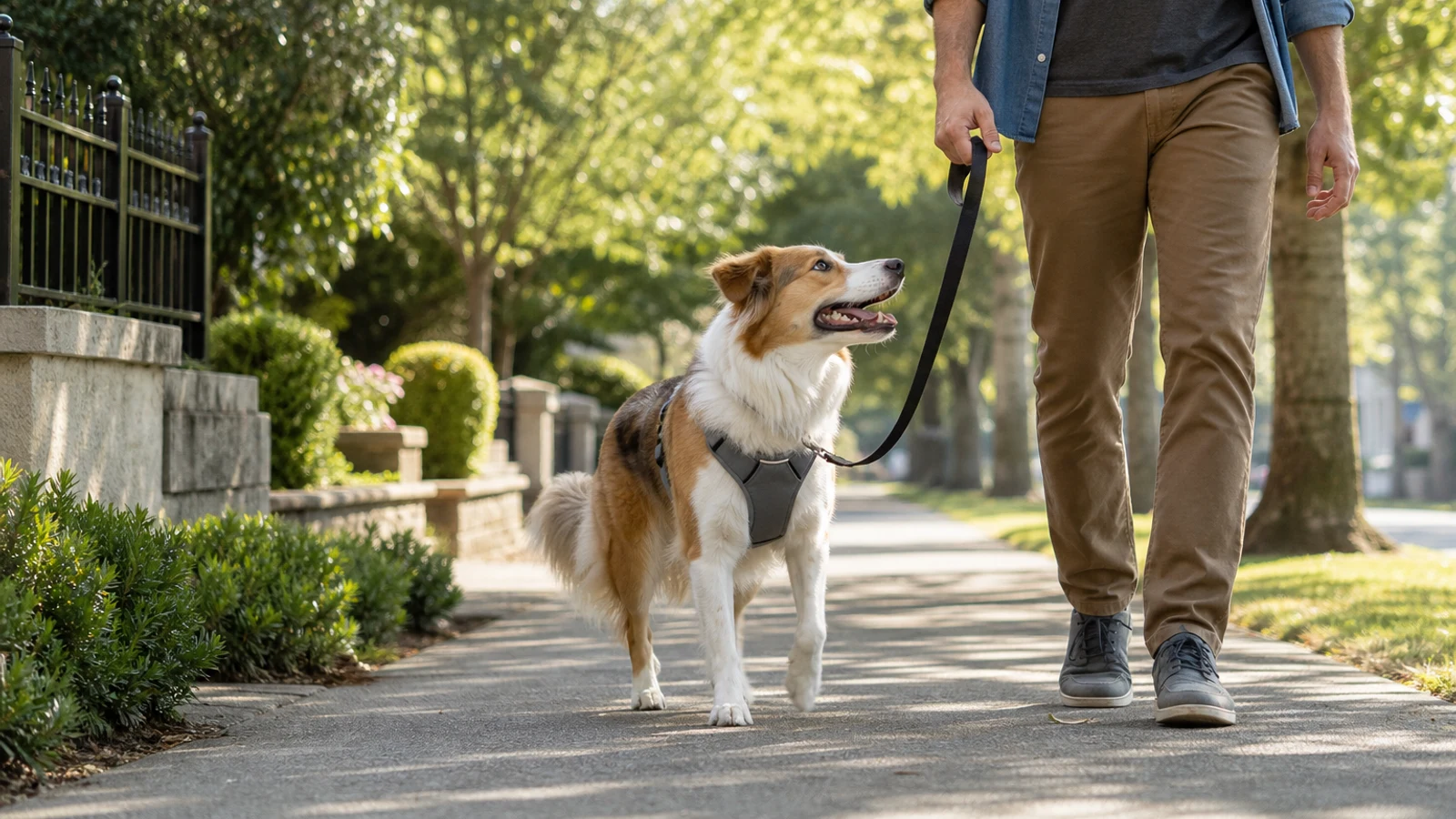
Dog Harness Vs. Collar At A Glance
| Decision Point | Harness | Flat Collar |
|---|---|---|
| Where leash pressure goes | Across the chest and body when properly fitted | Around the neck |
| Best for pulling | Often gives better leverage and reduces direct neck pressure | Can increase pressure on the neck when the dog pulls |
| Ease of use | May take longer to put on and adjust | Usually quick to put on and remove |
| Escape risk | Can be escaped from if loose or poorly shaped | Can slip over the head, especially on narrow-headed dogs |
| Identification | May hold tags, but many owners still use a collar | Convenient place for ID and license tags |
| Best match | Pullers, small dogs, puppies, strong dogs, and dogs with neck concerns | Calm leash walkers and dogs that need a simple everyday collar |
| Main caution | Avoid rubbing, restricted shoulder movement, and unattended wear | Avoid leash jerks, excessive tightness, and aversive collar designs |
The harness-versus-collar decision is not really about finding one winner for every dog. It is about deciding where leash pressure should go, how much control the walker needs, and whether the dog can walk without repeatedly reaching the end of the leash.
For a calm dog that walks on a loose leash, a standard flat collar can be perfectly practical. It is lightweight, easy to use, and convenient for identification tags. For a dog that pulls, lunges, slips out of collars, or has a respiratory or neck condition, a properly fitted body harness is usually the more sensible place to start.
In many homes, the most useful setup is not harness versus collar but harness plus collar. The harness handles the leash during walks, while the collar carries identification. The dog should still be trained to walk with a loose leash rather than relying on equipment alone.
When A Harness Is Usually The Better Choice
A body harness shifts leash forces away from the throat and neck. That makes it a strong option for dogs that pull, dogs with a history of neck pain, and dogs whose breathing may be affected by pressure around the neck. It can also give the handler more control when a dog is physically strong or easily distracted.
A harness is particularly worth considering if your dog regularly does any of the following:
- Pulls hard enough to cough, gag, or choke against a collar
- Lunges toward dogs, wildlife, vehicles, or other distractions
- Has a short muzzle or a known breathing concern
- Has neck, cervical spine, or tracheal problems
- Is a puppy still learning leash skills
- Can back out of a conventional collar
- Is strong enough to pull the walker off balance
- Needs support while recovering from an injury, when approved by a veterinarian A harness does not automatically stop pulling. A back-clip design may allow a determined dog to lean into the leash, while a front-clip design can give the handler more ability to redirect the dog. Either way, the equipment should support reward-based training rather than replace it.
When A Flat Collar Makes More Sense
A flat collar is the simpler option for a dog that already walks calmly and does not keep tension on the leash. It is quick to buckle, easy to check before leaving the house, and generally less bulky than a harness. It is also a practical home for identification and license tags.
A collar may be a good fit when
- Your dog usually walks with a loose leash
- You want the lightest and simplest walking setup
- Your dog dislikes having equipment placed over the head or around the body
- You need a convenient place for identification tags
- You are using a collar for short, controlled walks with a dog that does not pull The key limitation is what happens when the leash becomes tight. A dog pulling against a collar places pressure on structures in the neck. Repeated pulling, sudden lunges, or leash corrections can make the collar a poor choice for a dog that has not yet learned calm leash behavior. A flat collar should not be treated as a training device that creates discomfort.
The Most Important Variable Is Fit
A poorly fitted harness can rub the skin, restrict movement, or let a dog reverse out of it. A poorly fitted collar can slip over the head or become uncomfortably tight. Fit matters more than whether the product is marketed as no-pull, comfort, sport, or everyday.
For a collar, it should be secure without constricting. As a general check, you should be able to slide about one or two fingers between the collar and the dog, depending on the dog’s size and the design. The collar should not be loose enough to pass over the ears when the leash is attached.
For a harness, check the following before a full walk: • Straps do not rub behind the elbows or into the armpits
- The dog can move the front legs freely
- The harness does not sit across or press directly on the shoulder joints
- You can fit the appropriate number of fingers beneath the straps without the harness shifting excessively
- The dog cannot back out when you apply gentle backward pressure
- Buckles and adjustment points stay secure during movement
- The leash ring sits where the manufacturer intends it to sit Recheck the fit after your dog moves, sits, lies down, and turns. A harness that looks fine while standing can shift once the dog starts walking. Puppies and dogs that gain or lose weight may need frequent adjustments or a new size.
Back-Clip, Front-Clip, And Dual-Clip Harnesses
Harness design changes how the leash feels, so the attachment point deserves as much attention as the straps.
Back-clip harnesses attach between the shoulder blades. They are often easy for dogs to accept and can work well for calm walkers, small dogs, or activities where the dog needs to move naturally. Their drawback is that some dogs can lean forward and continue pulling with considerable force.
Front-clip harnesses attach around the chest. When a dog pulls, the leash can help turn the body back toward the handler instead of allowing the dog to drive straight ahead. This can improve manageability during training, but the harness must be correctly designed and fitted so it does not press on the front of the shoulder or restrict the dog’s stride.
Dual-clip harnesses offer flexibility. A leash can be attached at the back for ordinary walks or at both the front and back when the handler needs more control. They are useful for dogs whose behavior changes with the environment, but they add hardware and adjustment points that must be checked regularly.
Be cautious with products marketed as “no-pull” without examining how they work. Some use straps that tighten or press against sensitive areas when the dog pulls. The most useful design is one that improves handling without causing pain, restricting normal movement, or encouraging the handler to jerk the leash.
Dogs With Special Body Shapes Or Health Needs
Body shape can make a standard collar or harness less secure. Narrow-headed breeds may slip out of a flat collar, while deep-chested or unusually shaped dogs may need a harness with additional adjustment points. An escape-prone dog may benefit from a three-point or double-H-style design, but only if it fits the dog’s actual proportions.
Dogs with tracheal disease, neck pain, cervical spine problems, or certain mobility limitations should be fitted with walking equipment with veterinary guidance. A body harness is often preferred in these situations because it minimizes direct pressure on delicate neck tissues, but a harness is not a substitute for diagnosis or treatment.
Short-nosed dogs may also need extra attention to breathing, heat, and exertion. Even if a harness is more comfortable than a collar, the dog can still overheat or struggle during a strenuous walk. Stop when the dog shows signs of distress and ask a veterinarian about an appropriate walking plan.
Puppies, Pullers, And Strong Dogs
Puppies commonly need a gradual introduction to any walking gear. Let the puppy inspect the collar or harness, reward calm behavior, and practice wearing it indoors before heading into a busy environment. The goal is for the equipment to predict treats, attention, and enjoyable movement rather than restraint or conflict.
For a puppy or adult dog that pulls, a harness can reduce neck pressure while you teach loose-leash walking. Keep sessions short enough that the dog can succeed. Reward the dog for staying near you, turn away from distractions before the leash becomes tight, and avoid allowing the dog to drag you toward interesting sights.
A powerful dog and a physically small walker may need more than a basic collar. A properly fitted harness, a secure leash, and professional help with leash skills can improve safety. Head halters can provide additional control for some dogs, but they require careful conditioning and gentle handling. They should not be jerked, used with a retractable leash, or left on an unattended dog.
Safety And Maintenance Rules
Neither collars nor harnesses should be treated as permanent unsupervised clothing. Collars can catch on crates, fencing, furniture, or another dog during play. Harnesses can snag or entangle, especially if the dog is left alone or allowed to wrestle with other dogs.
Use these habits to reduce avoidable problems: • Inspect webbing, stitching, buckles, and leash rings before walks
- Remove a harness when the dog is not directly supervised
- Supervise collar wear during crate time and rough play
- Replace gear when straps fray or hardware no longer locks securely
- Introduce new equipment gradually in a quiet setting
- Avoid leash jerks and equipment designed to inflict pain
- Use a backup connection when a dog is especially skilled at escaping Keep the leash attached to the intended ring. If a harness has separate front and back attachment points, follow the manufacturer’s instructions rather than assuming every ring is interchangeable. For a dog with a medical condition or sudden change in gait, coughing, or willingness to walk, pause equipment experimentation and contact a veterinarian.
Should You Buy The PetSafe Easy Walk Dog Harness?
The PetSafe Easy Walk Dog Harness in the BuyingView catalog is directly relevant if you are considering a front-clip approach for a dog that pulls. A product in this category may help redirect forward pressure, but the result depends on the harness’s fit, the dog’s body shape, and whether the dog is being taught loose-leash skills at the same time.
Treat any front-clip harness as a piece of a walking system rather than a guaranteed solution. Before committing, confirm that the size range matches your dog, the straps stay clear of the front legs, and the dog can walk without rubbing or an altered stride. If your dog resists wearing it, introduce it with rewards instead of forcing it into place.
A Practical Decision Checklist
Choose a properly fitted harness first if: • Your dog pulls, lunges, or repeatedly reaches the end of the leash
- You are concerned about pressure on the neck or throat
- Your dog has breathing, cervical, or tracheal issues
- Your dog can escape from a flat collar
- You need more handling leverage than a collar provides Choose a flat collar for leash attachment if: • Your dog consistently walks calmly
- You want the simplest, lightest setup
- The collar fits securely and does not slip over the head
- Your dog has no relevant neck or breathing concerns Use both if: • You want the harness to carry leash pressure while the collar holds ID tags
- Your dog is an escape risk and benefits from a backup connection
- You need different equipment for calm neighborhood walks and more distracting environments Do not buy or upgrade yet if the real issue is training rather than equipment. A more expensive harness will not teach loose-leash walking by itself, and replacing a collar will not solve a dog that is overexcited, fearful, or reacting to other dogs. In those cases, work on the behavior with humane methods and seek qualified help when needed.
The Bottom Line
For everyday walks, a properly fitted body harness is usually the better starting point for dogs that pull or have neck, throat, or breathing concerns. A flat collar remains a useful choice for calm leash walkers and is especially valuable for identification. Many dogs benefit from wearing both, with the harness used for leash attachment and the collar reserved for tags or backup.
The best decision is the one that keeps pressure away from vulnerable areas, allows normal movement, fits securely, and works with reward-based leash training. If your dog coughs, chokes, escapes, rubs raw, changes gait, or shows distress in either setup, stop using that arrangement and reassess the fit or consult your veterinarian.
Go Deeper Before You Choose
For more context, see Gift Guide For Dog Owners.
Relevant Product
One catalog product is directly relevant to this decision. It is shown as a reference point, not as a universal winner. Current price, seller and availability should always be confirmed on Amazon.

PetSafe Easy Walk Dog Harness
A front-clip harness designed to reduce pulling on walks.
View on AmazonResearch References
These sources informed the factual background for this guide. BuyingView applies its own editorial judgment to the purchase decision.
Questions & Answers
Useful follow-up questions that often change the buying decision.
Is a harness safer than a collar for dogs that pull?
Often, yes. A properly fitted body harness distributes leash pressure across the chest and body instead of concentrating it around the neck. It still needs to allow free shoulder movement and must be paired with loose-leash training.
Can a dog wear a collar and harness at the same time?
Yes. Many owners use a harness for leash attachment and a collar for identification tags. If you use a backup connection, make sure both pieces fit securely and do not interfere with the dog’s movement.
Should a puppy wear a harness or collar?
Either can work if introduced gradually and fitted correctly, but a harness is often preferable for a puppy that pulls because it avoids repeated direct pressure on the neck. A flat collar remains useful for identification.
Does a harness stop dogs from pulling?
No. Some front-clip harnesses can improve handling and redirect a pulling dog, but they do not teach loose-leash walking automatically. Reward-based training is still needed.
How tight should a dog collar or harness be?
It should be secure without constricting. A common fit check is to slide roughly one or two fingers between the equipment and the dog, while also checking that the dog cannot back out and that straps do not rub or restrict movement.
Are no-pull harnesses always safe?
No. Designs vary. Avoid any harness that rubs, presses on the shoulder joints, changes the dog’s stride, or causes distress. A front-clip design should improve control without relying on pain or excessive tightening.
When should I ask a veterinarian about walking equipment?
Ask for guidance if your dog has neck pain, cervical spine disease, tracheal or breathing problems, recent surgery, a sudden change in gait, coughing during walks, or repeated discomfort in a collar or harness.