Bagged vs Bagless Vacuum: Which Is Better for Your Home?
Bagged vs Bagless Vacuum At A Glance
| Decision Point | Bagged Vacuum | Bagless Vacuum |
|---|---|---|
| Debris storage | Disposable bag | Reusable dust bin or canister |
| Emptying | Usually cleaner; seal or remove the full bag | Can release dust when the bin is opened |
| Ongoing supplies | Requires compatible replacement bags | No regular bags, but filters may need more care |
| Allergy considerations | Often preferable, especially with a self-sealing bag and strong filtration | Can work well with sealed filtration, but emptying requires more care |
| Capacity | Often larger and less frequently emptied | Typically emptied more often, depending on bin size |
| Visibility | May require a full-bag indicator or suction change to signal capacity | Transparent bins make the debris level easy to see |
| Environmental trade-off | Creates disposable bag waste | Avoids bags but uses washable or replaceable filters and may require more cleaning |
| Best fit | People who want contained disposal and a lower-maintenance routine | People who want no bags and do not mind regular bin and filter care |
The bagged-versus-bagless decision is less about which design is universally stronger and more about what happens after you finish vacuuming. Both types can clean floors effectively when the machine is well designed, matched to the surface, and maintained correctly. The bigger differences appear in debris storage, emptying, filtration, recurring supplies, and day-to-day mess.
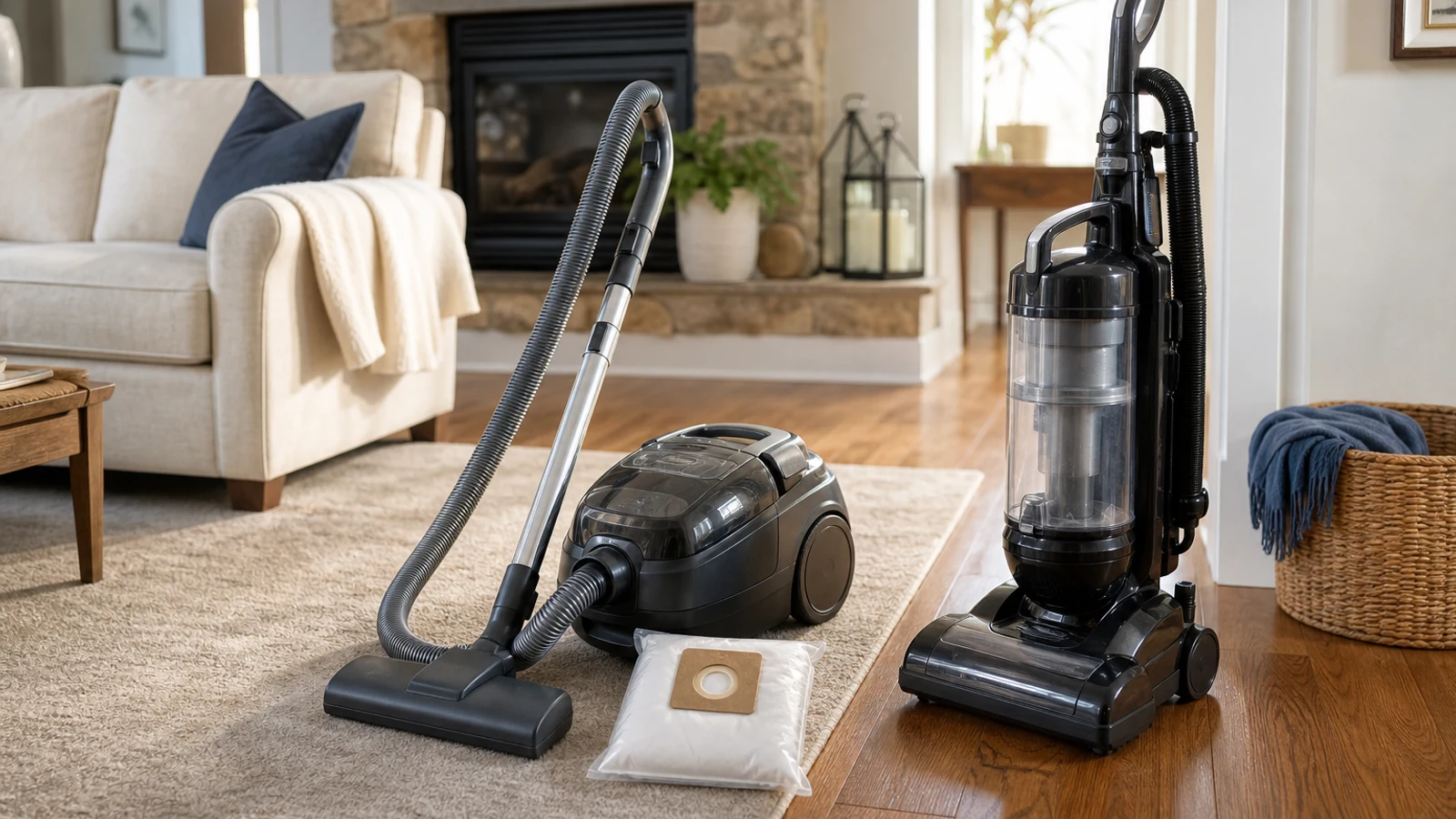
A bagged vacuum traps dirt in a disposable liner that is removed when full. A bagless vacuum directs debris into a reusable bin that you empty into the trash. That basic distinction affects allergy exposure, convenience, storage, long-term upkeep, and even whether you are likely to keep the vacuum operating at its best.
For many homes, the simplest rule is practical: choose bagged for cleaner disposal and less frequent maintenance; choose bagless for avoiding bags and having a visible, reusable dirt container. Then look beyond the label at filtration, seals, brush-roll controls, capacity, noise, maneuverability, and the floors you actually clean.
Choose Bagged If You Want Cleaner, Less Frequent Emptying
A bagged vacuum is usually the better fit for households that dislike handling dust. The bag serves as the debris container and often contributes to the vacuum’s filtration system. When it is time to replace it, you remove the closed or nearly closed bag rather than pouring loose dirt from a bin.
That makes bagged models particularly appealing if someone in the home has asthma, dust sensitivity, or significant pet allergies. A self-sealing bag can reduce the burst of dust that occurs during disposal, although the vacuum still needs good seals and effective exhaust filtration to limit particles while you clean.
Bagged machines also tend to offer a forgiving maintenance schedule. A large bag may hold substantially more debris than a compact dust cup, so you may go longer between disposal events. That can matter in homes with several pets, wall-to-wall carpet, children, or frequent tracked-in dirt.
Choose Bagless If You Want No Replacement Bags
Bagless vacuums appeal to shoppers who want to avoid buying, storing, and matching disposable bags. The transparent bin also makes capacity easy to judge, which reduces the chance of continuing to vacuum with an overfilled container. Some models compress debris or use a one-touch release to make emptying easier, but the disposal process still varies considerably by design.
The trade-off is that the dirt container must be emptied more often, and the bin, seals, pre-motor filter, and exhaust filter may need regular cleaning. Fine dust can accumulate around the cyclone or filter even when the bin does not look full. If those parts are neglected, airflow and cleaning performance can decline.
A bagless model can be a good choice for a smaller home, quick daily cleanups, or a household that prefers visible debris capacity and is comfortable doing routine maintenance. It is less appealing if you want to finish vacuuming without touching dust or if filter washing is likely to be forgotten.
Allergies And Indoor Air Quality Change The Answer
For allergy-sensitive households, bagged is usually the safer default because disposal can be more contained. A bagless vacuum is not automatically unsuitable, but emptying it indoors can send some of the collected dust back into the room. If you choose bagless, empty the bin outdoors when possible, use a slow release mechanism, and avoid shaking or tapping dusty filters inside the home.
Do not treat the word HEPA as a complete buying decision. A filter’s effectiveness depends on the vacuum’s overall design, including how well the housing and joints are sealed and whether all exhaust air is directed through the intended filtration stage. A poorly sealed machine can undermine the benefit of a high-efficiency filter.
Look for manufacturer instructions that clearly explain filter washing, replacement intervals, and whether filters are washable or disposable. A filter that cannot be sourced easily can make an otherwise affordable vacuum inconvenient to keep in service. Also remember that vacuuming can stir up dust while you work; people who are especially sensitive may prefer to leave the room during cleaning.
Compare The Ongoing Cost, Not Just The Purchase Price
Bagless vacuums avoid the recurring purchase of replacement bags, but they are not maintenance-free. Filters may need more frequent cleaning or replacement, and some models use multiple filters with different care instructions. You may also spend more time maintaining the bin, cyclone, brush roll, and seals.
Bagged models add the cost of compatible bags. That cost varies by model, bag size, household dirt load, and how often you vacuum. Some bags are widely available, while others are brand-specific or harder to find. Before buying, check whether replacement bags are easy to source and whether the manufacturer still supports the model.
The environmental comparison is not one-sided. Bagged machines create disposable bag waste, while bagless machines reduce that waste but may require replacement filters and more frequent cleaning. The most sustainable option is often the vacuum you can maintain, repair, and use for many years rather than replace early because its supplies are inconvenient or unavailable.
Cleaning Performance Depends More Than Bag Type
Bagged and bagless labels do not tell you how well a vacuum will clean your floors. Brush-roll design, suction management, airflow, nozzle sealing, agitation, and filtration all matter. A strong carpet vacuum may be awkward on delicate hard floors, while a canister designed for bare floors may be less effective on thick carpet.
For carpet, look for a powered brush roll, height adjustment or automatic height sensing, and a way to turn the brush roll off when necessary. For hardwood, tile, and vinyl, a hard-floor head or a brush-roll-off switch can help prevent scattering and reduce the chance of scratching sensitive surfaces.
Pet owners should focus on hair pickup, tangle resistance, upholstery tools, and the ease of removing wrapped hair from the brush roll. A large bin or bag helps if you collect a lot of fur, but it does not replace a nozzle that actually handles hair well.
Maintenance And Storage Should Match Your Routine
A vacuum that fits your maintenance habits will usually outperform a technically capable model that is routinely overfilled or clogged. Bagged owners should monitor the full-bag indicator if available, replace the bag before it is packed tight, and check the filters according to the manual. Running with a full bag can reduce airflow and may affect cleaning performance.
Bagless owners should empty the bin before it reaches the maximum line, inspect the brush roll, clear blockages, and clean filters on the manufacturer’s schedule. Washable filters generally need to dry completely before reinstalling; a damp filter can cause problems and may encourage odors or mildew.
Consider where the vacuum will live. A bagged canister needs room for replacement bags, while a bagless model may need a place to dry filters and store the dust bin while it is being cleaned. In a small apartment, a compact bagless stick may be easier to store, but its smaller bin and battery limitations may make it a poor substitute for a full-size machine in a carpeted home.
A Simple Decision Checklist
Choose a bagged vacuum if most of these statements describe your home
- Someone in the household is sensitive to dust, pollen, or pet allergens.
- You want the cleanest possible disposal process.
- You would rather replace a bag occasionally than wash filters frequently.
- You have lots of carpet, pets, or a larger home that produces substantial debris.
- You can easily find and afford the correct replacement bags.
Choose a bagless vacuum if most of these statements describe your home: • You strongly prefer not to buy disposable bags.
- You want to see the debris level without guessing when the container is full.
- You are willing to empty the bin carefully and clean filters on schedule.
- You have a smaller home or do frequent quick cleanups.
- The model has a genuinely convenient bin-release design and readily available replacement filters.
When Not To Upgrade Yet
If your current vacuum still seals properly, maintains airflow, and cleans your floors adequately, switching from bagged to bagless—or the reverse—may not deliver a meaningful improvement by itself. Replacing a clogged filter, clearing a hose, installing the correct brush roll, or changing an old bag can solve the problem at much lower cost.
An upgrade makes more sense when the vacuum is difficult to maintain, emits visible dust, lacks the tools needed for your flooring, repeatedly loses suction, has a failing battery or cord, or no longer fits your cleaning routine. If allergies are the reason for upgrading, prioritize containment and whole-machine filtration rather than relying only on the bag type.
If your main need is automated daily pickup, a robot vacuum may be a separate decision from choosing bagged or bagless in a full-size cleaner. A conventional vacuum is still useful for stairs, upholstery, edges, deep carpet cleaning, and areas a robot cannot reach.
The Bottom Line
Bagged vacuums are generally the better choice for allergy-conscious households, heavy cleaning, larger capacity, and people who want a cleaner, less frequent disposal routine. Bagless vacuums are generally the better choice for shoppers who want to avoid replacement bags, see the debris level easily, and accept more hands-on bin and filter maintenance.
Neither type guarantees better cleaning. Buy according to your dominant floor type, pet-hair load, storage space, disposal tolerance, and maintenance habits. Whichever design you choose, prioritize a sealed filtration system, accessible replacement parts, a suitable floor head, and controls that prevent the vacuum from scattering debris on hard floors.
Go Deeper Before You Choose
For more context, see robot vacuum vs cordless vacuum.
Research References
These sources informed the factual background for this guide. BuyingView applies its own editorial judgment to the purchase decision.
Questions & Answers
Useful follow-up questions that often change the buying decision.
Is a bagged vacuum better for allergies?
Often, yes. A bagged vacuum with a self-sealing bag and effective whole-machine filtration can reduce exposure during disposal. A well-sealed bagless vacuum can also perform well, but emptying its bin may release more dust, so it should be emptied carefully, preferably outdoors.
Do bagless vacuums lose suction faster?
They can if the bin is overfilled, filters are clogged, or the cyclone and air paths need cleaning. Bagged vacuums can also lose airflow when the bag or filters are full. Maintenance and design matter more than the label alone.
Are bagless vacuums cheaper to own?
They may cost less in recurring supplies because they do not use disposable bags. However, filters may require regular washing or replacement, and the extra maintenance time is part of the ownership cost.
How often should I empty a bagless vacuum?
Empty it before the debris reaches the maximum-fill line, and more frequently if you are collecting fine dust, pet hair, or bulky debris. Do not wait for a major drop in suction.
Can a bagged vacuum be used on hardwood floors?
Yes. Choose a model with a dedicated hard-floor head or a brush-roll-off control. The bag type does not determine whether a vacuum is safe or effective on hardwood; the floor nozzle and brush-roll design are more important.
Should I buy a bagged or bagless vacuum for pet hair?
Either can work. Bagged models offer more contained disposal and may be preferable for allergy concerns, while bagless models let you see and remove collected hair easily. Focus on brush-roll performance, tangle resistance, bin or bag capacity, and upholstery tools.