Cast Iron vs Stainless Steel: Which Pan Earns the Counter Space?
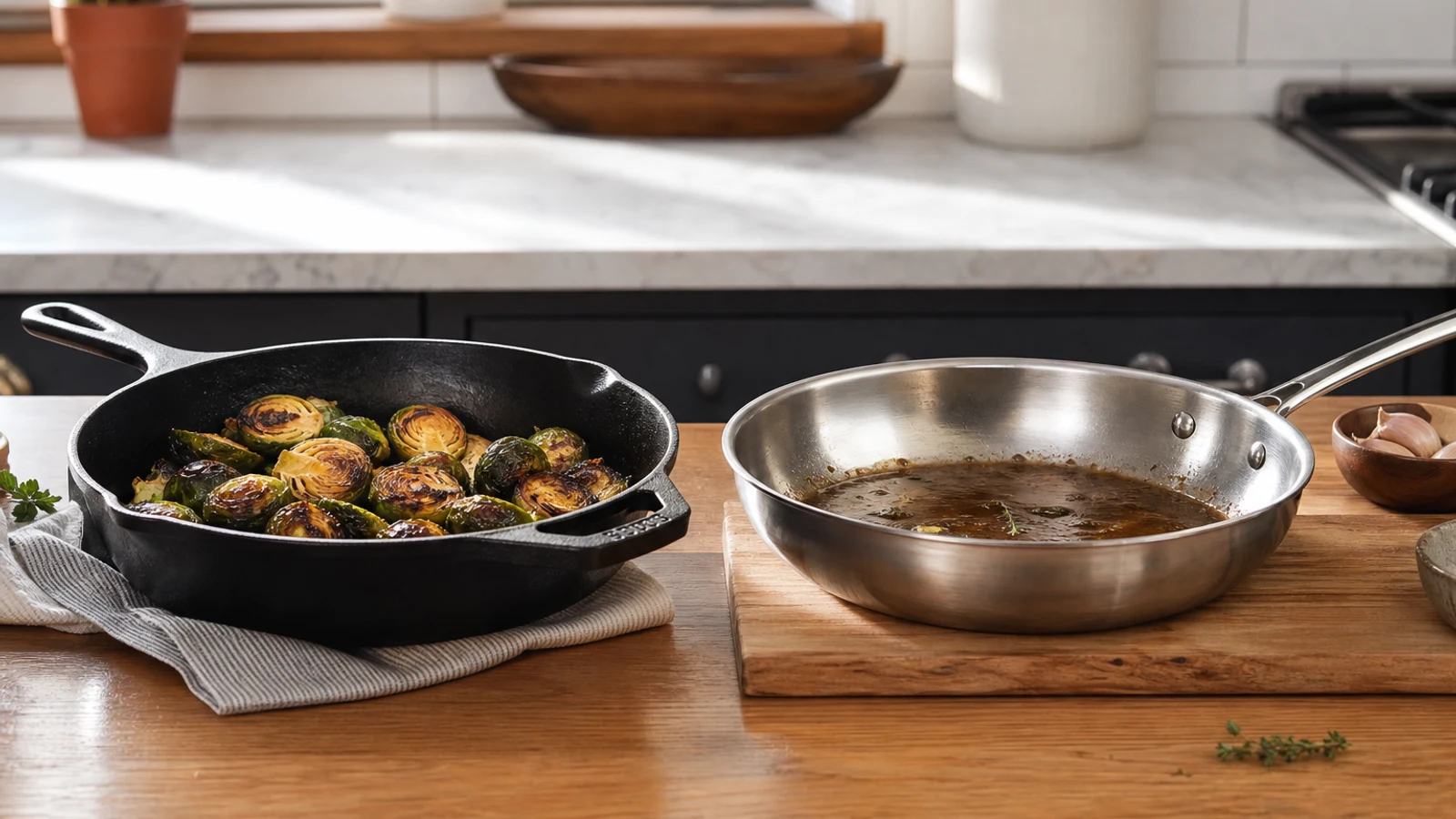
Cast Iron Vs Stainless Steel At A Glance
| Decision Point | Cast Iron | Stainless Steel |
|---|---|---|
| Best at | High-heat searing, roasting, baking, and heat retention | Sautéing, pan sauces, vegetables, deglazing, and flexible everyday use |
| Food release | Improves as seasoning develops; can be very slick with proper use | Depends on preheating, oil, temperature control, and letting food release naturally |
| Acidic foods | Fine for short cooking in well-seasoned pans; prolonged exposure can wear seasoning | Generally well suited to tomatoes, wine, citrus, and other acidic ingredients |
| Heat behavior | Slow to heat but holds heat exceptionally well | Usually heats more responsively; clad construction can spread heat evenly |
| Maintenance | Hand-wash, dry promptly, and occasionally refresh seasoning | Usually simpler to wash; may show discoloration or stuck-on residue |
| Weight and handling | Heavy and stable, but demanding to lift and maneuver | Typically lighter and easier to toss, pour, and move |
| Oven use | Excellent for stovetop-to-oven cooking and high heat | Often oven-capable, but temperature limits vary by pan and handle design |
| Best single-pan choice | For cooks who value searing and durability most | For cooks who want broad everyday versatility |
The better question is not which material is universally superior. It is which pan matches your cooking rhythm. Cast iron is a heat-retaining specialist: it excels when you want a deeply browned steak, crisp-edged potatoes, skillet cornbread, or a dish that moves from burner to oven. Stainless steel is a flexible all-rounder: it is especially comfortable with vegetables, pan sauces, acidic ingredients, quick reductions, and recipes where you want a responsive cooking surface without seasoning maintenance.
Both materials can last for years when used appropriately. The important differences are practical rather than ideological. Cast iron asks you to accept weight and a little more care in exchange for heat stability and a seasoned surface. Stainless steel asks you to learn preheating and temperature control, but it avoids the concern that an acidic sauce or a long simmer may affect seasoning.
Heat Retention And Cooking Control
Cast iron is slow to come up to temperature, but once hot it holds heat well. That makes it forgiving when you add a cold steak, several pieces of chicken, or a crowded layer of vegetables. The pan loses less heat immediately, which can help maintain browning. It is also useful for baking and roasting, where steady heat matters more than rapid adjustments.
That same stability can work against you. Cast iron is not quick to respond when you lower the burner. A pan that is too hot can remain too hot for longer, increasing the chance of scorched butter, burned spices, or overcooked delicate food. It also needs enough preheating time to warm across its thick surface rather than just becoming hot in the center.
Stainless steel usually responds more quickly, especially when it has an aluminum or copper core designed to spread heat. That responsiveness makes it easier to move from sautéing to simmering or to reduce heat when garlic, butter, or a pan sauce is at risk of burning. Construction matters, though: a thin stainless pan can develop hot spots, while a well-made clad pan generally distributes heat more evenly.
Searing, Browning, And Food Release
Cast iron has a natural advantage for hard searing because its thermal mass helps it stay hot when food hits the surface. It is a strong choice for steaks, burgers, chops, skin-on chicken, and vegetables that benefit from deep browning. A properly maintained seasoning layer can also make release easier over time, especially when the pan is preheated and lightly oiled.
Stainless steel can sear just as effectively, but the technique is less forgiving. Preheat gradually, add enough oil, and give the food time to develop a crust before trying to turn it. Food that appears stuck may release naturally once browning is complete. If you move ingredients too early, start with a cold pan, or use excessive heat, sticking is more likely.
Stainless steel has an advantage after searing: the browned bits left on the surface are easy to loosen with wine, stock, water, or another cooking liquid. That makes it particularly useful for pan sauces and gravies. Cast iron can also deglaze, but cooks may be more cautious about acidic liquids and about leaving those liquids in contact with the seasoned surface for an extended period.
Acidic Foods And Nonreactive Cooking
Stainless steel is the simpler choice for recipes built around tomatoes, vinegar, wine, citrus, or long reductions. Its cooking surface does not rely on a seasoning layer, so you can simmer a tomato sauce, deglaze with wine, or finish a lemon-based pan sauce without planning around the condition of the pan.
Seasoned cast iron is not automatically off-limits for acidic ingredients. A well-established seasoning layer can handle many short cooking tasks, such as a quick tomato-based pan sauce or a brief wine deglaze. The more relevant concerns are duration, acidity, and the condition of the seasoning. Long simmering or frequent acidic cooking may wear the seasoning more quickly and can sometimes affect flavor.
If acidic recipes are a major part of your routine, stainless steel is the less complicated option. Enameled cast iron is another possibility, but it is a different category from bare seasoned cast iron and brings its own weight, care, and cost considerations.
Maintenance And Cleanup
Bare cast iron needs a consistent cleanup routine. After cooking, let the pan cool enough to handle safely, remove food residue, wash it, dry it thoroughly, and apply a very thin layer of oil when appropriate. The goal is to protect the iron from moisture and preserve the seasoning. A well-used pan does not need ceremonial treatment, but leaving it wet in the sink is a reliable way to invite rust.
Seasoning is not a permanent coating that never changes. It develops through repeated cooking and can improve food release, but acidic foods, harsh cleaning, overheating, or long periods of neglect can weaken it. The remedy is usually manageable: clean the pan, remove rust or damaged residue if necessary, dry it, and rebuild the surface with a suitable seasoning process.
Stainless steel is generally easier for cooks who want fewer maintenance steps. It does not need seasoning, and ordinary washing can remove oil and food residue without changing the cooking surface. It can still develop browned or burned deposits, rainbow discoloration, or mineral marks. Those issues are usually cosmetic or removable with soaking and an appropriate stainless-steel cleaner, but the pan may require more scrubbing after a high-heat meal than a well-seasoned cast-iron skillet.
Weight, Storage, And Everyday Handling
Weight is one of the biggest real-world differences. Cast iron is stable on the stovetop, but lifting a full pan, pouring from it, or washing it with one hand can be tiring. The weight also takes up more practical space because you may want a sturdy shelf or a location where moving the pan is easy.
Stainless steel is usually easier to maneuver. That matters if you frequently sauté by hand, transfer food to a serving dish, drain vegetables, or cook with limited counter space. A stainless pan may also be more comfortable for cooks with wrist, shoulder, or grip limitations.
Neither material should automatically be judged by the nominal diameter alone. A larger cast-iron skillet can become difficult to lift once filled, while a smaller stainless pan may be more useful if it fits your burner and typical portions. Think about where the pan will live, how far it must travel to the sink, and whether your cooking surface has enough room for its base.
Stovetops, Ovens, And Cooking Workflow
Cast iron is naturally suited to stovetop-to-oven recipes. You can brown food on the burner and finish it in the oven without changing pans, provided the handle and any accessories are safe for the temperatures involved. Its heat retention also makes it useful for roasting, baking, and serving dishes that should stay warm at the table.
Stainless steel can be similarly versatile, but oven limits vary by model. The pan body, handle, lid, and any bonded or nonmetal components may have different temperature ratings. Check the manufacturer’s instructions rather than assuming every stainless-steel pan is suitable for broiling or very high oven heat.
On induction cooktops, both materials can work when the pan has a compatible magnetic base. Cast iron is generally magnetic but can scratch glass surfaces if dragged. Stainless steel is not always magnetic; some stainless cookware works on induction and some does not. If you use induction, verify compatibility before buying and lift rather than slide heavy cookware.
Which Pan Fits Common Meals?
Choose cast iron for meals where the pan’s stored heat is part of the result:
- Steak, burgers, pork chops, and chicken thighs with a deeply browned exterior
- Roasted vegetables that benefit from a hot, stable surface
- Cornbread, skillet cookies, and other baked dishes
- Hashes, frittatas, and oven-finished one-pan meals
- Cooking outdoors, on a grill, or over a fire where ruggedness matters
Choose stainless steel for meals where flexibility and easy deglazing matter more:• Tomato sauces, wine reductions, lemon sauces, and pan gravies
- Sautéed vegetables, mushrooms, and aromatics that need frequent heat adjustment
- Fish or delicate foods when you are comfortable with preheating and controlled release
- Recipes that move between sautéing, simmering, and reducing
- Households that want one pan without seasoning upkeep or rust concerns
Who Should Buy Cast Iron?
Cast iron makes sense if you enjoy cooking with a pan that becomes more familiar over time. It rewards cooks who regularly sear, roast, bake, or cook outdoors and who do not mind a deliberate cleanup routine. It is also appealing if you want a durable pan that can remain useful for decades rather than a piece of cookware selected mainly for lightness.
A basic model such as the Lodge Cast Iron Skillet is directly relevant for this use case. Its appeal is not that it replaces every other pan, but that it covers high-heat and oven-oriented jobs at which cast iron is naturally strong. Consider the size carefully: a 10-inch skillet is easier to handle and suits smaller households, while larger pans offer more cooking surface but become heavier when full.
Cast iron may be a poor fit if you often cook long tomato-based sauces, want to toss food quickly, dislike hand-washing, or have difficulty lifting heavy cookware. In those cases, the theoretical durability may not compensate for daily friction.
Who Should Buy Stainless Steel?
Stainless steel is the stronger choice for cooks who want one broadly useful pan and are willing to learn a repeatable technique. The key habits are straightforward: preheat gradually, add oil before the food, avoid excessively high heat, and wait for browned food to release before forcing it loose.
It is particularly practical for cooks who prepare sauces, vegetables, seafood, and mixed recipes where the heat level changes often. It also suits households that want a nonreactive cooking surface and do not want to think about seasoning, rust prevention, or whether a pan can sit briefly with an acidic ingredient.
Stainless steel is not maintenance-free in the sense of never needing cleaning. Burned-on residue can require soaking or scrubbing, and inexperienced cooks may find sticking frustrating at first. But once temperature and timing become familiar, it is often the easier material to use across a wide range of recipes.
Do You Need Both?
For many kitchens, the most practical answer is both—but only if each pan has a clear job. Cast iron can handle the high-heat searing, roasting, baking, and outdoor cooking. Stainless steel can take over for sauces, acidic dishes, sautéing, and tasks where lighter handling is useful. This pairing is more complementary than redundant.
If you are building a kitchen from scratch or trying to reduce clutter, start with the material that matches your most frequent meals. A cast-iron skillet paired with another existing pot may cover your needs if you mostly sear and roast. A stainless skillet may be the better first purchase if you cook varied weeknight meals and want to avoid a special care routine.
Do not upgrade merely because one material is fashionable or because a pan is marketed as an all-purpose solution. If your current pan is safe, appropriately sized, and producing the results you want, technique and workflow may matter more than switching materials. Upgrade when the current pan’s weight, reactivity, heat behavior, or maintenance is repeatedly getting in the way.
Bottom Line
Cast iron earns counter space when heat retention, hard searing, oven cooking, and long-term durability matter most. Stainless steel earns it when versatility, acidic-food compatibility, responsive heat control, and simpler upkeep matter more.
For a single everyday pan, stainless steel is usually the more adaptable choice, especially for cooks who make sauces and varied weeknight meals. For a dedicated searing and oven pan, cast iron remains difficult to beat. The best kitchen is not the one with the strongest material in the abstract; it is the one whose pan you will reach for confidently, clean correctly, and use often.
Go Deeper Before You Choose
For more context, see Cast Iron Vs Nonstick: Which Pan Fits Your Cooking Style?.
For more context, see 10-Inch Vs 12-Inch Cast-Iron Skillet.
For more context, see Stainless Steel Vs Nonstick Cookware.
Relevant Product
One catalog product is directly relevant to this decision. It is shown as a reference point, not as a universal winner. Current price, seller and availability should always be confirmed on Amazon.

Lodge Cast Iron Skillet (10.25 in)
A pre-seasoned cast iron skillet built to last for decades.
View on AmazonResearch References
These sources informed the factual background for this guide. BuyingView applies its own editorial judgment to the purchase decision.
Questions & Answers
Useful follow-up questions that often change the buying decision.
Is cast iron better than stainless steel for steak?
Cast iron is often easier for maintaining strong heat during searing, especially when the steak is thick or the pan is crowded. Stainless steel can also produce excellent browning when it is properly preheated, lightly oiled, and given time to release naturally.
Can you cook tomato sauce in cast iron?
Yes, a well-seasoned cast-iron pan can usually handle short contact with acidic ingredients. Long simmering or frequent acidic cooking may wear the seasoning more quickly, so stainless steel is the simpler choice for sauces that cook for a long time.
Which pan is easier to clean?
Stainless steel is generally easier for routine care because it does not need seasoning or immediate drying to prevent rust. Cast iron cleanup is still manageable, but it requires prompt drying and occasional seasoning maintenance.
Does stainless steel food always stick?
No. Sticking is more likely when the pan is underheated, overheated, insufficiently oiled, or when food is moved before it has browned. Preheating and allowing food to release naturally can make stainless steel much easier to use.
Which is better for induction cooking?
Both can work on induction, but compatibility depends on the specific pan. Cast iron is generally magnetic, while stainless steel may or may not be. Check the product specifications, and lift heavy cookware instead of sliding it across a glass cooktop.
Should a small kitchen buy both cast iron and stainless steel?
Not necessarily. Start with the material that matches your most common meals and your tolerance for maintenance and weight. Add the second material only when it fills a clear gap, such as needing a dedicated searing pan alongside a lighter pan for sauces and sautéing.