Stainless Steel vs Nonstick Cookware: Which Is Better for Everyday Cooking?
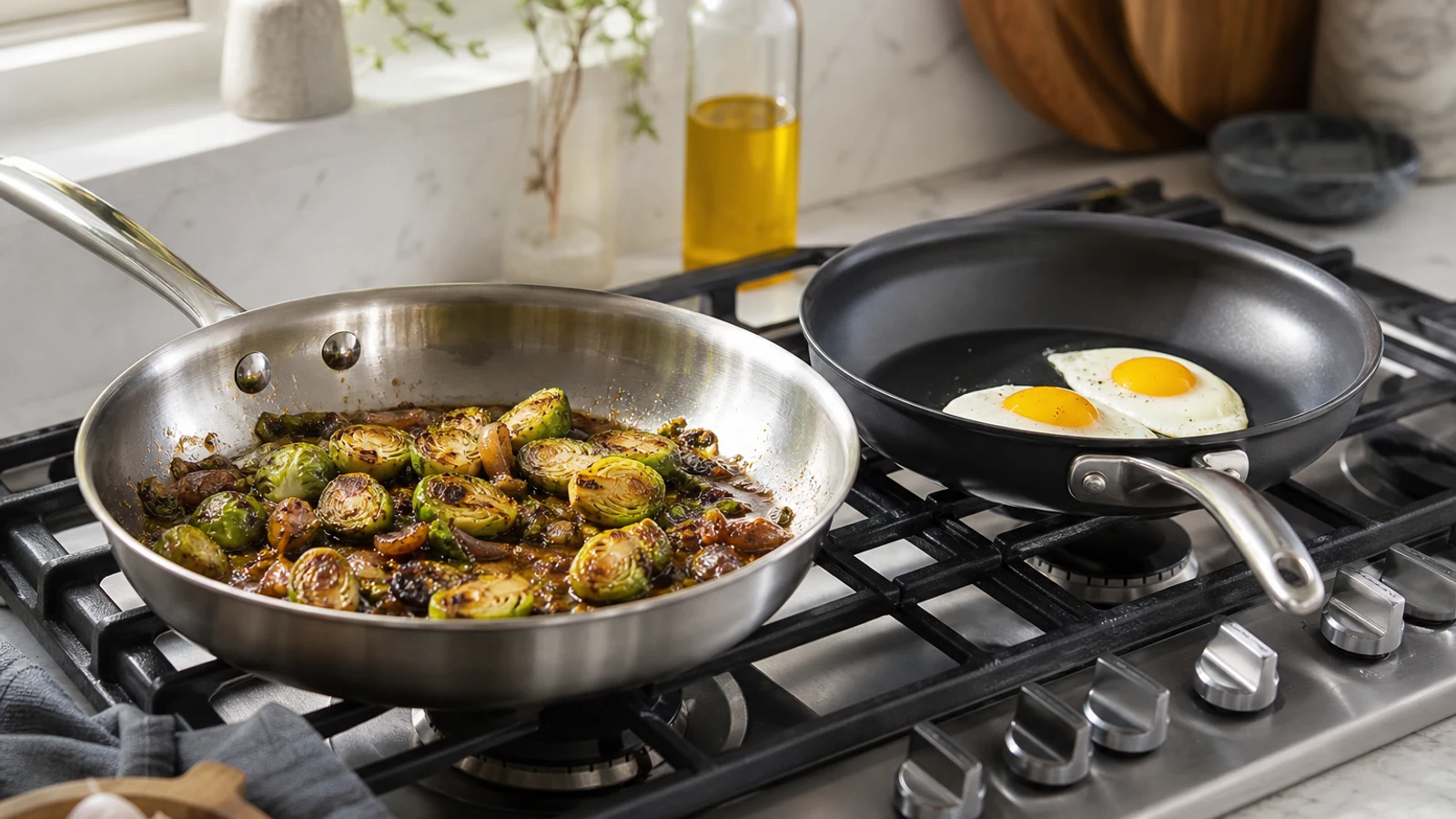
Stainless Steel vs Nonstick At A Glance
| Decision Point | Stainless Steel | Nonstick |
|---|---|---|
| Best for | Browning, searing, sautéing, pan sauces, acidic foods | Eggs, pancakes, fish, delicate foods, low-oil cooking |
| Food release | Requires preheating, oil, and timing | Naturally slick when the coating is in good condition |
| High-heat use | Generally more tolerant; check the product instructions | Usually best on low to medium heat |
| Cleanup | Can require soaking or gentle scrubbing | Usually quick and easy with a soft sponge |
| Durability | Can last for many years with normal care | Coating gradually wears and may need replacement |
| Cooking technique | More demanding but rewards temperature control | More forgiving for beginners and rushed meals |
| Best one-pan choice | Better for cooks who want maximum versatility | Better for cooks whose meals center on delicate foods |
Stainless steel and nonstick cookware are not direct substitutes in every situation. They behave differently because one exposes a durable metal cooking surface while the other relies on a release coating. That difference affects how food browns, how much oil you use, how carefully you control heat, and how long the pan remains at peak performance.
For everyday cooking, stainless steel is usually the stronger all-purpose foundation. It can handle browning, sautéing, simmering, acidic sauces, and stovetop-to-oven cooking, depending on the specific pan. Nonstick is the easier specialist: it excels when food tends to tear or adhere, cleanup needs to be fast, or you want to use little added fat.
The most practical answer for many households is not choosing one material exclusively. Use stainless steel for the jobs where fond and browning matter, and keep a nonstick skillet for foods that benefit most from effortless release. If you can buy only one pan today, your cooking habits should decide the material.
How Stainless Steel And Nonstick Cook Differently
Stainless steel cookware has a bare metal cooking surface, often paired with aluminum or another conductive layer in a clad design. The steel itself is durable and does not have a coating that can wear away. Its main learning curve is temperature control: food can stick when the pan is cold, the ingredients are wet, the heat is excessive, or the food is moved before it has developed a seared surface.
A properly preheated stainless steel pan can release food more easily than beginners expect. The usual sequence is to warm the pan gradually, add oil, let the oil heat, then add dry ingredients and leave them undisturbed until they naturally release. This technique also creates browned bits that can become the base of a pan sauce.
Nonstick cookware typically uses a coated cooking surface over an aluminum or other metal body. The coating reduces friction between food and pan, so eggs, pancakes, fragile fish, and soft vegetables are easier to turn. It also reduces the need for oil and usually makes cleanup faster. The trade-off is that the coating requires more careful heat and utensil management and will not remain like-new forever.
Choose Stainless Steel If You Want Versatility And Browning
Stainless steel is the better fit for cooks who want one material to cover many techniques. It is particularly useful when the goal is not merely to cook food but to build flavor in the pan. Meat, poultry, mushrooms, onions, and firm vegetables can develop deeper browning, and the browned residue left behind can be loosened with water, stock, wine, or another cooking liquid.
It is also a strong choice for tomato-based sauces, wine reductions, and other acidic preparations because the cooking surface is not a delicate nonstick coating. Stainless steel pots and sauté pans are also useful for boiling, simmering, reheating sauces, and preparing larger meals.
Choose stainless steel if:• You regularly sear meat or vegetables.• You make pan sauces or gravies.• You want cookware that can tolerate demanding everyday use.• You are willing to learn preheating and heat control.• You want a pan that can remain useful even after cosmetic discoloration or surface marks.• You prefer not to manage a coating that may eventually wear out.
Choose Nonstick If You Prioritize Easy Release And Cleanup
Nonstick earns its place through convenience. Eggs, omelets, pancakes, crepes, tofu, breaded fish, and other delicate foods can be difficult in bare stainless steel, especially when you are cooking quickly or using little oil. A good nonstick surface gives these foods a larger margin for error.
Nonstick is also convenient for small households, weekday breakfasts, and meals that do not benefit from a browned fond. If you are cooking one or two portions and want to finish quickly, a lightweight nonstick skillet may be easier to lift, clean, and store than a heavier clad stainless steel pan.
Choose nonstick if:• Eggs, pancakes, fish, or delicate foods are frequent meals.• You want to minimize added oil.• Fast cleanup matters more than pan-sauce capability.• You are new to cooking and want a forgiving surface.• You prefer a lighter skillet for quick stovetop tasks.• You are comfortable replacing the pan when the coating is visibly worn or performance has declined.
Heat, Utensils, And Care Are The Main Trade-Offs
Stainless steel generally gives you more freedom with heat, but that does not mean maximum heat is always best. Many manufacturers recommend low to medium heat for frying, sautéing, and searing because a well-made pan retains heat efficiently. Excessive heat can discolor the surface, burn oil, and make sticking worse. High heat is most useful for tasks such as bringing liquids to a boil, subject to the cookware’s instructions.
With stainless steel, preheat gradually and add oil before the food. Dry ingredients release more easily than wet ones, and proteins often need time to sear before they are turned. If food sticks, do not immediately scrape aggressively; it may release after the surface browns. For stubborn residue, soaking and gentle cleaning are usually safer than metal scouring pads or harsh chemicals.
Nonstick is less tolerant of overheating and empty-pan preheating. Low to medium heat is normally the safer default, and an oil that begins smoking is a warning that the pan is too hot. Silicone, wood, or nylon utensils help protect the surface, even when a manufacturer permits some metal utensils. Avoid cutting food in the pan, dragging sharp edges across the surface, and using abrasive scrubbers. Always check the pan’s individual oven and dishwasher limits rather than assuming all nonstick cookware has the same rating.
Durability And Long-Term Value
Stainless steel usually has the advantage in service life. Scratches, rainbow discoloration, and browned residue can affect appearance without making the pan unusable. A flat, structurally sound stainless steel pan can remain in regular rotation for a long time, especially when it is not repeatedly exposed to thermal shock, such as placing a very hot pan under cold water.
Nonstick performance is more closely tied to the condition of its coating. Even a well-cared-for pan can become less slick over time. Once food begins sticking regularly, the coating is visibly scratched, or the surface is peeling or otherwise damaged, replacement is more sensible than trying to restore it. Do not judge nonstick value only by its purchase price; its useful life is part of the calculation.
This does not make nonstick a poor investment. A moderately priced nonstick skillet used for eggs and other low-to-medium-heat foods may prevent you from abusing a stainless steel pan for tasks it is not ideal for. The most economical setup can be a durable stainless steel core supplemented by a smaller, replaceable nonstick pan.
Consider Your Stovetop, Oven, And Storage
Cooktop compatibility depends on construction, not just the broad material name. Many stainless steel pans are induction-compatible when they include a magnetic base or suitable magnetic layer, but some stainless steel is not magnetic on its own. Nonstick pans may also work on induction when built with an induction-ready base. Confirm compatibility on the product specifications before buying.
Oven safety varies widely. Bare stainless steel handles and bodies often tolerate higher oven temperatures than coated cookware, but lids, handles, helper handles, and nonstick coatings may have lower limits. Broiler use is especially model-specific. Treat the manufacturer’s stated limit as the controlling instruction.
Storage can also change the practical answer. Stainless steel is usually easier to stack without worrying about coating contact, although protectors can reduce scratches. Nonstick pans should be stored so that other cookware does not rub against the cooking surface. If cabinet space is tight, one versatile stainless steel skillet and one compact nonstick skillet may be more efficient than a large set containing several overlapping pieces.
What To Buy For Common Cooking Patterns
Breakfast-heavy cooking
If your routine centers on eggs, pancakes, French toast, or quick reheated foods, start with a nonstick skillet. A size that fits your typical portions is more useful than a large set. Add stainless steel later if you begin making pan sauces or searing proteins.
Meat, vegetables, and one-pan dinners||||Choose a stainless steel skillet or sauté pan if you frequently brown chicken, steak, pork, mushrooms, onions, or vegetables before finishing them with a sauce. The pan’s ability to build fond is more valuable here than effortless release alone. Keep heat moderate and allow ingredients to sear before moving them; this reduces the sticking that often turns new users away from stainless steel.
When Not To Buy Or Upgrade
You may not need new cookware if your current pans are still flat, stable, and performing well. Cosmetic marks on stainless steel are usually not a reason to replace it. Likewise, a nonstick pan does not need to be discarded merely because its exterior has darkened, provided the cooking surface remains intact and performs normally.
Do not upgrade from stainless steel to nonstick simply because a recipe stuck once. Technique, pan temperature, moisture, overcrowding, and premature turning can all cause sticking. Conversely, do not keep forcing a failing nonstick pan to perform high-heat searing; that is the wrong job for the material.
Replacement is more justified when a pan is warped, has a loose or unsafe handle, has lost its flat contact with an induction cooktop, has a damaged coating, or no longer fits the way you cook. If your cookware set contains many rarely used pieces, replacing one frequently used skillet may improve your kitchen more than buying another complete set.
The Best Everyday Setup For Most Kitchens
If your budget and storage allow two skillets, choose a durable stainless steel pan for browning, sautéing, sauces, and general-purpose cooking, then add a nonstick pan for eggs and delicate foods. This combination avoids asking either material to do every job.
If you can buy only one, select stainless steel when long-term versatility and cooking range matter most. Select nonstick when ease, low-oil cooking, and fast cleanup are the priorities. Neither choice is universally better; the right answer depends on whether you value technique and durability or convenience and release.
Bottom line: stainless steel is the better all-rounder, while nonstick is the better convenience tool. A thoughtful combination usually produces better everyday results than a single-material kitchen.
Go Deeper Before You Choose
For more context, see Cast Iron vs Nonstick: Which Pan Fits Your Cooking Style?.
For more context, see Kitchen Upgrades Worth Considering In 2026.
Research References
These sources informed the factual background for this guide. BuyingView applies its own editorial judgment to the purchase decision.
Questions & Answers
Useful follow-up questions that often change the buying decision.
Is stainless steel better than nonstick for everyday cooking?
Stainless steel is better for broad versatility, browning, searing, pan sauces, and long-term durability. Nonstick is better for delicate foods, low-oil cooking, and easy cleanup. For a mixed everyday menu, using both is usually the most practical approach.
Which is healthier, stainless steel or nonstick cookware?
Neither material should be judged by a simple universal label. Stainless steel has a bare cooking surface, while nonstick depends on a manufactured coating that should be used within the maker’s heat and care instructions. Avoid overheating nonstick cookware, follow the product directions, and replace a pan when its coating is visibly damaged.
Can you cook eggs in stainless steel?
Yes, but stainless steel requires more technique. Preheat the pan gradually, use enough fat, add dry ingredients, control the heat, and avoid moving the eggs before they have set. If effortless release is the main goal, nonstick is easier.
Does stainless steel cookware need to be seasoned?
Most stainless steel cookware does not require seasoning. Proper preheating, oil, dry ingredients, and heat control are more important for reducing sticking. Always follow the care instructions for the specific pan.
How long does nonstick cookware last?
Useful life varies with coating quality, frequency of use, heat exposure, utensils, cleaning, and storage. Replace a nonstick pan when food sticks persistently despite proper use or when the coating is scratched, peeling, or visibly deteriorated.
Can stainless steel and nonstick cookware go in the oven?
It depends on the specific pan, handle, lid, and coating. Stainless steel often has a higher oven tolerance, while nonstick cookware usually has a lower limit. Check the manufacturer’s oven, broiler, and lid instructions before using either pan in the oven.