Cast Iron vs Nonstick: Which Pan Should You Buy?
By BuyingView Editorial Team · Published September 21, 2026 · 12 min read
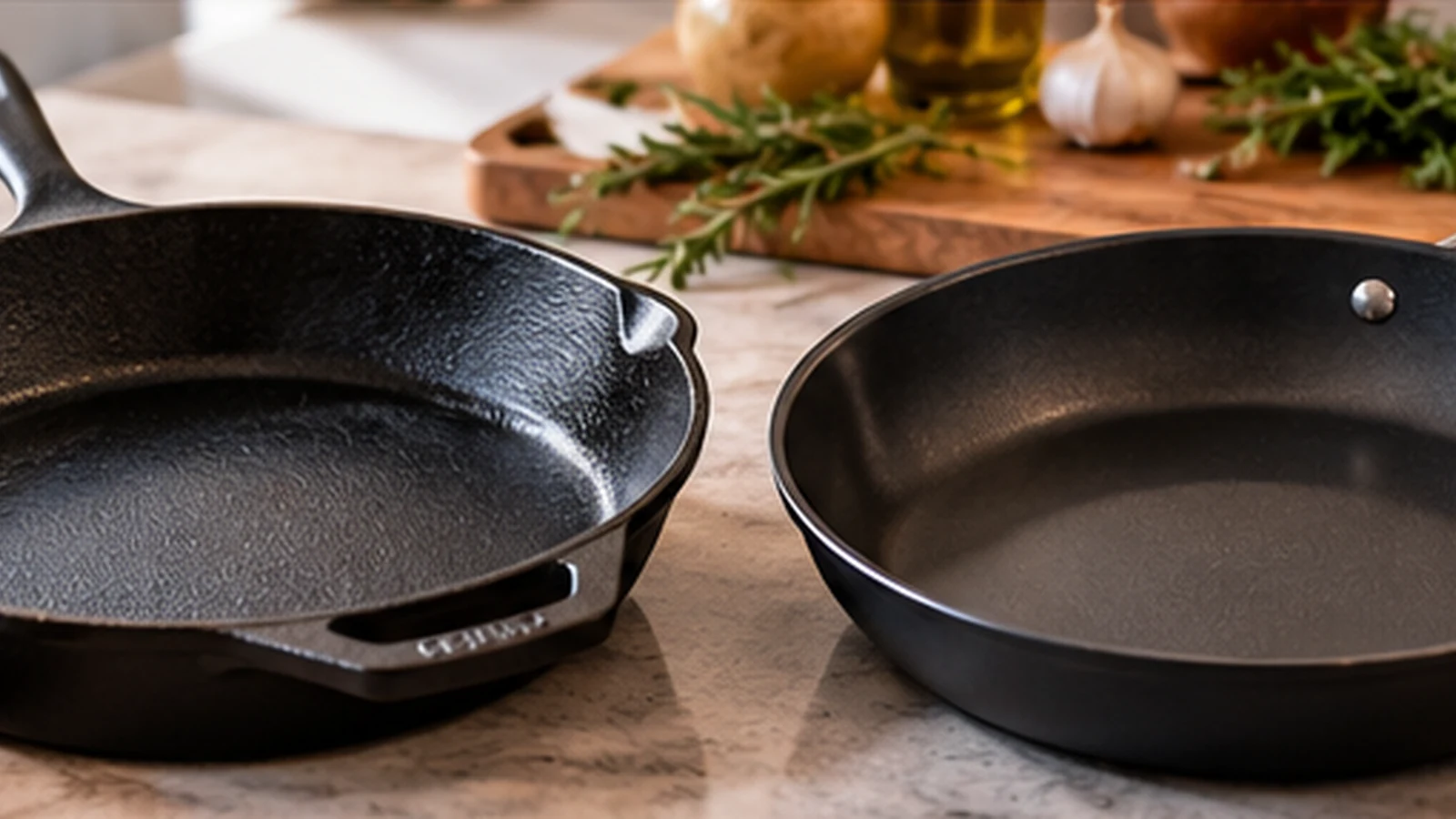
Cast iron and nonstick solve different cooking problems. Comparing them as if one must defeat the other creates a false choice. Cast iron is durable, heavy, heat-stable, and well suited to browning. Nonstick is convenient, light, and excellent when you want food to release with minimal fuss.
If you are building a kitchen from scratch, the smartest setup may be one of each rather than one expensive pan expected to do everything.
How cast iron behaves
Cast iron heats more slowly than thin aluminum cookware, but once hot it holds heat well. That makes it useful for searing meat, browning vegetables, shallow frying, and moving from stovetop to oven.
The Lodge Cast Iron Skillet is a common example of a pre-seasoned cast-iron pan. The important idea is the material: a seasoned surface improves with repeated cooking and proper drying, but it is not identical to a synthetic nonstick coating.
How nonstick behaves
Many nonstick pans use an aluminum body because it heats quickly and keeps the pan relatively light. The coating reduces sticking, which makes eggs, pancakes, fish, and other delicate foods easier to release.
The convenience is real. Cleanup is usually quick. The trade-off is lifespan: coatings gradually wear, scratch, or lose their release properties, so a nonstick pan is better treated as a replaceable tool than a lifetime purchase.
Searing and browning
Cast iron is the better choice when deep browning is the goal. Its heat retention helps the cooking surface stay hot when colder food is added. That can produce a stronger crust on steak, burgers, mushrooms, and other foods where browning creates flavor.
Nonstick can brown food, but very high heat is generally not where coated pans are most comfortable. Manufacturer instructions vary, so follow the heat limits for the specific pan rather than assuming every coating tolerates the same treatment.
Eggs and delicate foods
Nonstick is the easy winner for low-stress eggs. A good coating lets omelets, fried eggs, and scrambled eggs move around the pan with less sticking and less technique.
Well-seasoned cast iron can cook eggs successfully, but temperature control and seasoning quality matter more. If breakfast is a daily routine and you want the simplest possible cleanup, keeping a small nonstick pan makes sense even if cast iron is your main skillet.
Weight and handling
Cast iron is heavy. That is part of why it retains heat, but it can be inconvenient when you are pouring, tossing food, washing the pan, or lifting it into an oven. People with limited grip strength may find a large cast-iron skillet annoying to use every day.
Nonstick pans are usually much lighter. If a pan feels effortless to lift, you are more likely to reach for it for quick meals. Handling comfort is a legitimate buying criterion, not a minor detail.
Oven use
Traditional bare cast iron is naturally comfortable in the oven because there is no synthetic cooking-surface coating to protect. The limiting factor is usually an attached handle cover or accessory, if present.
Many nonstick pans are oven-safe only up to a manufacturer-specified temperature, and handle materials can lower that limit. Check the exact model before putting it under high heat or into a very hot oven.
Maintenance: cast iron
Cast iron needs to be dried promptly after washing so it does not rust. A very light film of oil can help maintain the surface, especially after aggressive cleaning. You do not need to turn care into a ritual, but you do need to avoid leaving the pan wet.
Seasoning is a bonded layer formed when oil is heated on the surface. Normal cooking with oil gradually reinforces it. If the surface becomes patchy, it can usually be cleaned and re-seasoned rather than discarded.
Maintenance: nonstick
Nonstick rewards gentler treatment. Use utensils that will not gouge the coating, avoid abrasive scrubbers unless the manufacturer says they are safe, and do not stack heavy cookware directly on top of the cooking surface without protection.
When a coating is visibly damaged or food begins sticking despite proper use, replacement is usually the sensible choice. Unlike cast iron, a worn synthetic coating is not something you restore by seasoning.
What about acidic foods?
Tomato, wine, citrus, and other acidic ingredients can interact with a young or weak cast-iron seasoning layer, especially during long simmering. A well-seasoned pan can handle brief acidic cooking, but stainless steel or enameled cookware is more carefree for long acidic braises and sauces.
Nonstick is generally less reactive with acidic foods, though you should still follow the manufacturer's temperature and utensil guidance.
Lifespan and value
A cast-iron skillet can last for decades because there is no bonded nonstick coating that must remain pristine. Scratches, surface rust, and neglected seasoning can often be repaired.
Nonstick pans are consumables by comparison. That does not make them poor value. If a modestly priced nonstick pan makes breakfast and delicate cooking easier every day, replacing it periodically can still be worthwhile. The mistake is paying a premium expecting it to behave like heirloom cookware.
Which pan should a beginner buy first?
If you cook eggs, pancakes, and quick delicate foods more often than steaks or oven dishes, start with nonstick. It minimizes frustration while you learn heat control.
If you want one durable pan for searing, roasting, stovetop-to-oven cooking, and general utility, cast iron is a strong first choice as long as you are comfortable with the weight and basic maintenance.
Why owning both can be the best answer
A small or medium nonstick pan plus a medium cast-iron skillet covers a wide range of home cooking without much duplication. Use nonstick for eggs, delicate fish, and quick low-mess meals. Use cast iron for browning, roasting, cornbread, and jobs where heat retention matters.
That combination can also be more economical than trying to buy one expensive do-everything pan.
Bottom line
Cast iron is the better long-term tool for durability, searing, oven use, and heat retention. Nonstick is the better convenience tool for delicate foods, light handling, and easy cleanup. Choose based on the food you cook repeatedly, not on which material has the more passionate fan base.
For other kitchen purchases worth prioritizing, see 5 Kitchen Upgrades Worth Buying in 2026.
Featured in this guide

Lodge Cast Iron Skillet (10.25 in)
A pre-seasoned cast iron skillet built to last for decades.
Frequently asked questions
Is cast iron naturally nonstick?
A well-seasoned cast-iron pan can release food well, but it is not identical to a modern nonstick coating and needs good heat control.
Can I use metal utensils on cast iron?
Generally yes on bare cast iron. For nonstick cookware, follow the manufacturer's utensil guidance to avoid damaging the coating.
Which pan is better for eggs?
Nonstick is usually easier and more forgiving for eggs, especially at lower heat.
Which pan lasts longer?
Cast iron usually has a much longer usable life because rust and seasoning problems can often be repaired.
Can cast iron go in the oven?
Bare cast iron can, but check any handle covers or accessories. Nonstick oven limits vary by model.
Do I need both cast iron and nonstick?
Not necessarily, but one of each is a practical combination because they excel at different cooking jobs.