10-Inch vs 12-Inch Cast Iron Skillet: Which Size Should You Buy?
By BuyingView Editorial Team · Published September 21, 2026 · 10 min read
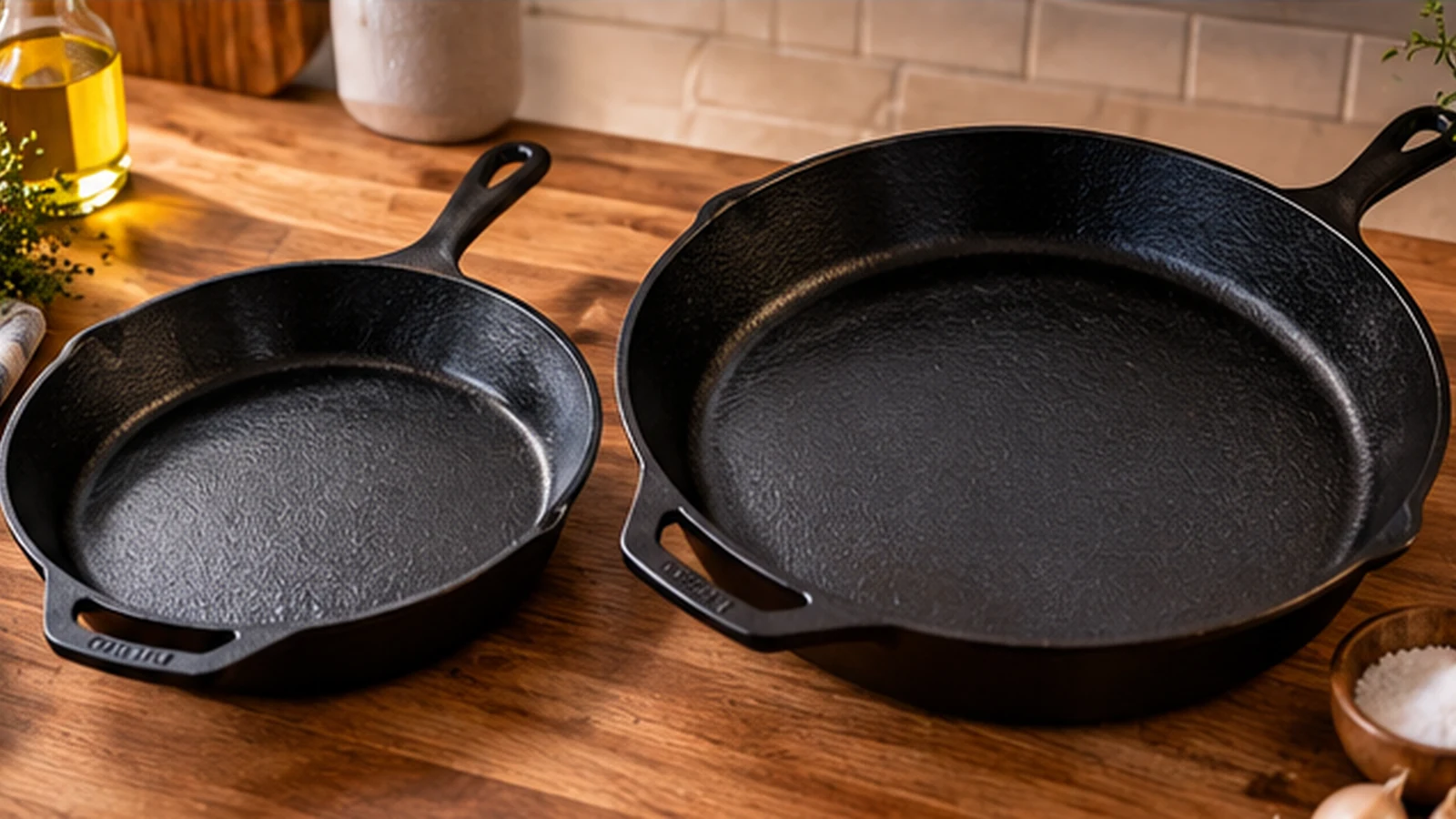
The difference between a 10-inch and 12-inch skillet sounds small until you lift them, fit them on a burner, and try to cook several pieces of food without crowding. Cast iron gets heavy quickly, and the advertised diameter is measured across the top rim rather than the flat cooking surface.
That means size affects more than capacity. It changes how evenly the pan sits over your burner, how comfortable it is to move, how much food can brown at once, and whether the skillet becomes an everyday tool or something you avoid because it is cumbersome.
First: advertised diameter is not cooking surface
Cast-iron skillets have sloped sides, so the flat area where food actually makes full contact with the pan is smaller than the number in the product name. A 12-inch pan gives you more usable surface than a 10-inch pan, but not two extra inches of flat cooking floor in every direction.
That is why comparing actual interior dimensions is more useful than assuming the label tells the whole story.
Why a 10-inch skillet is easier to live with
A skillet around 10 to 10.25 inches is manageable for one or two people and works well for eggs, burgers, small steaks, vegetables, cornbread, and many side dishes. It heats a smaller mass of iron and is easier to carry to the sink.
It is also more likely to fit closely over a standard household burner. Better burner fit can mean more even heating across the base, especially on smaller stovetops.
The Lodge Cast Iron Skillet is a useful reference point for this style of pan. When comparing models, look at actual diameter, weight, handle shape, and whether you can comfortably lift the skillet one-handed when empty.
Why a 12-inch skillet earns its space
A 12-inch skillet is valuable when surface area is the limiting factor. More room means less crowding, which helps browning. It is easier to cook several burgers, more vegetables, larger pieces of meat, or a one-pan dinner without stacking ingredients.
For households cooking for three or four people, that extra area can matter more than the extra weight. It can also be useful for oven dishes, large cornbreads, skillet pizzas, and recipes that need space around ingredients.
Weight is not a minor detail
Cast iron is heavy before food is added. A larger skillet adds enough mass that washing, draining, moving it into the oven, or carrying a full pan to the table can become uncomfortable.
If you already know you dislike heavy cookware, buying the largest skillet for theoretical flexibility is a mistake. A slightly smaller pan that you use four times a week is more valuable than a larger pan that stays in a cabinet.
Burner fit matters
A skillet performs best when the heat source matches the base reasonably well. If a large pan extends far beyond a small burner, the center can heat faster than the outer cooking surface.
Cast iron retains heat well, but that does not make burner size irrelevant. If your stove has mostly small elements, a 10-inch skillet may be the more practical everyday choice. If you have a large burner that suits a 12-inch pan, the larger size becomes easier to justify.
Cooking for one or two people
For one or two people, a 10-inch skillet is often enough for routine meals. It can handle a pair of portions without forcing you to heat and clean more iron than necessary.
The 12-inch size still makes sense if you deliberately cook leftovers, sear several pieces at once, or prefer one-pan dinners with vegetables spread around a protein. Household size is only a starting point; batch size is the better metric.
Cooking for a family
For three or four people, a 12-inch skillet is usually more comfortable because food can be spread out. Crowding traps moisture and can reduce browning, so surface area has a real cooking effect.
If you frequently cook for more than four people, even a 12-inch skillet may require batches depending on the meal. At that point, a second pan, griddle, Dutch oven, or larger cooking surface may be more useful than simply choosing the biggest skillet available.
Breakfast
For eggs and a small breakfast, a 10-inch skillet is easier to heat and handle. If you cook bacon, eggs, potatoes, and multiple portions together, the 12-inch surface becomes more attractive.
If eggs are your most common use and you value effortless release, also read Cast Iron vs Nonstick before assuming cast iron should be your only pan.
Searing meat
Searing benefits from room around each piece of food. If two steaks barely fit in a 10-inch skillet, they can cool the surface and trap moisture between them. A 12-inch skillet gives you more room to maintain separation.
For a single steak or burger, the smaller pan is usually sufficient. Buy for the number of portions you actually cook together.
Oven use and storage
Both sizes are useful in the oven, but check whether the 12-inch pan fits comfortably with the handle orientation and other racks or cookware you use. Large skillets also take more cabinet space and may not fit vertically in shallow storage.
Think about where the skillet will live before buying. Cast iron is much more convenient when it has an obvious storage spot and does not require moving several other pans.
Should you buy both sizes?
You do not need both to start. A 10-inch skillet covers many everyday tasks for smaller households, while a 12-inch skillet is a better single-pan choice for families or anyone who routinely cooks several portions.
If you eventually own both, they can serve different roles: the smaller pan for quick meals and the larger pan for family dinners, bigger batches, and oven dishes.
Bottom line
Buy the 10-inch skillet if you cook mainly for one or two people, value easier handling, and have a smaller burner. Buy the 12-inch skillet if you routinely cook three or more portions, want more room for browning, and are comfortable with the added weight.
If material choice is still part of the decision, read Cast Iron vs Nonstick: Which Pan Should You Buy?. For a broader kitchen plan, see 5 Kitchen Upgrades Worth Buying in 2026.
Featured in this guide

Lodge Cast Iron Skillet (10.25 in)
A pre-seasoned cast iron skillet built to last for decades.
Frequently asked questions
Is a 10-inch cast-iron skillet big enough for two people?
Usually yes for many everyday meals, though recipes that need a lot of surface area may be easier in a 12-inch pan.
Is a 12-inch cast-iron skillet too big for one person?
It can be more pan than necessary for routine meals, but it still makes sense if you batch cook or want more browning area.
Which size is easier to handle?
The 10-inch size is generally easier because it contains less iron and is lighter.
Which size is better for a family of four?
A 12-inch skillet is usually more practical because it provides more surface area for multiple portions.
Does a 12-inch skillet heat evenly on a small burner?
The outer area may heat more slowly if the pan extends far beyond the burner, so burner fit should be part of the decision.
Should I own both 10-inch and 12-inch skillets?
Not at first. Start with the size that matches your normal portions and add another only if you repeatedly run out of cooking surface or find the larger pan cumbersome.