Stand Mixer Vs Hand Mixer: Which One Is Worth Buying?
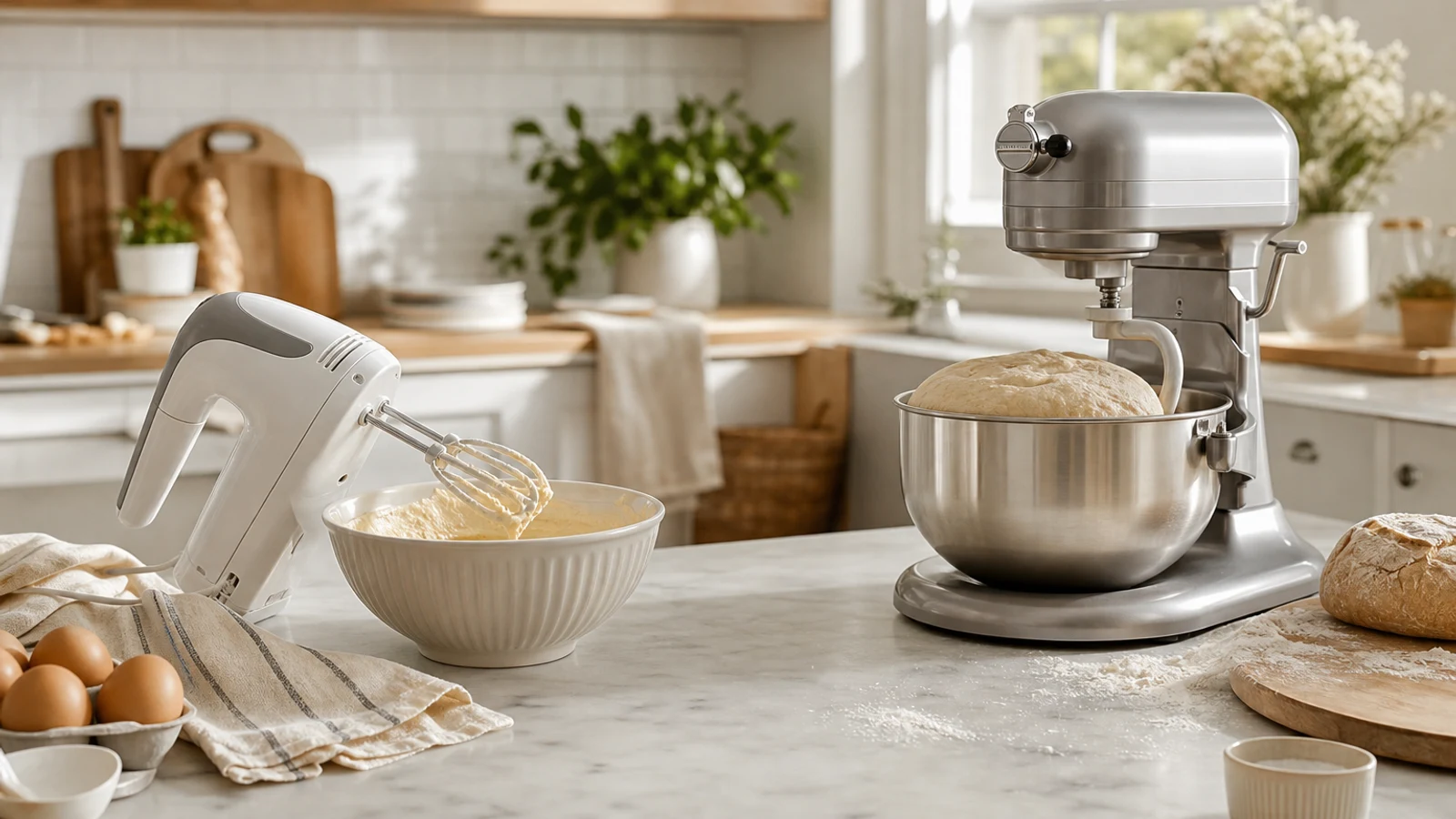
Stand Mixer Vs Hand Mixer At A Glance
| Decision Point | Stand Mixer | Hand Mixer |
|---|---|---|
| Best for | Bread dough, large batches, frequent baking | Cakes, frosting, whipped cream, small batches |
| Hands-free use | Yes; bowl and mixer stay in place | No; you guide the mixer through the bowl |
| Storage | Large and often heavy; may live on the counter | Compact and easy to store in a cabinet or drawer |
| Batch capacity | Better for larger recipes and repeated batches | Best for small to medium quantities |
| Heavy dough | More stable and less tiring for dense mixtures | Can work for lighter dough but strains your hand and arm |
| Bowl flexibility | Designed for its included bowl | Works in many bowls, pots, and containers |
| Extra functions | Often supports optional attachments | Usually limited to beaters, whisks, and dough hooks |
The choice between a stand mixer and a hand mixer is not simply a contest between a cheaper appliance and a more powerful one. They solve different kitchen problems. A stand mixer gives you stability, larger capacity, hands-free mixing, and a path to specialty attachments. A hand mixer gives you portability, lower storage demands, and the freedom to mix directly in the bowl or pan you are already using.
For many households, a hand mixer is enough. It can handle cake batter, buttercream, whipped cream, meringue, mashed potatoes, and ordinary cookie dough without occupying a permanent place on the countertop. A stand mixer becomes easier to justify when you make bread, stiff dough, large batches, or recipes that require several minutes of continuous mixing.
The practical question is: what is the most demanding task you expect to do at least several times a year? Choose the appliance that makes that task comfortable without creating a new problem with storage, cleaning, or unused capacity.
What A Stand Mixer Does Better
A stand mixer holds the bowl and mixing attachment in place while the motor runs. That arrangement matters most when a recipe is large, dense, or time-consuming. You can add ingredients, scrape the bowl, prepare pans, or measure the next component while the mixer continues working.
Stand mixers are particularly useful for yeast dough, enriched dough, large cookie batches, frosting, whipped egg whites, and mixtures that become tiring to hold. A dough hook can knead in the bowl, although the mixer still needs to be used within the capacity and speed limits stated by its manufacturer.
Many stand mixers also accept optional attachments. Depending on the model and attachment system, those may include pasta rollers, food grinders, slicers, spiralizers, or ice cream accessories. These features can add genuine value if you already want those tools, but they should not be treated as automatic savings. Attachments cost extra, take up storage, and may be used less often than expected.
Choose A Stand Mixer If
A stand mixer is the better fit when the appliance will remove a recurring chore rather than merely make an occasional recipe faster.
- You bake bread, pizza dough, bagels, pretzels, or other yeast-based recipes regularly
- You often double cookie, cupcake, or frosting recipes
- You dislike holding a mixer during long whipping or beating sessions
- You want to work on other preparation while ingredients mix
- You plan to use pasta, grinding, slicing, or other compatible attachments
- You have a sturdy storage location or enough counter space to leave it accessible
A stand mixer is also helpful for bakers who find hand mixing physically uncomfortable. The weight of the appliance and the fixed bowl reduce the need to stabilize both the mixer and the container at the same time. That convenience can matter more than a modest difference in advertised motor power.
What A Hand Mixer Does Better
A hand mixer is smaller, easier to move, and generally faster to set up for everyday baking. You can use it in a narrow bowl, a deep pot, or another suitable container instead of transferring ingredients into a dedicated mixer bowl. That can reduce both prep and cleanup.
Hand mixers are also easier to control around the bowl. You can move the beaters toward unmixed flour, work around the edges, and stop as soon as the ingredients are combined. For small recipes, that direct control can be more convenient than setting up a large stand mixer.
Storage is another major advantage. A hand mixer can usually fit in a cabinet, pantry, or drawer, while a full-size stand mixer may be heavy enough that moving it in and out of storage becomes a barrier to use. If an appliance is difficult to retrieve, its theoretical capabilities matter less.
Choose A Hand Mixer If
A hand mixer is usually the sensible starting point for occasional bakers, apartment kitchens, and households that mostly make light mixtures.
- You make cakes, brownies, whipped cream, frosting, or mashed potatoes
- You usually prepare one standard-size recipe at a time
- You have limited counter or cabinet space
- You want to mix in different bowls or containers
- You prefer a lower-commitment purchase while learning to bake
- You do not regularly make bread or very stiff dough
A hand mixer can also be the better choice when convenience means speed of setup rather than hands-free operation. For a small batch of frosting, pulling out a compact appliance may be quicker than clearing space, fitting a bowl, and washing several stand-mixer components.
Power And Dough Handling Are Not The Same Thing
It is tempting to compare mixers by wattage alone, but wattage does not fully predict how an appliance will behave with a particular recipe. Gear design, speed control, attachment shape, bowl geometry, cooling, and the manufacturer’s capacity guidance all affect performance.
A stand mixer’s main advantage with heavy dough is not only its motor. Its fixed position, heavier base, and dough hook allow it to work without requiring you to hold the appliance in place. A hand mixer may be capable of mixing some cookie dough or light dough, but the experience can become tiring as the mixture thickens.
Neither type should be treated as invulnerable. Very stiff mixtures, oversized batches, or prolonged operation beyond the manual’s instructions can overwork a motor. Follow the recipe’s batch size and the manufacturer’s limits, and avoid assuming that a larger bowl means you should always fill it to the rim.
Batch Size Changes The Answer
Batch size is one of the clearest dividing lines between the two appliance types. A hand mixer is efficient when the ingredients are shallow enough for the beaters to reach and the bowl is small enough to control. It becomes less convenient when the recipe is doubled, when flour clouds the counter, or when the mixture is too deep for even blending.
Stand mixers are more comfortable for larger batches, but larger capacity is not automatically better. A very large bowl can be inefficient for a small quantity of ingredients because the beaters may not reach the mixture well. If you mostly make small recipes, an oversized stand mixer may create more scraping and adjustment than convenience.
Before buying, look at your actual recipes rather than the biggest batch you might make someday. Consider how often you make one batch, double batches, bread dough, frosting, and whipped mixtures. The best capacity is the one that handles your common recipes without forcing you to buy a larger appliance than your kitchen needs.
Counter Space, Storage, And Workflow
A stand mixer is easiest to appreciate when it has a permanent, accessible home. Its weight can make frequent lifting unpleasant, especially from a low cabinet. Measure the available space, including the height needed to lift or tilt the mixer head and the room needed to add ingredients.
Also consider how the appliance fits into your workflow. A stand mixer can free both hands, but you still need to pause for scraping, ingredient additions, and checking consistency. A hand mixer takes more active attention, yet it may be faster to retrieve and easier to clean after a short task.
For small kitchens, a hand mixer may provide more usable value even if a stand mixer is technically more capable. For a dedicated baking area, the opposite may be true. The appliance that is visible, reachable, and ready to use is often the one that gets used most.
Cleaning And Maintenance Trade-Offs
Hand mixers generally have fewer parts and a smaller footprint, which can make cleanup straightforward. The beaters or whisk attachments still need to be washed promptly, particularly after buttercream, dough, or egg mixtures, but there is no heavy base or fixed bowl to wipe down.
Stand mixers add more surfaces and components. The bowl, beater, dough hook, whisk, splash guard, and mixer head may all need attention. Some accessories are dishwasher-safe and some are not, so the care instructions matter. Dried dough or batter around the attachment hub and bowl-locking area can also make cleanup more time-consuming.
A stand mixer can still reduce mess during mixing because the bowl stays in place and some models accept a pouring shield. But it is not maintenance-free. Buyers who dislike leaving appliances assembled or washing multiple parts should factor that into the decision.
When A Stand Mixer Is Not Worth It
A stand mixer may be unnecessary if your baking is occasional and centered on light recipes. If your most common tasks are whisking eggs, making pancake batter, mixing a single cake, or whipping cream, a hand mixer can provide the needed function with less expense and less storage pressure.
It may also be a poor fit if you expect to buy attachments mainly because they are available. An attachment is worthwhile only when it replaces a tool or process you genuinely expect to use. Otherwise, it adds cost and cabinet clutter without improving your everyday cooking.
Consider waiting if you are still learning what you like to make. A hand mixer can help you establish whether you bake often enough to justify a heavier appliance. Upgrade later when you can identify a specific limitation, such as insufficient capacity, tiring dough work, or the need for hands-free mixing.
When A Hand Mixer Is Not Enough
A hand mixer may become frustrating when you repeatedly make dense dough, large batches, or recipes that require long, uninterrupted mixing. You may also find it inadequate if you want to knead bread routinely or use one motor base for several specialty kitchen tasks.
The warning signs are practical: you regularly stop because your hand is tired, the bowl moves while you mix, the beaters struggle to move through the ingredients, or you avoid recipes because the process is inconvenient. Those are stronger reasons to upgrade than simply wanting a more impressive appliance.
If you already own a hand mixer and only bake a few times a year, a stand mixer may not change your results enough to justify its size. If you bake weekly and repeatedly encounter the same limitations, the upgrade is more likely to improve both efficiency and enjoyment.
Can You Own Both?
For frequent bakers, the two appliances can complement each other. A stand mixer can handle bread dough, large cookie batches, and hands-free whipping, while a hand mixer can take care of a small frosting batch, a quick cake, or a recipe that needs to be mixed in a different container.
Owning both makes the most sense when each has a clear role. It makes less sense when one appliance will sit unused because the other already covers nearly every recipe you make. Storage should be part of the decision: two mixers require not only room for the appliances but also space for bowls, beaters, hooks, and cords.
If you are buying your first mixer, start with one. Add the second only after you have identified a recurring task that the first appliance handles poorly.
Features That Matter More Than Marketing
For a hand mixer, prioritize a comfortable grip, stable low speed, easy-to-use controls, secure attachment release, useful beaters or whisks, and a storage solution that keeps the cord and accessories together. A slow-start function can help reduce flour splatter when beginning a recipe.
For a stand mixer, focus on bowl access, bowl size, mixer height, attachment clearance, speed control, included accessories, and the manufacturer’s guidance for dough and batch limits. A tilt-head design can make it easier to add ingredients and remove the bowl, while a bowl-lift design may offer a more stable platform for larger or heavier mixtures.
Do not pay for a large attachment ecosystem unless you have a plan for using it. The included flat beater, dough hook, and whisk—or the equivalent tools on a hand mixer—are more important than optional accessories for most buyers.
The Bottom Line
Choose a hand mixer when you want an affordable, compact tool for cakes, cookies, frosting, whipped cream, and other everyday mixing. It is the better value for many occasional bakers and for kitchens where counter space is limited.
Choose a stand mixer when you regularly make bread, stiff dough, large batches, or recipes that benefit from hands-free operation. Its value comes from reducing physical effort and making demanding or repeated tasks easier, not simply from having a larger motor.
There is no universal winner. For most first-time buyers, the best choice is the appliance that matches the recipes they already make—not the recipes they imagine making someday. If your needs later expand, a second mixer can be a targeted upgrade rather than an automatic purchase.
Go Deeper Before You Choose
For more context, see See More Practical Kitchen Upgrade Advice.
For more context, see Compare Other Kitchen Appliances Before You Buy.
Research References
These sources informed the factual background for this guide. BuyingView applies its own editorial judgment to the purchase decision.
Questions & Answers
Useful follow-up questions that often change the buying decision.
Can A Hand Mixer Replace A Stand Mixer?
For many cakes, frostings, whipped mixtures, mashed potatoes, and ordinary cookie recipes, yes. A hand mixer is less convenient for large batches, dense dough, long mixing sessions, and tasks where hands-free operation would help.
Is A Stand Mixer Better For Bread?
Usually, yes, because a stand mixer can knead dough with a dough hook while its bowl and base remain stable. It still must be used within the manufacturer’s dough and batch limits, and some bread recipes may require finishing or shaping by hand.
Which Mixer Is Easier To Clean?
A hand mixer usually has fewer and smaller parts. A stand mixer can still be manageable, especially when its bowl and accessories are easy to wash, but it generally requires more surface cleaning and storage space.
Do I Need A Stand Mixer If I Only Bake Occasionally?
Probably not. A hand mixer is usually sufficient for occasional cakes, cookies, whipped cream, and frosting. A stand mixer becomes easier to justify when you bake frequently or repeatedly make heavy dough and large batches.
Is It Worth Buying Both A Hand Mixer And A Stand Mixer?
It can be worthwhile for frequent bakers who use the stand mixer for demanding recipes and the hand mixer for quick, small jobs. For everyone else, start with one appliance and add the second only when a specific recurring limitation appears.
What Should I Check Before Buying Either Type?
Check your typical batch sizes, storage location, bowl compatibility, included attachments, cleaning requirements, speed control, and the manufacturer’s guidance for dough and maximum quantities. Those details are more useful than comparing motor wattage alone.