Robot Vacuum Vs Cordless Vacuum: Which One Saves More Work?
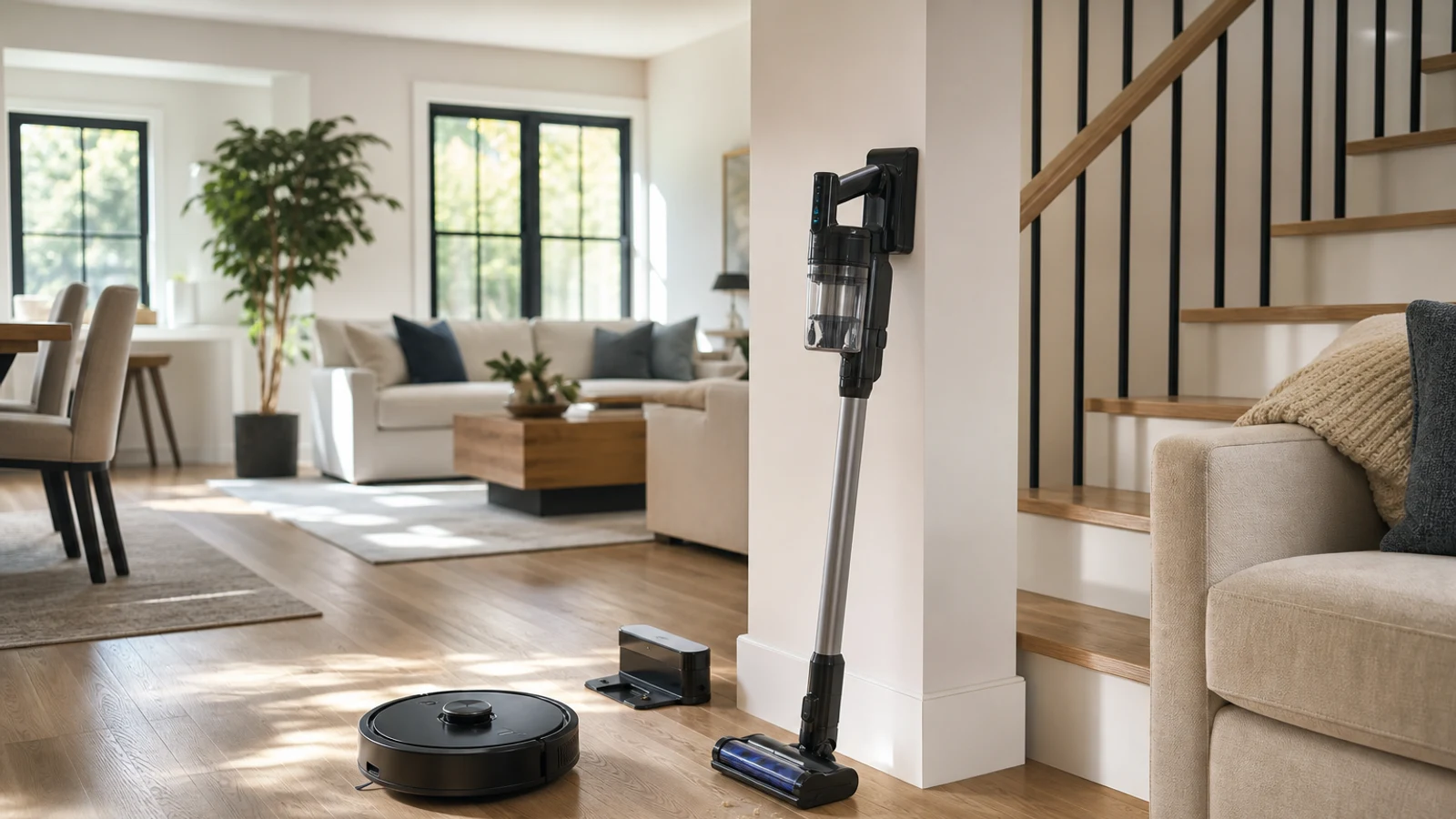
Robot Vacuum Vs Cordless Vacuum At A Glance
| Decision Point | Robot Vacuum | Cordless Vacuum |
|---|---|---|
| Main job | Scheduled, repeated floor maintenance | Manual cleaning and quick spot response |
| User effort | Low during cleaning; setup and maintenance still required | Higher during cleaning; little setup |
| Best surfaces and spaces | Open hard floors and accessible low-pile rugs | Stairs, upholstery, cars, edges, and mixed spaces |
| Navigation | Sensors, mapping, and obstacle avoidance vary by model | You guide the vacuum directly |
| Mess handling | Small, recurring debris spread across floors | Spills, concentrated dirt, corners, and cobwebs |
| Battery limits | Usually returns to its dock and may resume cleaning | Runtime depends on power mode, attachments, and battery condition |
| Maintenance | Brushes, sensors, filters, wheels, bin, and dock | Filter, brush roll, bin, charger, and battery |
| Privacy and space | May require an app, map, and permanent dock space | No room mapping; needs charging and storage space |
The robot-versus-cordless decision is really a choice between two kinds of convenience. A robot vacuum reduces the number of cleaning sessions you have to perform yourself. A cordless vacuum reduces the friction of handling a mess when you are ready to clean it.
That distinction matters because neither category completely replaces the other. Robot vacuums are designed to run frequently and keep everyday debris under control. Cordless vacuums are designed for hands-on cleaning, where you decide exactly what gets cleaned, how aggressively, and with which attachment.
For many homes, the most practical answer is not about suction claims or smart features. It is about your floor plan, clutter, stairs, pets, rugs, storage, tolerance for maintenance, and the kind of work you find most annoying.
Where A Robot Vacuum Saves More Work
A robot vacuum is most valuable when the work you want to avoid is repetitive floor cleaning. Once it is mapped and scheduled, it can make frequent passes over accessible rooms while you are working, sleeping, or handling other tasks. That can prevent dust, crumbs, and pet hair from accumulating to the point where a large cleaning session is necessary.
The benefit is strongest in homes with broad, unobstructed floor areas. Hard floors, open living spaces, and furniture with enough clearance for the robot to pass underneath are favorable conditions. A robot can also be useful for households that struggle to maintain a regular cleaning routine because the schedule removes some of the decision-making.
Modern models vary widely in navigation. Some use organized mapping, while others rely on less precise movement. Obstacle recognition, room selection, no-go zones, and the ability to resume after charging can substantially change how much supervision is needed. A robot that repeatedly gets trapped, misses rooms, or requires frequent rescue may save less work than expected.
Choose A Robot Vacuum If
- Most of your home is open hard flooring or low-pile carpet.
- You want frequent light cleaning rather than occasional deep cleaning.
- You can keep cords, clothing, pet toys, and other small objects off the floor before scheduled runs.• You have a practical location for the charging dock with clear access around it.• You are comfortable using an app or setting up maps and schedules.• You value reducing routine labor more than having instant control over every pass.
Where A Cordless Vacuum Saves More Work
A cordless vacuum saves work by being immediately available and easy to aim. You can pick it up for a few crumbs, vacuum a stair tread, clean a sofa, remove debris from a car, or handle a spill without waiting for a robot to reach the area. Its advantage is control rather than independence.
The direct-cleaning format is also better for concentrated dirt. A cordless vacuum can make repeated passes over one patch of carpet, use a crevice tool along a baseboard, or switch to a brush for upholstery. Attachments and a handheld configuration can extend its usefulness beyond floors.
Cordless vacuums are usually the more capable single-vacuum option for multilevel homes. A robot generally cannot clean stairs, carry itself between floors, or reach vertical surfaces. If your main frustration is moving a conventional vacuum around the house, a cordless model may remove enough effort without introducing mapping, dock, or app-related upkeep.
Choose A Cordless Vacuum If
- Your home has stairs, several levels, or rooms separated by thresholds.• You often clean sudden messes rather than following a fixed schedule.• You need to clean upholstery, curtains, shelves, cars, or tight corners.• Your floors include thick rugs or areas that need repeated, directed passes.• You dislike leaving a device and dock permanently visible.• You prefer a vacuum that works without mapping, Wi-Fi, or room preparation.
Cleaning Performance Is Not The Same As Convenience
A robot vacuum can keep floors looking consistently maintained without delivering the same kind of deep, directed cleaning as a hands-on vacuum. Its performance depends on the model, floor type, brush design, navigation, and how often it runs. Frequent passes can compensate for some limitations by removing debris before it builds up.
A cordless vacuum lets you choose the pressure, path, attachment, and number of passes. That makes it better for embedded debris, edges, stairs, and areas where a robot cannot position itself effectively. However, the cleaning only happens when you decide to do it and physically guide the machine.
For pet owners, the answer depends on both shedding patterns and surfaces. A robot can help control loose hair on accessible floors between larger cleanups. A cordless vacuum is more useful for pet beds, furniture, stairs, corners, and clumps of hair that need targeted attention. Neither should be judged solely by a headline suction number; brush design, filtration, hair handling, and the floor head are also important.
Which Option Works Better For Your Floor Plan?
An open-plan apartment is often a strong robot-vacuum candidate. There may be fewer stairs, more continuous flooring, and enough room for organized navigation. A cordless vacuum can still be useful for the kitchen after cooking, the sofa, and small spills, but the robot may remove more recurring floor work.
A multilevel house usually favors a cordless vacuum as the primary tool because it can travel with you. A robot can still be useful on one main floor, but moving it between levels may reduce the convenience that justifies buying it. If you choose a robot for one level, make sure that floor has enough accessible area to benefit from scheduled cleaning.
A cluttered home, a home with many floor-level objects, or a home with frequent rearrangement may be frustrating for a robot. If you do not want to clear the floor before every run, a cordless vacuum may be the more honest fit. Homes with delicate rugs, tall thresholds, narrow passages, or furniture that blocks access also deserve extra caution.
What Changes The Answer Most
- Stairs: A cordless vacuum has a clear advantage because it can be carried and used on each step.• Pet hair: A robot helps with recurring floor hair; a cordless model is better for furniture, beds, stairs, and concentrated shedding.• Mostly hard floors: This generally improves the case for a robot, especially when rooms are open and uncluttered.• Thick or delicate rugs: Verify compatibility and brush behavior before relying on a robot.• Small children: A cordless vacuum is better for immediate spills, while a robot can handle crumbs between larger cleanups.• Limited storage: A robot may need a dock location, while a cordless vacuum needs a charging mount or floor stand.• Privacy concerns: A cordless vacuum does not need room mapping or a connected camera-based navigation system.• Physical limitations: Automation may reduce bending and pushing, but emptying bins and maintaining a dock still require some hands-on work.
Should You Buy Both?
A two-vacuum setup can make sense when each device has a distinct job. Use the robot for scheduled maintenance on accessible floors, then keep the cordless vacuum for stairs, upholstery, edges, entryways, cars, spills, and deeper spot cleaning. This combination can reduce the number of large cleaning sessions without pretending that a robot can reach every surface.
Buying both is less compelling if your home is small, cluttered, or already easy to clean manually. It is also less attractive if you dislike maintaining connected appliances or do not have room for a robot dock. In those cases, a good cordless vacuum may deliver most of the practical benefit with fewer ownership tasks.
If you already own a functional cordless vacuum, buy a robot only when your unmet problem is recurring floor maintenance. If you already own a robot, buy a cordless model when you regularly need to rescue it, clean stairs, handle furniture, or deal with messes it cannot reach.
How To Decide Without Overbuying
Start by tracking the work you actually postpone. If you avoid vacuuming because it takes too long to get the equipment out, a cordless model may remove the setup barrier. If you avoid vacuuming because you cannot keep up with daily crumbs and hair, a scheduled robot may address the more important problem.
Then map your home literally. Count levels, note thresholds, measure low furniture, identify floor types, and mark where a dock or charger could live. Consider whether doors are usually open, whether objects commonly remain on the floor, and whether pets may interfere with cleaning.
Finally, separate useful features from impressive-sounding ones. For a robot, prioritize dependable navigation, room control, obstacle handling, dock practicality, replacement parts, and maintenance access. For a cordless vacuum, prioritize comfortable weight, useful tools, battery support, filter access, brush-roll design, and whether the bin is easy to empty.
Bottom Line
Choose a robot vacuum when your priority is reducing repeated floor-cleaning labor and your home is compatible with scheduled automation. It is most convincing for open, accessible floors where frequent light cleaning prevents buildup.
Choose a cordless vacuum when you need one flexible tool for stairs, upholstery, cars, corners, spills, and direct control. It is usually the safer single-vacuum choice for mixed layouts and homes with more concentrated cleaning needs.
If you can support two devices, the strongest division of labor is simple: let the robot handle routine floor maintenance and use the cordless vacuum for everything that requires hands-on reach, precision, or extra power. The best choice is the one that removes the kind of cleaning you postpone most—not necessarily the one with the longest feature list.
Go Deeper Before You Choose
For more context, see See More Practical Home Upgrade Decisions.
Research References
These sources informed the factual background for this guide. BuyingView applies its own editorial judgment to the purchase decision.
Questions & Answers
Useful follow-up questions that often change the buying decision.
Can A Robot Vacuum Replace A Cordless Vacuum?
Usually not completely. A robot can handle recurring floor maintenance, but a cordless vacuum is still more useful for stairs, upholstery, cars, corners, sudden spills, and areas blocked by furniture or clutter.
Which One Is Better For Pet Hair?
A robot vacuum can reduce loose pet hair on accessible floors when it runs frequently. A cordless vacuum is better for pet beds, furniture, stairs, corners, and concentrated hair. Homes with pets often benefit from using both.
Is A Cordless Vacuum Better For A Small Apartment?
Often, especially if the apartment has stairs, clutter, or mostly concentrated messes. A robot can still be worthwhile in a small apartment with open floors if your main goal is reducing routine sweeping and vacuuming.
Do Robot Vacuums Need A Lot Of Maintenance?
They still need regular attention. Expect to clear brushes and wheels, clean filters and sensors, empty or replace dust containers, and maintain the dock. Self-emptying or washing docks may reduce some tasks but add their own maintenance.
Are Cordless Vacuum Batteries Replaceable?
It depends on the model. Check the manufacturer’s parts support before buying, including battery availability, replacement instructions, and expected maintenance requirements. Battery runtime also varies with power mode and attachments.
What Is The Best Choice For Stairs?
A cordless vacuum is the practical choice because you can carry it from step to step and use suitable attachments. A robot vacuum generally cannot clean stairs.
Should I Buy A Robot Vacuum If I Already Have A Cordless Vacuum?
Buy one if the problem you still have is daily or near-daily floor maintenance. If your cordless vacuum already makes cleaning easy and you do not mind using it, a robot may add cost and maintenance without solving an important problem.