Espresso Machine vs Pod Machine: Which Coffee Setup Fits You Better?
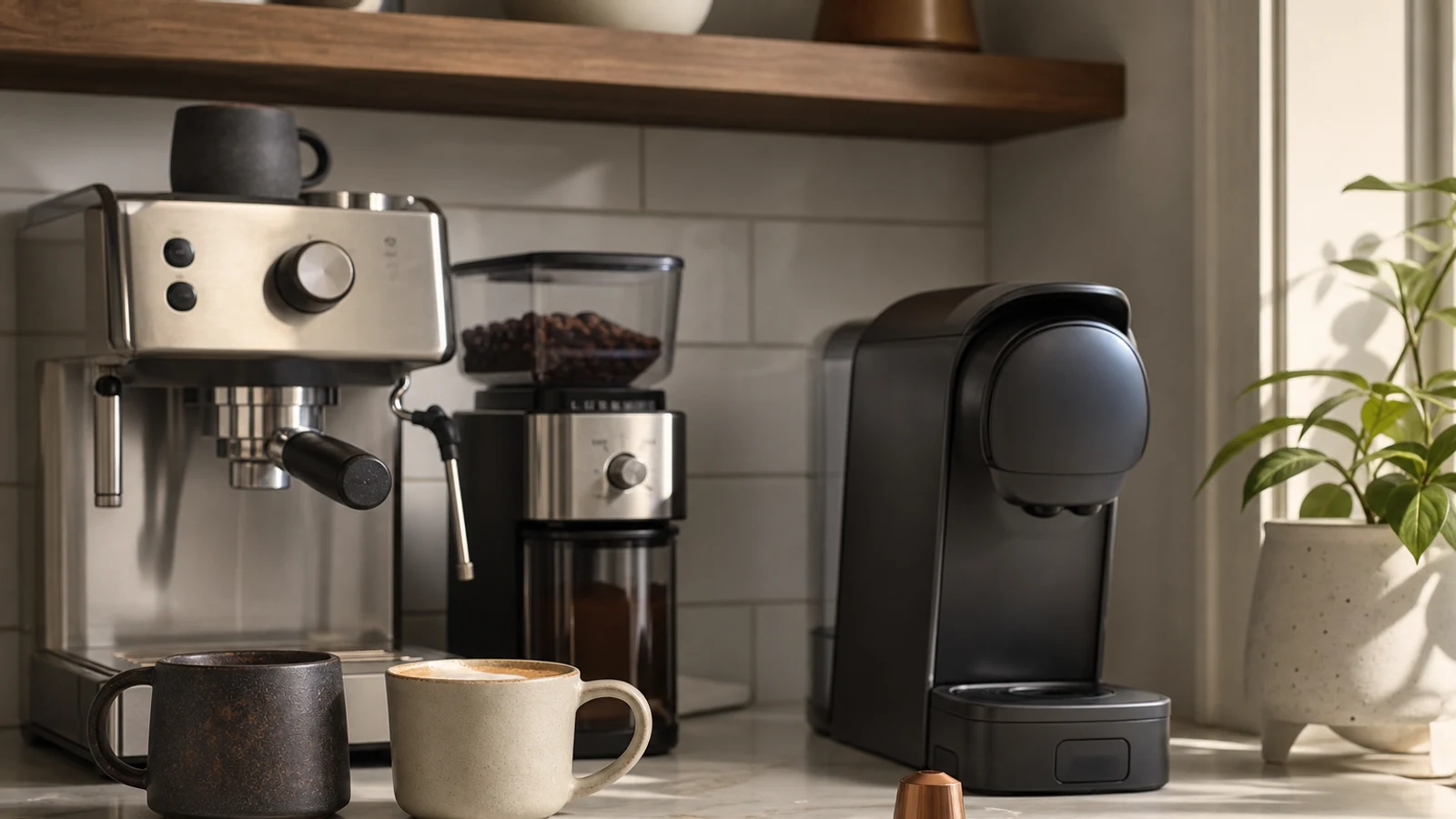
Espresso Machine Vs Pod Machine At A Glance
| Decision Point | Espresso Machine | Pod Machine |
|---|---|---|
| Coffee preparation | Uses loose grounds; you typically grind, dose, tamp, and brew | Uses a pre-portioned pod or capsule; insert it and press a button |
| Control | High control over beans, grind, dose, yield, and extraction | Limited to the machine’s settings and available pod flavors or blends |
| Consistency | Depends on technique, grinder quality, and coffee freshness | Usually repeatable from cup to cup with little technique |
| Milk drinks | Steam wand can produce textured milk for lattes and cappuccinos | May require a separate frother or use a built-in automated system |
| Cleanup | Dispose of grounds, rinse the portafilter, and maintain the brew path | Remove the used pod, empty the pod bin or tray, and follow descaling guidance |
| Countertop needs | May also require a dedicated grinder and room for accessories | Usually a simpler setup, though water tanks and pod storage still need space |
| Best fit | Coffee drinkers who enjoy control, fresh beans, and learning | People who value convenience, speed, and predictable results |
The choice between an espresso machine and a pod machine is less about finding a single winner and more about deciding how much involvement you want from your coffee setup. A traditional semi-automatic espresso machine turns preparation into a small process: you select beans, grind them, distribute the grounds, tamp the puck, start the shot, and clean the equipment afterward. A pod machine packages most of those decisions into a sealed serving that the machine brews for you.
That difference affects more than taste. It changes the time required each morning, the amount of counter space you need, how much maintenance you will actually perform, what kinds of drinks you can make, and how locked-in you are to a particular pod format. Before shopping, decide whether you want a coffee appliance or a coffee hobby. That one distinction usually makes the answer clearer.
How The Two Setups Work
A traditional home espresso machine brews loose coffee grounds under pressure. With a semi-automatic model, you are responsible for at least some combination of grinding, dosing, tamping, starting and stopping the shot, and steaming milk. The machine provides the heat and water delivery, but the result still depends heavily on the grinder and the person using it.
This approach gives you a large adjustment range. You can change beans, grind size, dose, brew ratio, and extraction time. You can also use different roast styles and experiment with drinks such as straight espresso, Americanos, cortados, flat whites, cappuccinos, and lattes. However, the extra control creates more opportunities for inconsistency. A small grind or tamping change can make a shot taste noticeably different.
A pod machine uses a pre-portioned serving of ground coffee sealed in a pod or capsule. The machine pierces the package, delivers heated water, and dispenses the drink with very little preparation. Depending on the system, it may produce espresso-style servings, longer coffees, or milk-based drinks. Those formats are not interchangeable, so check what the machine actually brews rather than assuming every pod system makes traditional espresso.
Choose An Espresso Machine If You Value Control
An espresso machine makes the most sense when the preparation itself is part of the appeal. You may enjoy trying different beans, dialing in a shot, or learning how to steam milk. You also benefit more from this setup if you drink espresso frequently enough to justify keeping beans, a grinder, and cleaning supplies on hand.
The biggest advantage is the ceiling. With a capable grinder and fresh coffee, you can make a drink that is more tailored to your preferences than a fixed pod recipe. You can adjust strength and extraction rather than accepting the dose and flavor profile chosen by a capsule manufacturer. A steam wand also gives you more control over milk temperature and texture than a basic pod brewer paired with a separate frother.
That flexibility does not guarantee better coffee automatically. An inexpensive espresso machine paired with a poor grinder, stale beans, or inconsistent technique can produce disappointing results. If you are new to espresso, the grinder is often as important to the experience as the machine itself. Budgeting only for the espresso machine can leave you with a setup that is difficult to tune.
Choose A Pod Machine If Convenience Comes First
A pod machine is usually the better fit when you want coffee with minimal decisions and minimal mess. The routine can be as simple as filling the water reservoir, inserting a pod, and pressing a button. That appeals to busy households, occasional coffee drinkers, shared kitchens, guest rooms, offices, and anyone who does not want to learn espresso technique.
Pod systems also make repeatability easy. If everyone in the household prefers a similar drink, a pod brewer can reduce arguments about grind settings, dose, or shot timing. It is also easier to hand to a visitor who wants coffee without explaining how to use a portafilter or steam wand.
The trade-off is that convenience comes with limits. You are generally restricted to the pod formats that fit the machine, and the available blends, serving sizes, and flavor options depend on that ecosystem. Some systems offer many compatible choices, while others are more tightly tied to one manufacturer. Check the availability and storage requirements of the pods before buying.
Taste And Drink Quality
A well-prepared espresso machine drink can offer more aroma, body, sweetness, and balance because you control the coffee and the extraction. It can also be adjusted as the beans age or as your preferences change. For someone who notices differences between roasts or enjoys café-style milk texture, this control is a meaningful benefit.
Pod machines can produce enjoyable, consistent coffee, but the flavor is shaped by the pre-ground coffee, packaging, serving size, and brewing design. A pod may be convenient and pleasant without matching the character of a carefully prepared shot from fresh grounds. Some capsule systems create a crema-like layer or foam, but appearance alone does not indicate that the drink was extracted in the same way as traditional espresso.
Milk drinks narrow the gap for some users because milk, syrup, ice, and other ingredients can soften differences in the coffee base. If you usually drink flavored lattes or iced drinks, convenience may matter more than extracting every nuance from the beans. If you drink straight espresso or short milk drinks, the quality and freshness of the coffee may be more noticeable.
Workflow, Speed, And Daily Effort
The practical question is not just how fast the machine starts. Consider the complete workflow from deciding what to drink to leaving the kitchen with a clean counter. A pod machine usually wins for a single quick serving because it avoids grinding and tamping. It can also be easier when several people want different drinks one after another.
An espresso setup may take longer, especially while you are learning. You need to grind coffee, prepare the portafilter, brew, knock out the puck, rinse the basket, and wipe or purge the steam wand if you make milk drinks. Once the routine becomes familiar, the process can feel manageable, but it remains more involved than pressing a pod button.
For households making several drinks at once, think about the machine’s heat-up behavior, water capacity, drip tray, and milk workflow. A compact machine may fit a small kitchen but require more frequent refilling and emptying. A larger setup may be more comfortable for multiple drinks but occupy valuable counter space.
Cleaning And Maintenance
Neither option is maintenance-free. Pod machines reduce loose-ground mess, but they still need regular attention. Used pods accumulate in the internal bin or tray, coffee residue can collect around the puncture area, and mineral buildup can affect water flow and flavor. Follow the specific manufacturer instructions for rinsing, cleaning, and descaling rather than waiting for a performance problem.
Espresso machines create more visible daily cleanup. After brewing, you usually need to remove the spent puck, rinse the portafilter and basket, wipe the group area, and empty the drip tray as needed. Steam wands require prompt wiping and purging after milk use. Periodic backflushing, descaling, and gasket or screen maintenance may also be required, depending on the machine.
The important buying test is honesty about your habits. If you know you will not wipe a steam wand or rinse a portafilter, do not buy a setup that depends on those steps for good results. A simpler machine that you maintain is preferable to a more capable machine that sits dirty.
Cost: Look Beyond The Purchase Price
The initial machine price is only one part of ownership. A traditional espresso setup may require a grinder, tamper, scale, knock box, and fresh beans. Some machines include basic accessories, but the total setup can grow as you improve your workflow. You may also spend more on better beans or replacement parts over time.
A pod machine can be simpler to start because the brewer and serving format are bundled together. However, you continue buying compatible pods for every drink, and those recurring purchases can become a significant part of the cost for frequent users. The answer depends on the specific pod format, coffee choice, serving size, and how often you brew, so avoid relying on a generic per-cup claim.
You should also account for waste and storage. Pods are convenient, but they create individual packaging to manage. Loose grounds can be compostable in some household setups, while capsules may require special recycling or disposal procedures depending on the material and local program. If waste reduction matters to you, investigate the actual pod material and disposal route before choosing a system.
Space, Storage, And Kitchen Fit
Measure the space rather than relying on a product photo. Espresso machines often need clearance above the machine for a water tank, room beside the machine for a grinder, and an accessible area for beans, cups, a tamper, and cleaning supplies. If you keep the grinder in a cabinet, daily use may become less convenient.
Pod machines generally need less supporting equipment, but they still require room for pod storage and access to the water reservoir. Some compact models have small reservoirs or limited used-pod capacity, which may be fine for one person but annoying for a family or office.
Your existing kitchen workflow matters too. A machine placed beside the sink may be easier to refill and clean than one placed under a cabinet. For broader countertop planning, see the guide to Kitchen Upgrades For 2026. Keep the coffee station close to mugs, water, and waste disposal so the setup does not create unnecessary steps.
What Changes The Decision Most
Your drink preference is the first filter. If you mostly want a large, mild coffee, neither a traditional espresso machine nor a small espresso-focused pod system may be ideal; a drip or single-serve coffee maker could be a better match. If you regularly drink short espresso-based beverages, both formats become more relevant.
Your tolerance for learning is the second filter. A pod brewer is designed to hide most variables. An espresso machine exposes them. That is an advantage when you want to improve, but a burden when you want the same result immediately every morning.
Your household pattern is the third filter. One enthusiastic user may appreciate a manual workflow while everyone else ignores it. Multiple users, guests, or an office may benefit from a machine that does not require training. Consider who will clean it, refill it, buy supplies, and troubleshoot it—not just who is excited to purchase it.
When Not To Buy Either One
Do not buy a traditional espresso machine simply because it appears to be the more serious choice. If you do not enjoy espresso, milk drinks, or the preparation process, the equipment may become an expensive countertop ornament. A regular coffee brewer may serve your habits better.
Do not buy a pod machine if you already know you dislike proprietary supplies, want to use any coffee you choose, or expect café-level control over extraction and milk texture. The convenience may not compensate for the limitations.
Also consider delaying the purchase if you are still uncertain about your drink preferences. Try espresso drinks from a café, borrow a machine, or compare the morning routines in a store or shared kitchen before committing to a system. Choosing based on your actual habits is safer than choosing based on a feature list.
Bottom Line
Choose an espresso machine when you want control, fresh grounds, customizable drinks, and a setup you can improve over time. Plan for a grinder, a learning curve, daily cleanup, and more counter space. The reward is a higher ceiling for flavor and milk drinks, but only if you are willing to use and maintain the equipment.
Choose a pod machine when speed, consistency, and low-effort cleanup matter more than experimentation. It is often the practical choice for busy mornings, shared spaces, guests, and users who want one-button coffee. Accept the limits of the pod ecosystem and evaluate ongoing supply cost, waste, and availability before buying.
The most useful question is simple: do you want to make coffee, or do you want coffee ready? If the process sounds rewarding, choose the espresso route. If the process sounds like friction, choose the pod route—and buy the system whose drink sizes, pod availability, and cleaning routine fit your actual week.
Go Deeper Before You Choose
For more context, see Kitchen Upgrades For 2026.
Relevant Product
One catalog product is directly relevant to this decision. It is shown as a reference point, not as a universal winner. Current price, seller and availability should always be confirmed on Amazon.

Research References
These sources informed the factual background for this guide. BuyingView applies its own editorial judgment to the purchase decision.
Questions & Answers
Useful follow-up questions that often change the buying decision.
Is espresso from a pod machine the same as espresso from an espresso machine?
Not necessarily. A pod machine can produce a concentrated, espresso-style drink, but the brewing method, coffee dose, pressure system, and extraction controls may differ from a traditional espresso machine. Check the specific machine rather than assuming the word espresso means identical results.
Which is easier to clean: an espresso machine or a pod machine?
A pod machine is usually easier for daily cleanup because it avoids loose grounds and tamping. It still needs rinsing, used-pod disposal, and periodic descaling. An espresso machine requires more hands-on cleanup, especially after brewing and steaming milk.
Does an espresso machine require a separate grinder?
Many semi-automatic machines work best with a separate burr grinder, although some machines include a built-in grinder and some users buy pre-ground coffee. A suitable grinder makes it easier to adjust the grind and achieve repeatable results.
Are pod machines cheaper in the long run?
Not automatically. They may cost less to set up, but you keep buying compatible pods. An espresso setup can require more equipment initially, while whole-bean coffee may offer more flexibility over time. Compare the complete setup and your expected brewing frequency.
Which option is better for lattes and cappuccinos?
An espresso machine with a capable steam wand offers the most control over milk texture. A pod system can be convenient for milk drinks, especially with an automated frother, but the result depends on the machine and accessories. If milk texture is a major priority, inspect that feature specifically.
Can a pod machine be a good choice for coffee beginners?
Yes. Pod machines are often a good fit for beginners who want a predictable drink without learning grinding, dosing, tamping, and extraction. They are less suitable for beginners who specifically want to learn traditional espresso preparation.