Is an Instant Pot Worth It for Two People? A Practical Buying Guide
By BuyingView Editorial Team · Published September 21, 2026 · 11 min read
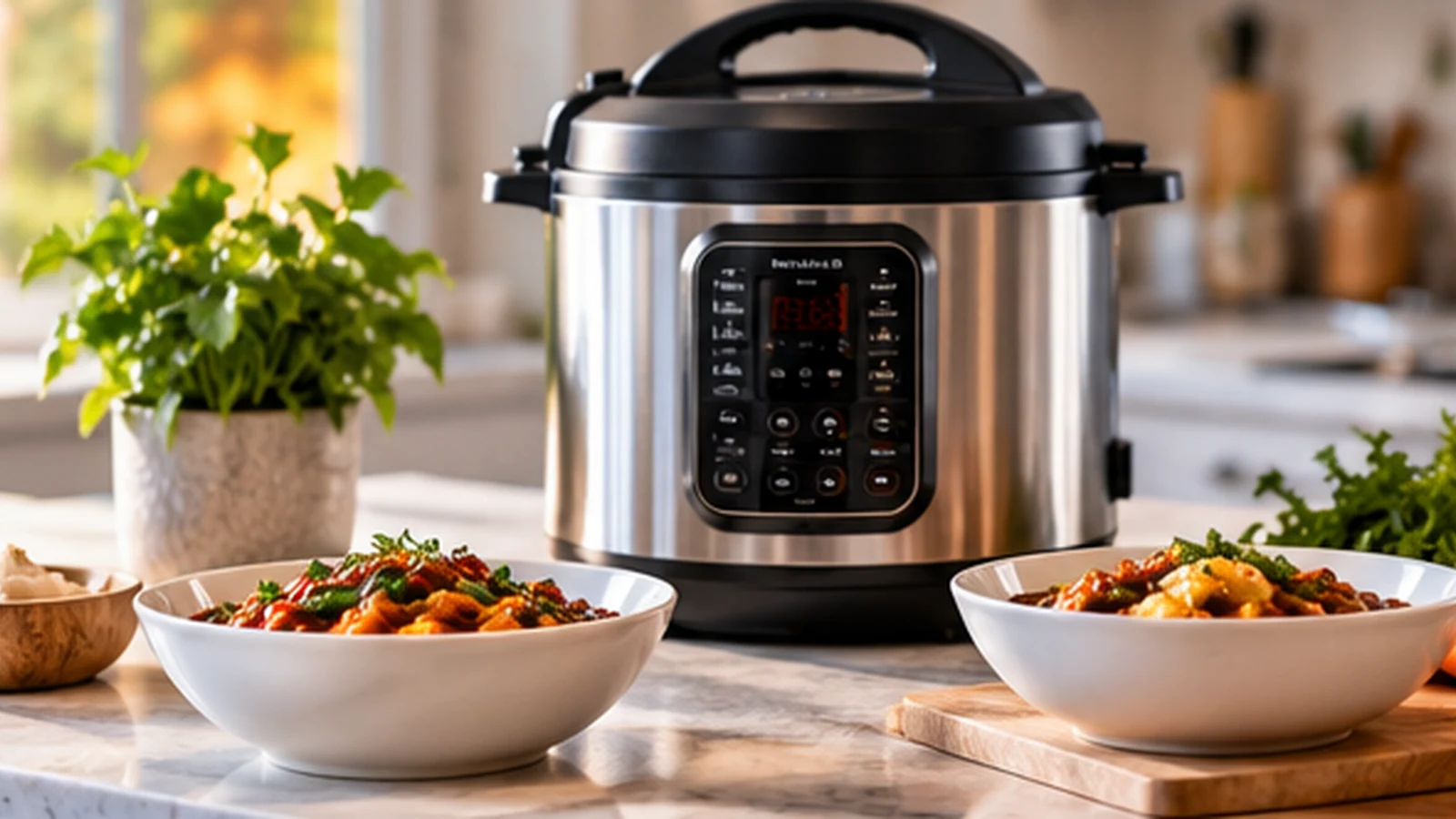
Two-person households often hesitate over a multi-cooker because the appliance looks designed for families. Capacity matters, but cooking style matters more. A pressure cooker does not become useless because only two people are eating. It becomes useful when its strengths match your routine: unattended cooking, tenderizing foods, cooking dried beans, making grains, and producing several portions at once.
The Instant Pot Duo 7-in-1 is a familiar example. Think of it less as a gadget with many buttons and more as a sealed electric pot that can pressure cook, slow cook, steam, and handle several basic one-pot tasks.
When it makes sense for two people
It makes the most sense when you are happy to cook four to six servings and turn the extras into tomorrow's lunch or freezer meals. That changes the economics completely. Instead of asking whether the pot can make exactly two servings, ask whether one cooking session can cover two or three meals without creating food you will throw away.
Soups, chili, beans, lentils, curries, braised meats, and grain-based meals fit this pattern well. They also tend to reheat well, which is why the appliance can be especially useful for people who want fewer weeknight cooking sessions.
When it does not make sense
If your normal dinner is a quick stir-fry, pan-seared protein, salad, sandwich, or something you want crisp, a pressure cooker may sit unused. It is excellent at moist cooking; it does not replace a frying pan, broiler, or air fryer for browning and crisping.
It is also a poor fit if leftovers bother you and you strongly prefer cooking exactly what you will eat that night. You can reduce recipes, but very small quantities can be awkward because the cooker still needs enough liquid to pressurize correctly.
The leftover question matters more than capacity
People often focus on whether a six-quart pot is too large for two. The more useful question is what you do with extra food. If you already pack lunch, freeze portions, or intentionally cook once for multiple meals, extra capacity is an advantage. If food tends to disappear into the refrigerator until it is discarded, extra capacity becomes waste.
A simple test is to look at the last month of dinners. Count how many meals would have been just as good the next day. If the answer is several each week, a multi-cooker has a much stronger case.
What it can replace — and what it cannot
A multi-cooker can reduce the need for a separate slow cooker and can handle rice, steaming, and pressure cooking in the same vessel. That can be valuable in a small kitchen because one appliance takes the place of several specialized ones.
But it does not automatically replace every appliance named on the control panel. A dedicated rice cooker may still be more convenient for someone who makes rice every day. A slow cooker may be simpler for someone who likes transparent, all-day cooking. Neither replaces a skillet when surface browning is central to the meal.
Treat multi-function labels as possible uses, not a promise that every mode is equally good for your household.
How much time does it really save?
Pressure cooking can reduce the active cooking time of foods that normally simmer for a long time, but the timer on the display is not the whole story. The pot needs time to come to pressure, and some recipes need a natural pressure release afterward.
The real time savings often come from attention rather than minutes. Once the lid is locked and the cycle is running, you are free to do something else. On a busy evening, not having to monitor a pot can be more valuable than shaving a few minutes from the clock.
The learning curve is real but manageable
The first few uses feel less intuitive than a skillet because you cannot open the lid whenever you want. You need to understand sealing versus venting, how much liquid a recipe needs, and when to use quick release versus natural release.
The workflow becomes repetitive quickly. Start with forgiving foods such as soup, beans, or a simple one-pot meal rather than trying an elaborate recipe on the first night.
Cleaning and maintenance
The inner pot is straightforward to wash, but the lid has parts that deserve attention. The sealing ring can hold odors, the steam-release area needs to stay clear, and the lid should be cleaned according to the manufacturer's instructions.
For two people, easy cleanup is part of the value proposition. If the appliance saves cooking time but creates several parts you dislike washing, you will use it less. Look at the lid design and replacement-part availability before buying.
Counter space versus storage space
A multi-cooker is tall and bulky compared with a frying pan. If it lives in a cabinet that is difficult to reach, you may stop pulling it out. If it replaces a slow cooker and another appliance, however, the total storage picture can improve.
Before buying, decide where it will live. Countertop appliances earn their space when they are easy to access. A useful machine stored behind six other appliances becomes theoretical convenience.
What size makes sense for two?
A mid-size model is often more flexible than the smallest model because it gives you room for batch cooking, larger ingredients, and recipes written for common pressure-cooker sizes. The downside is footprint.
If you have very limited space and rarely batch cook, a smaller model may be enough. If you want leftovers, meal prep, or freezer portions, a mid-size pot gives you more room without forcing you to fill it.
Instant Pot versus air fryer for two people
These appliances solve different problems. A pressure cooker is for moist, hands-off cooking and foods that benefit from time under pressure. An air fryer is for dry heat, browning, crisping, and reheating.
If your weeknight frustration is that stews, beans, or shredded meat take too long, choose the multi-cooker. If your frustration is soggy leftovers and slow oven preheating, read our air fryer versus toaster oven comparison instead.
A simple decision rule
An Instant Pot is worth it for two people when at least three things are true: you like batch-friendly meals, you eat leftovers, you cook foods that normally simmer a long time, you want hands-off cooking, or the appliance can replace something you already own.
If only one of those is true, you may get more value from a good pan or another appliance that matches your normal meals. For more ways to prioritize kitchen spending, see 5 Kitchen Upgrades Worth Buying in 2026.
Featured in this guide

Instant Pot Duo 7-in-1 (6 Qt)
Pressure cooks, slow cooks, and steams in one countertop unit.
Frequently asked questions
Is a six-quart Instant Pot too big for two people?
Not necessarily. It can be useful for two people who batch cook or want leftovers, though it takes more storage space than a smaller model.
Can I cook only two servings in an Instant Pot?
Usually, yes, as long as the recipe still uses enough liquid for the cooker to pressurize safely and correctly.
Is an Instant Pot good for meal prep?
Yes. Its strongest use cases often produce several portions that refrigerate or freeze well.
Does an Instant Pot replace an air fryer?
No. Pressure cooking is moist cooking; air frying is dry, high-airflow cooking for browning and crisping.
Is it hard to learn?
There is a short learning curve around sealing, pressure release, and liquid amounts, but basic recipes become routine quickly.
What should I cook first?
Start with forgiving one-pot foods such as soup, beans, lentils, or a simple stew so you can learn the pressure and release workflow.