Mesh Vs Cushioned Office Chair: Which Is Better For Long Workdays?
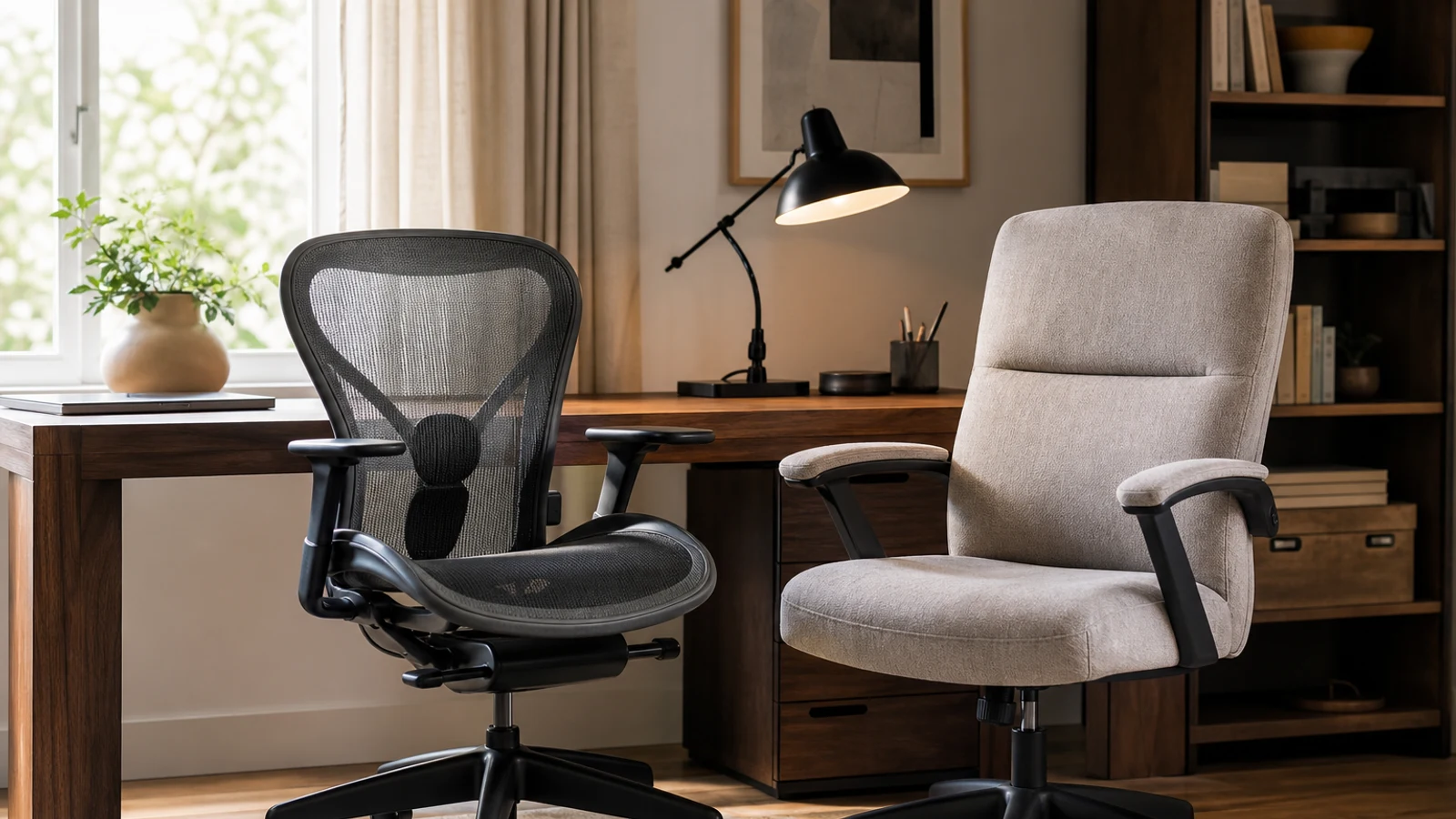
Mesh Vs Cushioned Office Chairs At A Glance
| Decision Point | Mesh Chair | Cushioned Chair |
|---|---|---|
| Breathability | Usually better airflow, especially with a mesh seat and back | Can retain more heat, particularly with thick foam and non-breathable upholstery |
| Initial feel | Firmer, springier, and more responsive | Softer and more immediately forgiving |
| Pressure distribution | Depends heavily on mesh tension, seat design, and frame shape | Foam can spread pressure well, but overly soft foam may allow sinking |
| Long-term support | Does not compress like foam, but can stretch or lose tension if poorly made | Quality foam can remain supportive; low-density foam may flatten over time |
| Cleaning and maintenance | Generally easy to vacuum or wipe, though debris can collect in the weave | Upholstery can absorb spills and may be harder to deep-clean |
| Best fit | Warm rooms, users who prefer firm support, and people who shift position often | Users who prioritize softness, pressure relief, and a more traditional chair feel |
| Common compromise | Mesh back with a padded seat | Breathable fabric or a thinner cushion paired with a supportive backrest |
The mesh-versus-cushion debate is often framed as if one material is automatically more ergonomic. That is too simple. A well-designed chair can support a long workday in either format, while a poorly fitted chair can create discomfort regardless of whether it uses mesh, foam, or both.
The more useful question is what kind of comfort you need. Mesh usually favors airflow, firmer support, and easier movement. A cushioned chair usually favors softness, pressure relief, and a familiar upholstered feel. Your height, body shape, sitting habits, room temperature, clothing, and desk setup can all change the answer.
For many home-office users, the practical middle ground is a chair with a breathable mesh back and a supportive padded seat. That combination can reduce heat around the upper body without asking your thighs and sitting bones to adapt to a firm suspended seat.
What The Materials Actually Change
A mesh chair uses tensioned textile material stretched over a frame. The material can flex under your weight and allow air to pass through it. Mesh is not automatically soft: some designs feel flexible and springy, while others feel taut and firm. The frame underneath also matters because a poorly shaped front edge or seat frame can create pressure even when the mesh itself feels comfortable.
A cushioned chair generally uses foam beneath fabric, synthetic leather, or another upholstery material. Cushioning can distribute pressure and create a softer first impression. However, softness is not the same as support. If the foam is too soft, you may sink into the seat, lose freedom of movement, or end up with more pressure under the thighs as the chair compresses.
The backrest material and seat material should be considered separately. A chair can have a mesh back and a foam seat, a cushioned back and mesh seat, or mesh throughout. When a product description simply says “mesh chair,” confirm which parts are actually mesh before comparing it with a padded model.
When Mesh Is The Better Choice
Mesh is usually the stronger choice when heat and moisture are the main sources of discomfort. A mesh back allows more air movement between your body and the chair, and a mesh seat may feel less warm during extended sitting. This can matter in a room without strong air conditioning, in a chair positioned near a sunny window, or for people who naturally run warm.
Mesh also tends to feel more supportive to users who prefer a stable surface rather than a plush seat. Its tension can encourage small posture changes instead of allowing you to settle deeply into the chair. That does not make mesh inherently healthier, but it can make the chair feel more active and less restrictive.
Choose mesh if most of these statements describe your situation: • Your office is warm or poorly ventilated.
- You dislike upholstery that traps heat.
- You prefer firm or springy support.
- You shift between upright work, relaxed typing, and reclining.
- You want a surface that is less likely to absorb a small spill.
- You are willing to test the seat rather than judging comfort from a short showroom impression.
Where Mesh Can Fall Short
The main weakness of mesh is that comfort depends heavily on tension, contour, and frame design. A mesh seat that is too firm can create pressure under the thighs or around the sitting bones. A rough weave may irritate bare skin or feel uncomfortable with thin clothing. Some mesh seats also have a pronounced front frame, which can be more noticeable than the edge of a well-shaped padded seat.
Mesh may also feel too cold or too rigid for users who prefer a soft, enveloping chair. If you tend to sit in one position for long periods and want the chair to absorb pressure rather than respond to movement, a high-quality cushion may be more comfortable.
Do not assume that an all-mesh chair will remain supportive indefinitely. The quality of the textile, frame, tensioning system, and warranty all matter. A poorly made mesh seat may stretch, sag, or expose the edge of the frame. Look for a clearly defined seat shape, a supportive but not sharp front edge, and a return policy that gives you enough time to assess comfort during a normal work routine.
When A Cushioned Chair Is The Better Choice
A cushioned chair is often preferable when immediate softness and pressure relief matter more than airflow. Good foam can spread load over a broader area and make the chair feel comfortable during meetings, reading, or other tasks where you remain relatively still. Upholstery can also feel less technical and more familiar than a suspended mesh surface.
Cushioning is especially useful when you find firm mesh uncomfortable, have prominent pressure points, or frequently wear clothing that makes mesh texture noticeable. A padded seat can also be more forgiving when the chair’s dimensions are close to—but not perfect for—your body size, although correct fit is still important.
Choose a cushioned chair if most of these statements describe your situation:
- You prefer a soft or medium-firm sitting surface.
- You are sensitive to firm pressure beneath the thighs or sitting bones.
- Your room is cool enough that heat buildup is not a major concern.
- You spend time reading, taking calls, or reclining as well as typing.
- You want a more traditional upholstered feel.
- You can verify that the foam is supportive rather than merely plush.
Where Cushioned Chairs Can Fall Short
Thick padding can retain more heat, especially when combined with dense upholstery or synthetic leather. It can also make it harder to sense how your pelvis and back are positioned. A very soft seat may feel excellent for the first few minutes but become less comfortable after the foam compresses and your body settles into it.
Foam quality matters more than the word “cushioned.” Low-density foam can lose resilience with repeated use, leaving you closer to the seat base and changing the chair’s effective height and support. Very thick cushions can also reduce usable seat depth, which may be a problem for taller users or anyone who needs to sit close to the backrest.
A cushioned chair is not automatically warmer or less durable than a mesh chair. Breathable fabric, resilient foam, removable covers, and strong construction can narrow the difference. Conversely, a mesh chair with poor design can be less comfortable than a well-made upholstered chair. Evaluate the complete seat rather than treating material as a shortcut for quality.
The Ergonomic Features That Matter More Than Material
For long workdays, fit and adjustment usually matter more than whether the chair is mesh or cushioned. The seat should allow your feet to rest flat on the floor or on a stable footrest, while the backrest should support your lower back without forcing you into one rigid position.
Seat depth is particularly important. You should be able to use the backrest while leaving a small gap between the front edge of the seat and the backs of your knees. A waterfall-shaped front edge can reduce pressure behind the legs. If the seat is too deep, shorter users may slide forward or lose contact with the lumbar support. If it is too shallow, taller users may lack thigh support.
Before comparing materials, check for these features:
- Seat-height adjustment that lets your feet rest securely.
- Seat-depth adjustment or a seat pan that fits your leg length.
- Lumbar support that is positioned where your lower back needs it.
- A backrest that reclines or tilts with adjustable resistance.
- Armrests that keep your shoulders relaxed without blocking the desk.
- A five-leg base and casters suited to your floor.
- A seat edge that does not dig into your thighs.
- A return policy or trial period that allows extended evaluation.
- Dimensions and weight limits appropriate for your body size. For a broader checklist of features, see our guide to office chair features worth paying for. Your chair also works as part of a system, so monitor height, keyboard position, desk clearance, and foot support can determine whether the chair feels comfortable.
How To Test A Chair For A Full Workday
A brief sit in a store can reveal obvious problems, but it cannot fully predict comfort after several hours. If possible, test the chair with your usual desk height, keyboard, monitor, and clothing. Adjust the chair before judging it rather than sitting in the default position.
Start with your feet supported and your hips positioned against the backrest. Adjust seat height, seat depth, lumbar support, recline tension, and armrests in that order. Then work for at least 30 to 60 minutes before deciding whether the seat is too firm, too soft, too warm, or poorly shaped. A longer trial is even more useful because some problems only appear after repeated pressure or after you stop frequently changing positions.
Use this test sequence:
- Confirm that your feet stay supported without raising your shoulders to reach the desk.
- Check that the seat edge does not press into the backs of your knees.
- Lean back and verify that the lumbar support remains useful without pushing you forward.
- Type and use your mouse with your shoulders relaxed.
- Recline and return upright without the seat forcing you to slide forward.
- Notice whether you are shifting because the chair supports movement or because you are trying to escape pressure.
- Recheck comfort after a normal meal, meeting, or focused work session rather than only during a quick trial.
Which Option Makes Sense For Different Work Styles
For Hot Rooms And Long Continuous Sits
Mesh is usually the safer starting point when airflow is your first priority. A mesh back may provide most of the cooling benefit without requiring you to accept a firm mesh seat. If you choose all-mesh, pay close attention to seat tension and the front edge.
For Users Who Prefer Softness And Pressure Relief A cushioned seat is likely to feel more natural, particularly if firm surfaces create discomfort quickly. Look for medium-firm foam, a rounded front edge, and enough seat depth to maintain back support without pressing behind the knees. Avoid choosing solely by how soft the chair feels during the first five minutes. For People Who Shift Positions Frequently Either material can work, but mesh often feels more responsive when you move between upright typing and reclining. The chair’s tilt mechanism, backrest shape, and armrest movement may matter more than the upholstery. For Shared Workspaces Prioritize adjustability and easy cleaning. A chair with broad adjustment ranges can fit more than one user, while a mesh surface may be easier to wipe or vacuum. If the chair is shared, verify that the seat depth, lumbar position, and armrests can be changed without tools. For Smaller Or Taller Users Fit should override material preference. A chair with the wrong seat depth can remain uncomfortable even if the mesh breathes well or the cushion feels soft. Measure your available desk clearance and compare the chair’s seat-height and seat-depth ranges before buying.
Maintenance, Durability, And Value
Mesh is often simpler to clean because crumbs and dust can be vacuumed from the surface, although debris may collect in the weave. Avoid assuming that mesh is maintenance-free: inspect attachment points, keep sharp objects away from the seat, and follow the manufacturer’s cleaning instructions.
Cushioned chairs need more attention to spills, stains, and foam compression. Fabric upholstery may be easier to live with than smooth synthetic leather in a warm room, while removable or replaceable covers can improve long-term practicality. A seat cushion that can be replaced is also easier to repair than a chair whose entire seat is sealed.
Warranty terms can reveal how seriously the manufacturer treats the frame, mechanism, upholstery, and mesh. Compare what is covered and for how long rather than relying on a general durability claim. A repairable chair with available replacement parts may offer better value than a cheaper chair that must be discarded when one component fails.
Bottom Line
Mesh is not automatically better for long workdays, and cushioning is not automatically more comfortable. Mesh is the better fit when you run warm, prefer firmer support, or value airflow and easy surface care. A cushioned chair is the better fit when you want pressure relief, a softer feel, or a more traditional upholstered seat.
The most broadly useful compromise is a breathable mesh back with a supportive padded seat. But the right material cannot compensate for poor dimensions or missing adjustments. Before buying, confirm that the chair fits your legs, supports your lower back, keeps your feet stable, and lets your arms reach the desk without raised shoulders.
If your current chair is uncomfortable only because of height, desk alignment, or missing lumbar support, an adjustment, footrest, monitor change, or removable support may solve the problem without a full upgrade. Consider replacing the chair when the seat no longer holds its shape, the mechanism cannot maintain a comfortable position, the dimensions are fundamentally wrong, or discomfort continues despite a properly arranged workstation.
Go Deeper Before You Choose
For more context, see office chair features worth paying for.
For more context, see home office essentials.
Research References
These sources informed the factual background for this guide. BuyingView applies its own editorial judgment to the purchase decision.
Questions & Answers
Useful follow-up questions that often change the buying decision.
Is mesh or cushion better for sitting eight hours a day?
Neither is universally better. Mesh usually has an airflow advantage, while cushioning can provide more immediate pressure relief. For eight-hour use, prioritize seat depth, lumbar support, recline, armrest adjustment, and a shape that lets you change positions. A mesh back with a padded seat is often a practical compromise.
Do mesh office chairs sag over time?
They can, depending on the quality of the mesh, frame, and tensioning system. A well-built mesh chair may remain supportive for years, but low-quality mesh can stretch or lose tension. Check the construction, warranty, and return policy rather than assuming all mesh has the same durability.
Are cushioned office chairs bad for posture?
Not inherently. A supportive cushioned chair can work well when the seat fits your legs and the backrest supports your lower back. Problems are more likely when the cushion is excessively soft, the seat is too deep, or the chair lacks the adjustments needed to maintain a comfortable neutral position.
Is a mesh seat better than a padded seat for sweating?
A mesh seat generally allows more airflow and may feel cooler, especially in a warm room. However, mesh tension, clothing, seat shape, and room temperature all affect the result. A breathable mesh back paired with a thinner fabric-covered cushion can provide cooling without the firmness of an all-mesh seat.
Should I buy a new chair if my current one is uncomfortable?
Not always. First check seat height, seat depth, lumbar position, armrest height, monitor placement, and foot support. A footrest, lumbar cushion, or desk adjustment may solve a fit problem. Replace the chair when its dimensions are wrong, the foam has flattened, the mesh has lost support, the mechanism is failing, or adjustments no longer produce a stable working position.
What should I choose if I cannot try the chair first?
Favor a seller with a clear return period, verify every dimension, and avoid judging the chair solely by material or review averages. Measure your desk height and compare the seat-height and seat-depth ranges with your body. A returnable chair with broad adjustments is usually a safer online purchase than a chair with an appealing material but limited fit information.