Is a Vacuum Sealer Worth It for Everyday Food Storage?
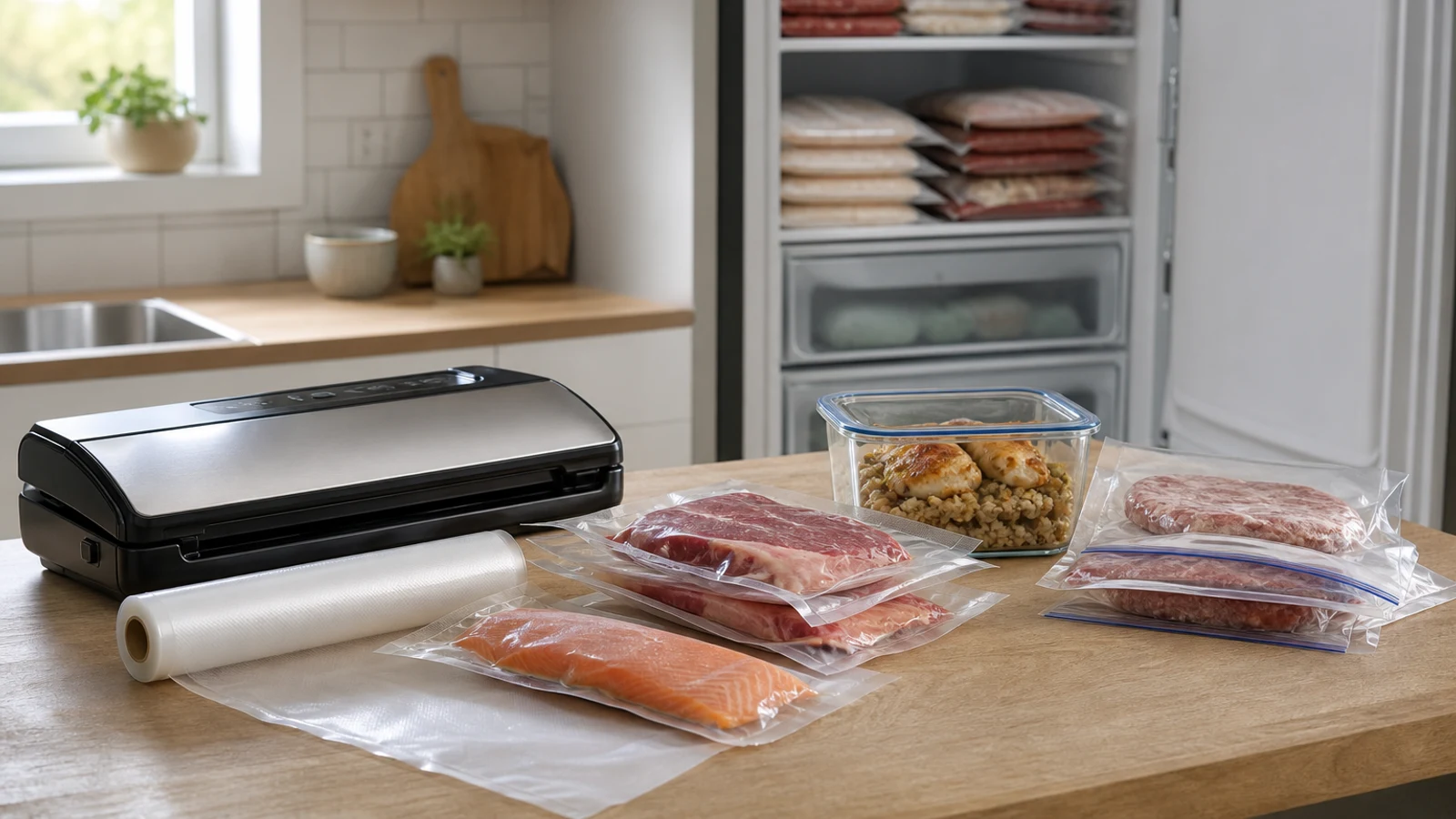
Vacuum Sealer Vs. Standard Food Storage
| Decision Point | Vacuum Sealer | Containers And Freezer Bags |
|---|---|---|
| Best use | Longer freezer storage, bulk portions, meal prep, sous vide | Leftovers, short-term refrigerator storage, everyday lunches |
| Protection from freezer burn | Strong, when the seal remains intact and air is removed | Good to moderate, depending on bag fit and trapped air |
| Setup and cleanup | Requires bags, sealing space, and occasional wiping | Usually faster and easier for small portions |
| Storage flexibility | Compact flat packages; contents may be compressed | Reusable containers protect delicate foods and stack well |
| Wet or liquid foods | Can be awkward unless frozen first or sealed with suitable equipment | Containers are easier for soups, sauces, and stews |
| Ongoing cost | Requires rolls or specialty bags for many uses | Bags and containers may be reusable or already on hand |
| Best value when | You use it regularly and prevent waste or freezer damage | You store food for only a few days at a time |
A vacuum sealer is not automatically a money-saving appliance. It is a packaging tool that removes much of the air from a bag and then heat-seals the opening. That can protect food quality, make freezer portions more compact, and reduce the dry, leathery patches associated with freezer burn. But it also adds bags, preparation steps, storage space, and cleanup to a task that ordinary containers already handle well.
The practical question is not whether vacuum sealing works. It is whether your household stores enough food for long enough to benefit from it. Someone who buys family-size packages of meat and freezes them for several weeks may use a sealer constantly. Someone who cooks dinner and eats the leftovers within two or three days may find that containers are faster and more convenient.
The clearest bottom line is this: buy a vacuum sealer for a recurring storage problem, not because it sounds like a general-purpose kitchen upgrade. If your freezer is full of poorly wrapped portions, your bulk purchases develop freezer burn, or your meal-prep routine needs flatter, better-protected packages, it can earn its counter or cabinet space.
What A Vacuum Sealer Actually Improves
The main benefit is reducing air exposure around food. Air can contribute to oxidation, moisture loss, stale flavors, and freezer burn. A tight seal also keeps portions from shifting around in a bag, which can make a freezer easier to organize and help food fit into narrow spaces.
That benefit is most noticeable over longer storage periods. Sealing a chicken breast that will be cooked tomorrow is unlikely to transform the meal. Sealing individually portioned chicken that may remain frozen for several weeks or months is a more meaningful use. The same logic applies to ground meat, fish, steaks, shredded cheese, chopped vegetables intended for cooking, and prepared meals.
Vacuum sealing can also improve portion control. You can divide bulk purchases into meal-sized packages before freezing instead of repeatedly opening and resealing a large package. Flat packages often freeze and thaw more efficiently than bulky containers, although the shape is less protective for delicate foods and can make stacking awkward if portions are inconsistent.
When It Is Worth Buying
You regularly buy in bulk. A vacuum sealer makes more sense when a large package is cheaper per pound but too much to use before its quality declines. Portioning before freezing can let you take advantage of bulk pricing without exposing the entire package to repeated air and moisture.
You meal prep for more than a few days. Prepared proteins, vegetables, and some complete meals can be sealed in individual portions for the freezer. The appliance is especially useful when your routine involves preparing several meals at once rather than storing one container of leftovers in the refrigerator.
You want better freezer organization. Flat, labeled packages can use freezer space efficiently, particularly in a drawer or chest freezer. This works best when you seal consistent portions and label each package with the food and date before it goes into storage. A vacuum sealer will not organize a freezer by itself; it simply gives you a more compact format to organize around.
It is also a strong fit if you cook sous vide, preserve garden produce for the freezer, process game or large quantities of fish, or frequently store expensive ingredients. In these cases, the sealer is doing a specialized job often enough to justify its workflow.
Choose a vacuum sealer if several of these statements are true
- You freeze meat, fish, or prepared food every week or two.
- You buy family-size or warehouse-club packages and divide them into portions.• You have experienced freezer burn or torn freezer bags.• You have enough freezer space to store food for later rather than only a few days.• You are willing to buy compatible bags and label packages consistently.• You cook sous vide or have another regular use beyond occasional leftovers.
When It Is Probably Not Worth It
A vacuum sealer is less compelling if most food in your home is eaten fresh or within a few days. Standard containers are often better for refrigerator leftovers because they are quick to open, easy to wash, and convenient for reheating. Removing air from a package does not create a reason to keep food longer than safe storage guidance allows.
It may also be unnecessary if you already use good freezer bags correctly. Pressing out excess air, freezing food promptly, avoiding overfilled bags, and using a double layer for longer storage can provide acceptable results for many households. The improvement from vacuum sealing is real, but it is not equally valuable for every item or every storage period.
Small kitchens should treat counter and cabinet space as part of the buying decision. Many sealers are compact compared with larger appliances, but you still need a clear surface, access to bags, and a place to store the machine. If retrieving it feels inconvenient, usage often drops quickly. An appliance that is technically useful but rarely accessible is poor value.
Skip the purchase for these situations:
- You mainly store leftovers for one to three days.• You rarely freeze food.• You do not buy food in bulk or prepare meals ahead.• You dislike single-use packaging or do not want to manage bag rolls.• Your kitchen has no convenient place for the sealer.• You expect vacuum sealing to make perishable food safe at room temperature.• You primarily store soups, sauces, or other liquid-heavy foods and do not want to freeze them first.
The Food-Safety Limits Matter More Than The Marketing
Vacuum sealing reduces oxygen in the package, but it does not sterilize food or stop all microbial growth. Perishable meat, poultry, seafood, and cooked foods still need proper refrigeration or freezing. Keep refrigerated food at 40°F or below and keep long-term frozen food at 0°F or below. Do not treat a sealed bag as shelf-stable simply because it looks airtight.
Vacuum sealing is not a substitute for canning, dehydration, pasteurization, or other validated preservation methods. It can extend quality and help limit freezer burn, but safe storage still depends on temperature, handling, cooking, and timing. Labeling the package with the date is important because an airtight bag can make old food look deceptively fresh.
For frozen food, thaw sealed packages in the refrigerator or use another safe method appropriate for the food. If a package leaks, loses its seal, smells unusual, or has been stored under uncertain temperature conditions, do not assume the vacuum process makes it safe. When in doubt, follow food-safety guidance rather than relying on the package appearance.
Everyday Foods That Work Well
Firm, relatively dry foods are generally the easiest place to start. Meat, fish, hard cheese, coffee beans, nuts, and dry ingredients can benefit from reduced air exposure, although pantry storage still depends on the food and packaging guidance. Vacuum sealing is particularly practical for foods headed into the freezer.
Prepared meals can work well when portions are cooled safely before packaging and freezing. Flat packages of cooked meat, rice-based meals, or casseroles can save space, but avoid compressing foods whose texture or appearance matters. Label everything before stacking it, because sealed packages can be difficult to identify once frozen.
Some foods need extra care. Soft bread, delicate berries, pastries, chips, and easily crushed produce can be flattened by the vacuum. Freeze fragile items separately first, use a gentler setting if available, or choose a rigid container instead. For flour, sugar, spices, and other fine powders, particles can be drawn toward the sealing area and interfere with the seal unless you use an appropriate technique.
Liquids Are The Main Everyday Hassle
A standard external vacuum sealer can pull free liquid toward the pump and sealing strip. That can produce a weak seal, contaminate the machine, or create a frustrating cleanup job. Soups, marinades, sauces, and juicy foods are not impossible, but they require planning.
The common workaround is to freeze liquid-heavy food until solid, then seal it. You can also use a suitable container or choose equipment designed to handle liquids more effectively. For many households, this is a deciding factor: if most of your storage consists of soup and stew, containers may be the better everyday tool even if a vacuum sealer would be useful for meat and dry foods.
What To Look For In A Vacuum Sealer
For most home users, an external edge sealer is the practical starting point. It draws air from a textured bag or roll and seals the open end. These machines are generally more approachable for ordinary freezer portions, though bag compatibility and liquid handling vary.
A chamber sealer is a different class of appliance. It places the entire bag inside a chamber, which can handle liquid-heavy foods more effectively and may use smooth bags. It is usually larger, more expensive, and harder to justify for occasional household use. It makes more sense for frequent sous vide cooking, serious food processing, or high-volume packaging.
Before buying, check the workflow rather than focusing only on suction claims or extra buttons. Look for:','• Bag and roll compatibility that fits your budget and storage habits.• A seal-only function for bags that do not need full vacuuming.• A pulse or gentle setting for delicate foods.• A moist-food setting if you often package juicy ingredients.• A cutter or roll storage if it will make repeated use less frustrating.• A removable drip tray or surfaces that are easy to wipe clean.• A width that accommodates the portions you actually prepare.• A storage plan that keeps the machine accessible.
The Ongoing Cost And Workflow
The purchase price is only part of the calculation. You also need bags or rolls, labels, freezer space, and time. Rolls can reduce waste because you cut the bag to the length you need, but they add a measuring and sealing step. Pre-cut bags are faster but may not fit every portion efficiently.
There is also a learning curve. You need enough empty space at the top of the bag for the machine to seal, a clean and dry sealing area, and consistent portion sizes. Wet foods may need pre-freezing, and sharp bones or edges may require protection so they do not puncture the bag. These are manageable details, but they explain why a sealer can remain unused after an enthusiastic first week.
A useful test is to estimate your real monthly uses. Count bulk meat portions, freezer meals, or other packages you would genuinely seal. If the number is small, try improving freezer bags and containers first. If you would use a sealer several times per month for food that otherwise suffers quality loss, the recurring convenience and reduced waste may justify the consumables.
Better Alternatives For Many Households
Reusable glass or plastic containers are often the best choice for refrigerator leftovers, soups, sauces, soft foods, and foods you plan to reheat. They protect delicate textures and avoid the need to cut and seal a new bag for every portion.
Standard freezer bags can be effective when you remove excess air, freeze food promptly, and avoid keeping portions longer than needed. A straw-assisted method is sometimes used to remove air, but it should not replace safe handling or create a contamination risk. For short-term freezer storage, the convenience may outweigh the extra protection of a vacuum seal.
Freezer paper, foil, or a double-bagging approach can also be adequate for irregularly shaped foods. The best system may be mixed: containers for the refrigerator and liquids, freezer bags for quick-turn items, and vacuum-sealed bags for meat, fish, bulk purchases, and food that will remain frozen longer.
A Simple Buying Decision
Buy a vacuum sealer if you can identify a repeatable pattern: you purchase more food than you can use immediately, freeze individual portions, and care about preserving quality for weeks or months. The strongest case combines frequent use with expensive or waste-prone food, such as meat, seafood, prepared meals, or garden produce.
Wait if your interest is mostly curiosity, social-media meal-prep inspiration, or the hope that sealing alone will eliminate food waste. A sealer cannot compensate for overbuying, poor labeling, an overcrowded freezer, or meals that do not fit your routine. Start with a storage system you will actually maintain.
If you do buy one, begin with a narrow use case. Portion and seal one category—such as bulk meat or freezer meals—rather than trying to package everything. After a month, evaluate whether the machine saved time, improved food quality, or reduced waste. That practical trial will tell you more than a feature list.
Bottom Line
A vacuum sealer is worth it for regular freezer users, bulk shoppers, meal preppers, sous vide cooks, and households that repeatedly lose food quality to air exposure. It is less worthwhile for people who mostly store short-term leftovers, rarely freeze food, or prefer the simplicity of containers.
The best everyday setup is often not vacuum sealer versus everything else. It is a combination: containers for quick refrigerator storage and liquids, ordinary freezer bags for short-term use, and vacuum-sealed bags for longer freezer storage and carefully portioned foods. Buy the appliance when that combination solves a problem you already have—not when you are hoping it will create a new habit.
Go Deeper Before You Choose
For more context, see kitchen upgrades worth considering in 2026.
Research References
These sources informed the factual background for this guide. BuyingView applies its own editorial judgment to the purchase decision.
Questions & Answers
Useful follow-up questions that often change the buying decision.
Does vacuum sealing make food last forever?
No. It can help preserve quality and reduce freezer burn, but it does not make perishable food shelf-stable or eliminate the need for refrigeration, freezing, safe handling, and date labeling.
Is vacuum sealing worth it for leftovers?
Usually only when leftovers will be frozen for longer-term storage. For food you will eat within a few days, containers are generally faster, easier to clean, and more convenient.
Can you vacuum seal soup or other liquids?
You can, but standard external sealers may draw liquid into the machine. Freezing the food first or using a suitable container is usually easier. Chamber sealers handle liquids more effectively but cost more and take up more space.
Does vacuum sealing prevent freezer burn?
It can substantially reduce air exposure and therefore help limit freezer burn when the package is sealed properly. It cannot prevent damage from temperature fluctuations, poor handling, or an eventual loss of the seal.
What foods should not be vacuum sealed?
Be cautious with delicate foods that crush easily, very fine powders, and liquid-heavy foods. Vacuum sealing also should not be used as a substitute for validated preservation methods for perishable food.
Should I buy a chamber vacuum sealer?
Most households should start with an external sealer. A chamber model is more appropriate for frequent liquid-heavy packaging, high-volume food preparation, or serious sous vide use because it is larger and more expensive.