What Size Air Fryer Do I Need? A Practical Capacity Guide
By BuyingView Editorial Team · Published September 21, 2026 · 12 min read
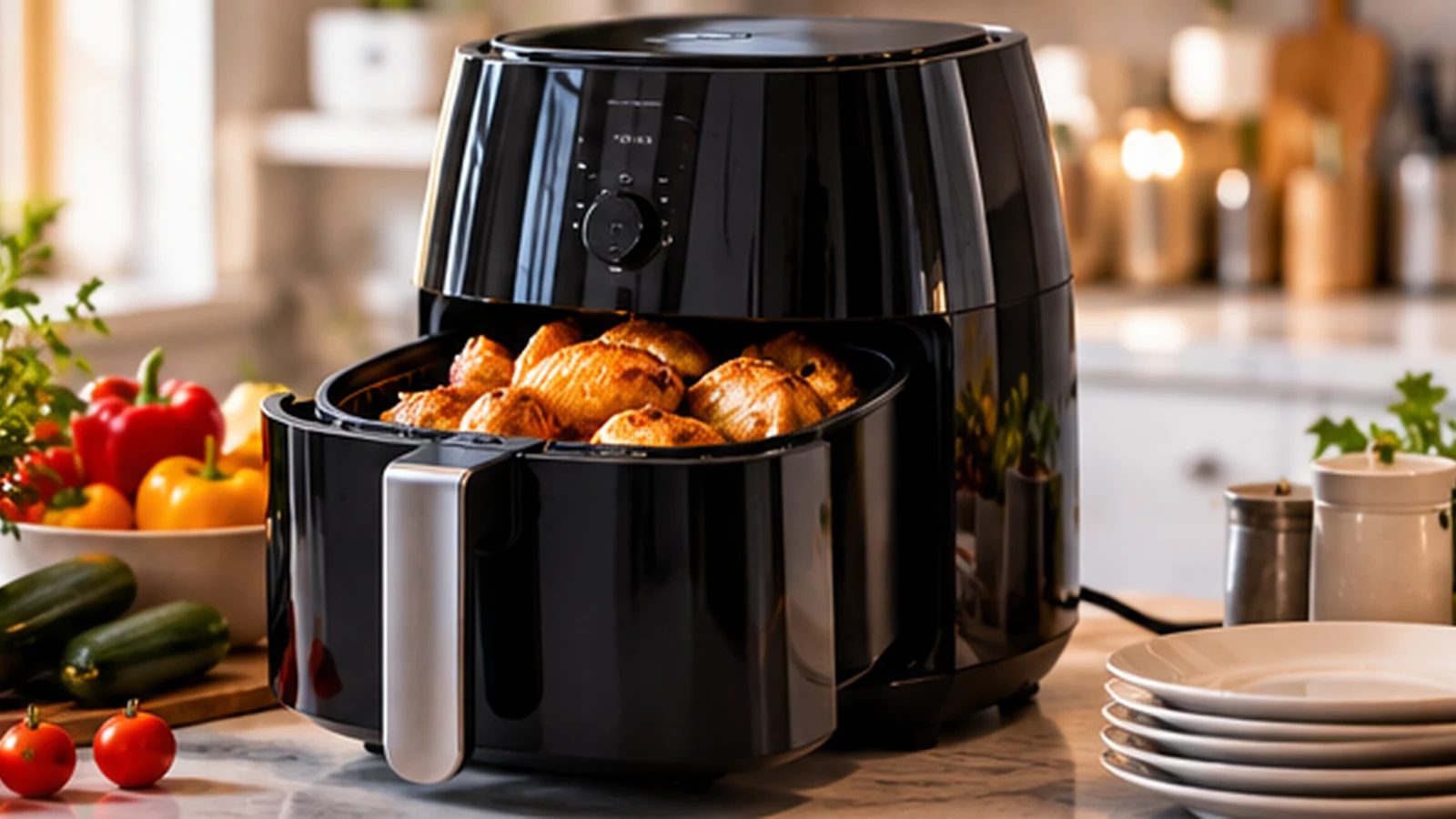
Air fryers are sold with a single capacity number, usually in quarts or liters, but that number describes volume rather than usable browning area. Two baskets with the same advertised volume can feel completely different if one is tall and narrow and the other is wide and shallow.
That matters because air frying depends on airflow. Filling the basket to the top may fit more food, but it can also block circulation and create uneven browning. The number you should care about is how much food can sit in a reasonably open layer.
Start with the meals, not the number of people
Household size is a useful starting point, not the final answer. One person who meal-preps chicken and vegetables may need more basket area than a couple who mainly reheats snacks. A family that cooks separate side dishes may benefit from two baskets even if the total capacity is similar to one large basket.
Write down three foods you expect to cook most often. Estimate how much of each you normally make at once. That gives you a much better capacity target than choosing a quart number from a generic chart.
A rough size guide
For one person, a 2–3 quart air fryer can be enough for snacks, reheating, and small portions. The compromise is that full meals may need multiple batches.
For one or two people, roughly 4–6 quarts is often the most flexible range. It gives you more room to spread food out without making the appliance overwhelmingly large.
For three or four people, around 5–7 quarts or a wide dual-basket design can reduce batch cooking. For larger households, 7–8 quarts or more may be helpful, but basket geometry becomes more important than the headline capacity.
These are rules of thumb, not standards. Always compare the actual basket dimensions and the type of food you plan to cook.
Wide baskets usually beat deep baskets
A wide basket lets you arrange more food in a single layer, which improves contact with moving hot air. A deep basket may advertise impressive capacity but encourage stacking.
If two models have similar volume, compare the width and length of the cooking area. This is especially important for chicken pieces, fish fillets, burgers, vegetables, and anything you want browned on multiple sides.
Think in batches
Imagine your usual serving of fries, vegetables, or protein. If that amount would cover the basket floor without piling up, the size is probably workable. If you would need two batches every time, decide whether that is acceptable.
Batch cooking is not automatically a deal-breaker. For one or two people, two short batches may still be faster and easier than heating a full oven. For a family dinner, repeating the cycle while the first batch cools can become frustrating.
The frozen-food test
Frozen foods are one of the most common reasons people buy air fryers. Look at the portion size you normally cook, not the serving size on the package. If you routinely cook half a bag of fries or several breaded pieces at once, choose a basket that lets most of that food spread out.
People often buy too small because a compact model looks easier to store. Then they compensate by overfilling it, which defeats the airflow advantage that made them want an air fryer in the first place.
The meal-prep test
If you plan to meal prep, capacity needs rise quickly. Cooking several portions of vegetables or protein works best when you can spread food out. A larger basket can save cycles even for a one-person household.
On the other hand, if you cook fresh every day and only need one serving at a time, a giant air fryer wastes counter space and may be more awkward to clean.
Counter footprint can be the limiting factor
Measure the exact place where the air fryer will live. Include space for the handle, airflow around the appliance, and room to pull out the basket without hitting a wall or another appliance.
A larger model may technically fit on the counter but make the kitchen harder to use. If the only storage option is a high shelf, consider the weight and how often you are realistically willing to move it.
Single basket or dual basket?
A single wide basket is simple and gives you flexible space for one food. A dual-basket model is useful when you frequently cook two foods that need different times or temperatures.
The trade-off is that the total capacity is split. Each compartment can be narrower than expected. If your priority is a large piece of food or one wide layer, a single basket may be more useful than two smaller zones.
Round basket or square basket?
Square and rectangular baskets generally use counter footprint more efficiently because foods themselves are often arranged in rows. Round baskets can be perfectly good, but corners add usable surface area when you are trying to fit several pieces without overlap.
Do not choose by shape alone. Removable parts, handle comfort, coating quality, and how easily the basket slides in and out matter in everyday use.
How much bigger should you buy for guests?
If you host occasionally, do not necessarily size your everyday appliance around the largest dinner of the year. Buying a much larger air fryer for rare events can make daily use less convenient.
A better approach is to size for normal life plus a little headroom. When guests come, use the conventional oven or cook an extra batch. Counter space is permanent; dinner parties are occasional.
A practical product example
The COSORI Air Fryer in the BuyingView catalog is an example of the mainstream basket-style format. Use it as a reference point for comparing footprint, basket geometry, removable parts, and how much food you expect to cook — not as a reason to ignore your own space and portion needs.
Bottom line
Choose the smallest air fryer that can handle your normal meal without chronic overcrowding. For many one- or two-person households, that means moving beyond the tiniest snack-size models but stopping well short of the largest machines.
If you are deciding whether an air fryer is the right appliance at all, read Air Fryer vs Toaster Oven: Which One Makes More Sense?. For the broader kitchen plan, see 5 Kitchen Upgrades Worth Buying in 2026.
Featured in this guide

COSORI Air Fryer
A countertop air fryer for crisping food with little oil.
Frequently asked questions
What size air fryer is best for one person?
A small 2–3 quart model can work for snacks and small portions, while 4 quarts or more gives more flexibility for full meals.
What size air fryer is best for two people?
Roughly 4–6 quarts is a common practical range, but basket width and your normal portion size matter more than the label.
Can an air fryer be too big?
Yes. Oversized models take more counter space, can be heavier to move, and may be unnecessary if you cook very small portions.
Is a 6-quart air fryer enough for a family of four?
It can be, depending on basket shape and the foods you cook, but some meals may still require batches.
Is a dual-basket air fryer better?
It is better when you often cook two foods separately. A single wide basket may be better for larger pieces or one big batch.
Should I fill the basket completely?
Usually not if you want strong browning. Leaving space for airflow generally gives more even results.