Air Fryer vs Microwave for Reheating: Which One Is Better for Leftovers?
By BuyingView Editorial Team · Published September 21, 2026 · 11 min read
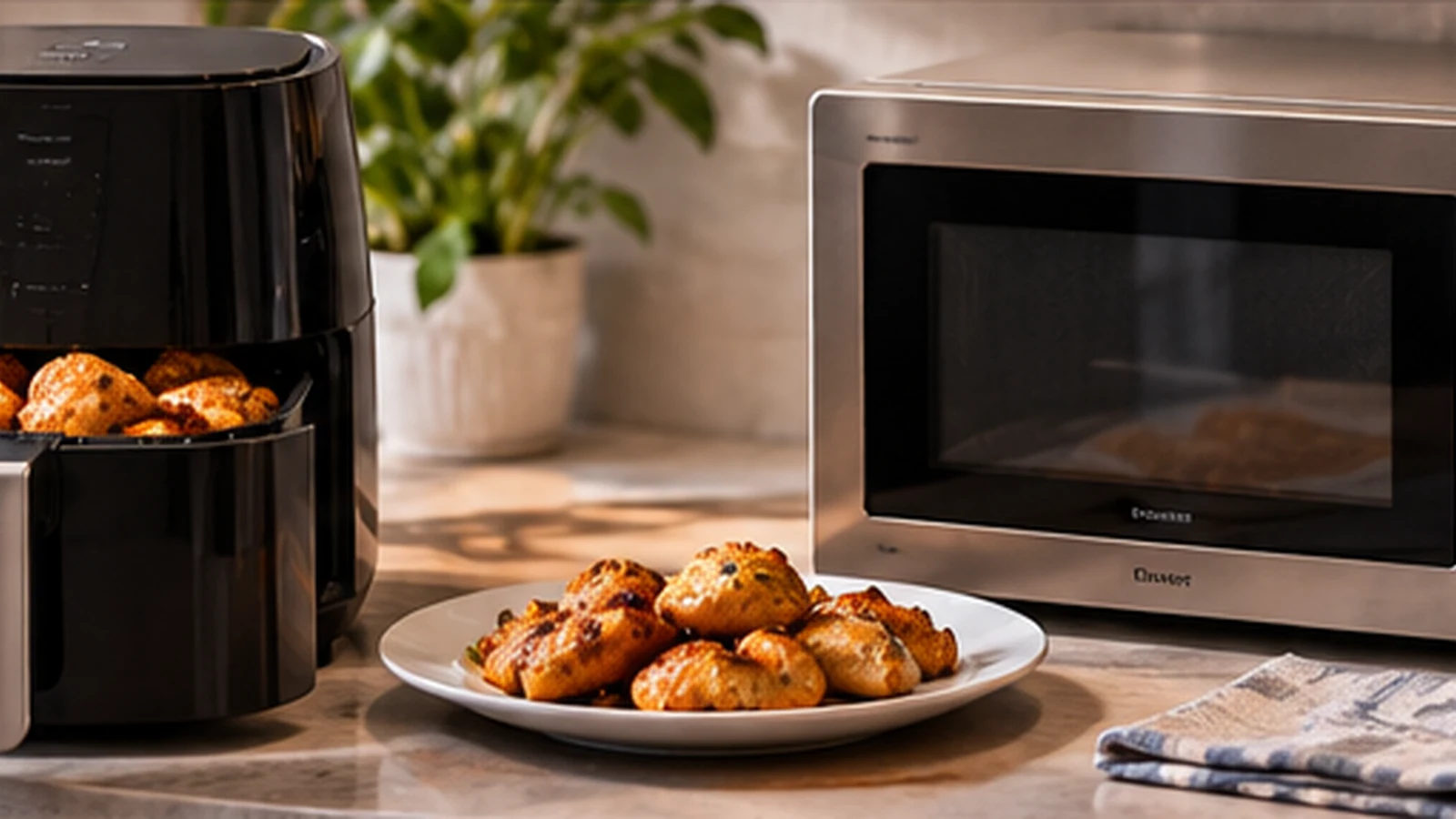
The microwave and air fryer are often compared as if one should replace the other. For reheating, that is usually the wrong question. They transfer heat differently and are good at different jobs. A microwave heats food quickly by exciting water molecules throughout the food, while an air fryer surrounds the surface with moving hot air. One is built around speed and moisture; the other is built around surface browning and crispness.
That difference becomes obvious with leftovers. A bowl of rice can be hot in a microwave before an air fryer has done much useful work. A slice of pizza can come out limp from the microwave but regain a crisp base in an air fryer. The better choice depends on the texture you want to preserve or restore.
What the microwave does best
A microwave is difficult to beat for foods that contain a lot of moisture or that you want heated quickly without further browning. Rice, pasta with sauce, soup, curry, cooked vegetables, casseroles, and many one-pot meals all fit naturally into a microwave-safe container.
It also handles uneven shapes well because you are not trying to expose every surface to moving air. Stirring halfway through can help even out hot and cold spots. For a weekday lunch, the microwave often wins simply because the total process can take only a few minutes.
The Toshiba Countertop Microwave Oven is one example from the BuyingView catalog. The useful buying criteria are straightforward controls, an interior large enough for your normal plate or bowl, and predictable reheating rather than a long list of specialty buttons.
What the air fryer does best
An air fryer is strongest when the food was originally crisp, browned, roasted, or baked and you want some of that texture back. Fries, breaded chicken, roasted potatoes, pizza, fried appetizers, and roasted vegetables are common examples.
The moving hot air dries and browns the outside while the interior reheats. That is why an air fryer can revive foods that a microwave tends to soften. It takes longer, but the result can feel much closer to freshly cooked food.
A basket-style option such as the COSORI Air Fryer illustrates the format. If reheating is your main use, basket width and easy cleanup matter more than a long list of cooking presets.
Pizza: air fryer usually wins on texture
Pizza shows the difference clearly. A microwave can heat a slice quickly, but steam can soften the crust. An air fryer takes longer, yet it can restore a firmer base and re-melt the cheese without making the slice as soggy.
For one or two slices, the air fryer is often the more satisfying choice. For several slices, a toaster oven or conventional oven can offer more usable surface area. If pizza is one of your main use cases, our Air Fryer vs Toaster Oven comparison is also worth reading.
Fries and breaded foods: air fryer advantage
Fries, nuggets, breaded cutlets, and similar foods lose appeal when their exterior turns soft. An air fryer gives moisture somewhere to escape while reheating the surface. A microwave traps more steam around the food, which is fast but usually works against crispness.
The key is not to overcrowd the basket. Leaving gaps around the food improves airflow. If you routinely reheat larger portions, basket size becomes important; our air-fryer size guide explains how to think about usable cooking area rather than quart numbers alone.
Rice and pasta: microwave advantage
Rice and sauced pasta are almost the opposite case. They benefit from retaining moisture rather than drying at the surface. A covered microwave-safe container with a small amount of added moisture, when appropriate for the food, can reheat these dishes quickly without turning the edges hard.
An air fryer can work for baked pasta or foods where you intentionally want a browned top, but it is not the natural tool for a bowl of rice or spaghetti. Choosing the air fryer simply because it feels newer can add time without improving the result.
Soup, curry, and stews
Liquid and heavily sauced foods belong in the microwave or on the stovetop, not in a basket air fryer. The microwave lets you heat the entire portion in the same container you plan to eat from, and stirring helps distribute heat.
This is one reason an air fryer does not truly replace a microwave in many homes. It may replace some oven use, but it is a poor substitute for heating liquids and moist meals.
Vegetables depend on how they were cooked
Steamed vegetables usually do better in the microwave because you want to preserve moisture. Roasted vegetables often improve in the air fryer because the surface can dry and brown again. The original texture of the food is a good clue to the reheating method that will work best.
If a vegetable was crisp-edged when you first ate it, the air fryer is likely to restore more of that character. If it was soft and moist, the microwave is usually faster and gentler.
Speed versus result
The microwave wins on speed. There is little debate about that. It is especially valuable when you are reheating a single bowl or plate and simply want the food hot.
The air fryer asks you to trade a few extra minutes for surface texture. That can be worth it for pizza or fried foods and unnecessary for soup or rice. The useful decision is not which appliance is faster overall, but whether the extra time changes the part of the food you care about.
Energy and portion size
For small portions, both appliances can avoid heating a full conventional oven. The exact energy use depends on appliance wattage, cook time, and the food itself, so broad claims that one is always cheaper are not very useful.
Instead, think about total runtime. A microwave may run for only a few minutes. An air fryer may operate longer but still use a smaller chamber than a conventional oven. For occasional leftovers, convenience and food quality are usually more important than tiny differences in one reheating cycle.
Cleanup
Microwave cleanup is often limited to the container and an occasional wipe of the interior. Air fryers add a basket or crisper plate that may need washing, particularly after oily foods.
If you mainly reheat messy sauced meals, the microwave is easier. If your air fryer basket is dishwasher-safe and you mostly reheat dry foods, the extra cleanup can be minor. Check the exact manufacturer's cleaning guidance before assuming removable parts can go in a dishwasher.
Should you own both?
For many households, yes. The microwave handles fast, moist reheating; the air fryer handles crisp reheating and small-batch roasting. The overlap is smaller than it first appears.
If counter space is tight, look at what you reheat most often. A person who saves rice, soup, and pasta every week will probably miss a microwave more. A person who reheats pizza, fries, and breaded foods may get more satisfaction from an air fryer.
Bottom line
Choose the microwave when the priority is speed, moisture, liquid foods, rice, pasta, or a full plate that simply needs to be hot. Choose the air fryer when the priority is restoring a crisp or browned surface. Neither is universally better; each is better at a different kind of leftover.
If you are deciding whether to buy an air fryer in the first place, continue with Air Fryer vs Toaster Oven and What Size Air Fryer Do I Need?.
Featured in this guide

COSORI Air Fryer
A countertop air fryer for crisping food with little oil.

Toshiba Countertop Microwave Oven
A compact microwave with simple preset controls.
Frequently asked questions
Is an air fryer better than a microwave for reheating pizza?
Usually for texture. An air fryer can restore a crisper crust, while a microwave is faster but may soften it.
Which is better for reheating rice?
A microwave is generally more practical because it reheats moist foods quickly and works well with covered containers.
Can an air fryer replace a microwave?
Not completely for many households. Air fryers are poor substitutes for reheating liquids, soups, and many moist meals.
Which reheats fries better?
An air fryer usually produces a better result because moving hot air helps dry and crisp the surface.
Which is faster?
A microwave is generally much faster for reheating most everyday portions.
Do I need both appliances?
Not necessarily, but they complement each other well if you frequently reheat both moist meals and crisp foods.