Portable AC Vs Window AC: Which Trade-Offs Matter Most?
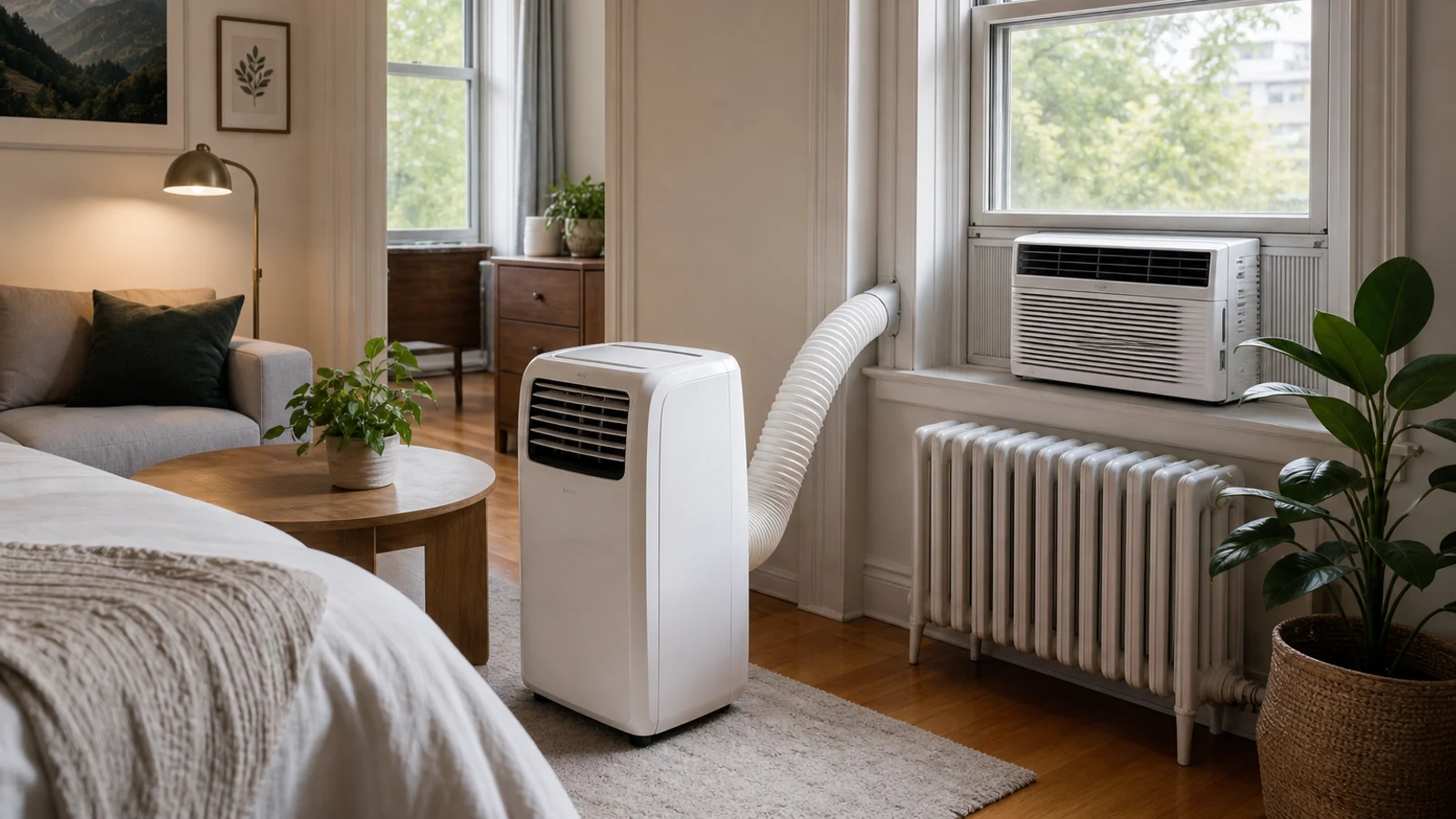
Portable AC Vs Window AC At A Glance
| Decision Point | Portable AC | Window AC |
|---|---|---|
| Best fit | Renters, casement windows, restricted buildings, flexible placement | Rooms with compatible windows and permission for a mounted unit |
| Cooling performance | Usually less effective for its advertised capacity; depends heavily on hose and window sealing | Generally stronger and more consistent for the same broad size class |
| Energy use | Often higher because the compressor and exhaust system are inside the room | Usually more efficient, especially when properly installed and certified |
| Noise | Mechanical components remain indoors, so fan and compressor noise are more noticeable | Some operating noise is outside the room, though the indoor fan is still audible |
| Installation | Window kit and exhaust hose; no heavy unit hanging from the window | Requires lifting, brackets, sealing, and a compatible window |
| Mobility | Can be rolled and stored, but units are heavy and hoses must be reinstalled | Mostly stationary and may need seasonal removal |
| Humidity management | May require drainage or tank maintenance in humid conditions | Usually drains condensation outdoors through the unit or installation path |
| Typical compromise | Convenience and compatibility in exchange for floor space and efficiency | Better cooling and operating value in exchange for installation effort |
Portable ACs and window ACs solve the same basic problem, but they do it in very different ways. A window unit places much of the heat-producing hardware outside the room. A portable unit keeps the equipment indoors and sends hot air out through a hose. That difference affects nearly everything you notice: cooling strength, noise, efficiency, floor space, installation, and how much heat can leak back into the room.
For many households, a window AC is the better performer if it can be installed safely and legally. Portable ACs make more sense when the window design, lease, building rules, or room arrangement rules out a conventional window unit. The important question is not simply which type is “best,” but which compromise creates fewer problems in your specific room.
Cooling Performance And Energy Use
Window ACs usually have the performance advantage because the compressor and condenser sit outside the room. That makes it easier to reject heat without adding as much equipment, airflow, or mechanical noise to the occupied space. A properly sized and well-sealed window unit can cool a room more directly and may use less electricity than a similarly marketed portable unit.
Portable AC capacity labels require more caution. Modern portable models use standardized testing that includes a seasonally adjusted cooling capacity, often called SACC, rather than relying only on a less representative headline number. Compare the applicable capacity metric consistently, and do not assume that a portable unit labeled with a high BTU figure will cool like a window unit with the same number.
Single-hose portable ACs can pull replacement air from the room or nearby spaces as they exhaust hot air outside. That can create negative pressure and draw warm, humid air through cracks, doors, or other parts of the home. Dual-hose designs separate intake and exhaust more effectively, but they still need a well-sealed window panel and may not match a window unit’s overall efficiency or cooling consistency.
Installation, Windows, And Building Rules
Installation constraints are the strongest reason to choose portable. A standard window AC typically expects a compatible double-hung window, a sturdy sill, enough opening width, and a setup that can safely support the unit. Casement, sliding, unusually narrow, or deeply recessed windows may require specialized models or make a portable unit more practical.
A portable AC still needs an outside exhaust path. Its window kit must seal around the hose, and the hose should be kept as short and straight as the manufacturer allows. A loose panel, open gap, or unnecessarily long hose can reduce cooling and allow hot air back inside. Portable does not mean installation-free; it means the installation is usually lighter and more reversible.
Before buying either type, check your lease, condominium rules, homeowner association requirements, and local safety expectations. Some buildings prohibit window units because of weight, falling-object risk, facade appearance, electrical limitations, or concerns about drainage. Others allow only specific brackets or professionally supported installations. If a building prohibits window units, do not assume a portable AC is automatically acceptable; the exhaust panel and electrical load may still need approval.
Room Layout, Noise, And Everyday Comfort
Portable ACs take up valuable floor area, often near the only practical window. Measure the unit’s footprint, hose bend, clearance around the air intake, and the route to the electrical outlet. A model that technically fits beside a bed or desk may make the room harder to use, especially in a small bedroom.
Window ACs preserve floor space, but they can block the lower portion of a window and may interfere with curtains, blinds, furniture, or emergency egress. Never install a unit in a window that must remain clear as a required escape route unless the installation is specifically approved and still meets applicable safety requirements.
Noise is personal, but the design creates a predictable difference. Portable models keep the compressor and other mechanical components inside the room, so their sound is more present. Window units also make noise indoors, but placing some hardware outside can reduce the character and intensity of the sound. For bedrooms, look for verified sound information, sleep or low-fan modes, and—where available—variable-speed compressor operation rather than relying on a vague “quiet” label.
Sizing, Humidity, And Maintenance
Sizing should start with the room or connected area you actually intend to cool, not the largest number printed on a product page. A unit that is too small may run continuously without reaching a comfortable temperature. One that is too large can cool the air quickly without removing enough moisture, leaving the room chilly but clammy. Sun exposure, ceiling height, insulation, kitchen heat, and the number of occupants can change the requirement.
For either type, use the manufacturer’s sizing guidance and account for the room’s real conditions. If you are cooling a bedroom with the door closed, size for that room. If you are trying to cool an open living area, hallway, and adjacent rooms, expect weaker results than the square-footage claim suggests. A fan can help distribute cooled air, but it cannot turn a single-room unit into central cooling.
Maintenance is easy to underestimate. Both types need regular filter cleaning, and heavy-use periods may require more frequent attention. Portable models may also need condensate drainage depending on humidity, operating mode, and design. Read the instructions for tank alerts, continuous-drain options, hose placement, and storage. If moisture control is a major concern, compare the air conditioner’s dehumidification behavior with the broader considerations covered in a dehumidifier buying guide.
Which One Fits Your Situation?
Choose A Window AC If
- You have a compatible, structurally sound window.
- Your building permits the installation.
- You expect to run the unit frequently or for long hours.
- Lower operating cost and stronger cooling matter more than easy removal.
- You want to preserve floor space.
- You can safely lift, secure, seal, and eventually remove the unit.
Choose A Portable AC If:
- Your windows are casement, sliding, unusually shaped, or unsuitable for a conventional unit.
- Your lease or building rules prohibit window-mounted equipment but allow a vented portable model.
- You need to store the equipment seasonally or move it between rooms occasionally.
- You cannot safely support a heavy unit in the window.
- You accept that the unit will occupy floor space and may be louder.
- You are willing to seal the exhaust kit carefully and manage drainage if required.
Features Worth Paying Attention To
For window ACs, efficiency certification, appropriate capacity, installation hardware, adjustable airflow, filter access, and sound performance are more important than a long list of app features. Variable-speed operation can improve efficiency and comfort by reducing abrupt starts and stops. Good sealing materials also matter: an efficient unit can perform poorly if warm outdoor air leaks around the installation.
For portable ACs, pay particular attention to the hose design, the stated standardized cooling capacity, window-kit quality, intake and exhaust arrangement, condensate handling, caster quality, and clearance requirements. A dual-hose design may be worth considering when portable is your only practical option, especially in a hot room where single-hose negative pressure would be a problem. It is not a guarantee of window-unit-level performance.
For either type, consider the electrical setup before purchase. Air conditioners can draw substantial power, and an overloaded circuit can trip breakers or create a safety concern. Follow the manufacturer’s instructions, use a suitable wall outlet, and do not treat an extension cord or power strip as a universal solution. If the outlet, circuit, or installation is questionable, ask a qualified professional before operating the unit.
When Not To Buy Either Type
A portable or window AC may be the wrong answer if you need to cool several rooms, have severe insulation problems, or expect reliable whole-home comfort. A single room unit cannot overcome open doors, major solar gain, or a large multi-room layout very efficiently. In those cases, a properly evaluated mini-split or central system may be a better long-term direction, even though the installation cost and complexity are higher.
You may also want to delay the purchase if you cannot safely vent the unit, cannot provide an appropriate electrical circuit, or cannot install it without blocking a required emergency exit. Buying a more powerful model does not solve an unsafe setup. If the room is only uncomfortable during a short heat spell, first consider shading, weather sealing, fans, and reducing indoor heat sources; those measures can improve comfort regardless of the AC type.
The Bottom Line
For most people who can legally and safely install one, a window AC is the more efficient and space-conscious choice for cooling a single room. It usually offers better cooling value and keeps the noisiest hardware partly outside. Its drawbacks are real: lifting, security, window compatibility, seasonal removal, and building restrictions.
A portable AC earns its place when compatibility and reversibility matter more than peak performance. It is especially useful for difficult windows, rentals, and spaces where a mounted unit cannot be supported. Just treat it as a compromise rather than a plug-and-play equivalent to a window unit. Compare standardized cooling capacity, favor careful exhaust sealing, consider dual-hose designs, and leave enough floor and airflow clearance.
The clearest decision rule is simple: choose the window AC if installation is straightforward and permitted; choose portable when a window unit creates an actual structural, regulatory, or practical obstacle. In both cases, correct sizing and careful sealing will matter more than buying the biggest number available.
Go Deeper Before You Choose
For more context, see dehumidifier buying guide.
Research References
These sources informed the factual background for this guide. BuyingView applies its own editorial judgment to the purchase decision.
Questions & Answers
Useful follow-up questions that often change the buying decision.
Is A Portable AC Better Than A Window AC?
Usually not for raw cooling performance or efficiency. A portable AC is better when your window, lease, building rules, or room layout makes a window unit impractical. If both types are viable, a properly sized window AC is generally the stronger value for frequent use.
Are Dual-Hose Portable ACs Worth It?
They can be worth considering when portable is your only realistic option. A dual-hose design can reduce the negative-pressure problem associated with many single-hose units, but performance still depends on capacity, room conditions, hose routing, and how well the window kit is sealed.
Which Is Quieter, A Portable AC Or A Window AC?
There is no guarantee for every model, but window ACs often have a noise advantage because some mechanical components are outside the room. Portable ACs keep the compressor indoors, making their operating sound more noticeable. Check verified sound information and operating modes rather than relying only on marketing language.
Can A Portable AC Cool More Than One Room?
Only with limited results. It may lower temperatures in an open layout, but cooling weakens through doorways and hallways. For dependable comfort, size the unit for the primary enclosed area and use a fan to distribute air rather than assuming a portable AC can replace multi-room cooling.
Do Window ACs Use Less Electricity Than Portable ACs?
They often do when comparing appropriately sized units and similar operating conditions, because window units generally reject heat more directly and avoid some of the airflow losses of portable systems. Actual use depends on efficiency, thermostat settings, insulation, weather, installation quality, and run time.
Should I Buy A Larger AC To Cool Faster?
Not automatically. Oversizing can cool the air quickly without removing enough humidity, producing a damp or clammy room and potentially reducing efficiency. Match capacity to the room and adjust for factors such as strong sun, high ceilings, kitchen heat, and additional occupants.