Steam Mop Vs Spray Mop: Which Fits Your Floors Better?
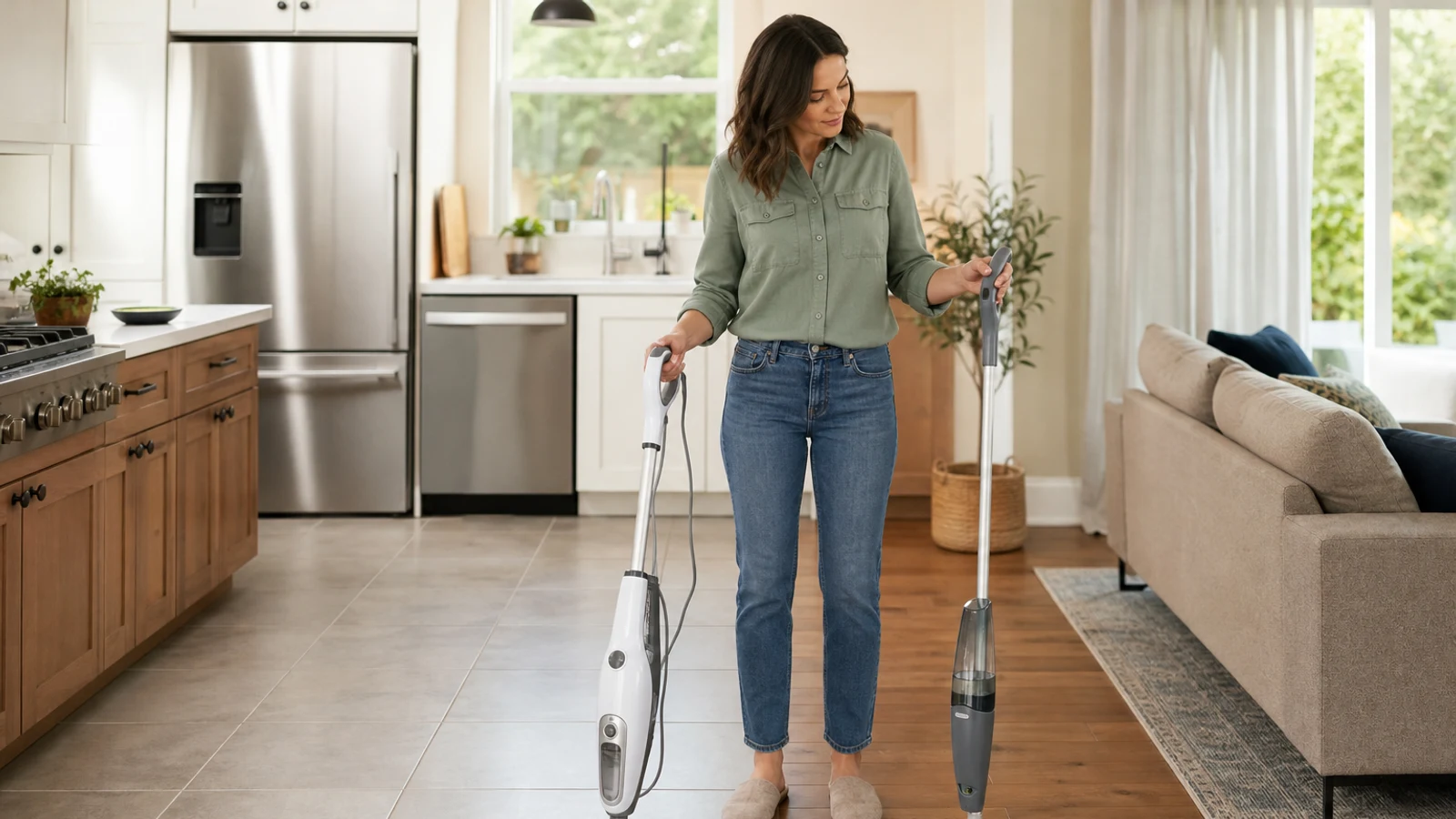
Steam Mop Vs Spray Mop At A Glance
| Decision Point | Steam Mop | Spray Mop |
|---|---|---|
| Best fit | Compatible sealed tile and durable hard surfaces | Hardwood, laminate, vinyl, tile, and mixed flooring when approved cleaner is used |
| Cleaning method | Heated water creates steam and loosens grime | Fine mist of water or floor cleaner plus microfiber agitation |
| Moisture and heat | Uses heat and can expose seams or finishes to steam | Uses a controlled amount of liquid with no added heat |
| Everyday convenience | Requires filling, heating, and pad care | Usually ready immediately and easy to grab for quick messes |
| Cleaning solution | Usually water only; additives may damage the machine | Can use a compatible floor cleaner or water, depending on the mop and flooring |
| Main risk | Warping, finish damage, softened adhesive, or warranty issues on unsuitable floors | Too much liquid, wrong cleaner, streaks, or leaving a wet pad in place |
| Typical buyer | Someone with mostly compatible tile who wants chemical-free deep cleaning | Someone prioritizing floor safety, flexibility, low storage demands, and frequent touch-ups |
The steam mop versus spray mop decision is really a floor-care decision. Steam sounds more powerful because heat can loosen sticky residue and may reduce reliance on cleaning chemicals. A spray mop is less dramatic, but it gives you more direct control over how much liquid reaches the floor and which cleaner touches the finish.
That difference matters. Flooring manufacturers do not agree on one universal steam-mop rule. Some products allow steam under specific conditions, while others prohibit it on laminate, vinyl, wood, or floors with vulnerable seams. A spray mop is not automatically safe either: excessive liquid, harsh cleaners, and dirty pads can also cause problems.
For most households, the spray mop is the lower-risk default. A steam mop becomes compelling when your home has mostly compatible sealed tile or another hard surface whose manufacturer explicitly permits steam.
How Steam Mops And Spray Mops Work
A steam mop heats water in a small tank and directs steam through or around a microfiber pad. The heat helps soften grime, while the pad absorbs loosened dirt. Because the process generally uses water rather than detergent, it appeals to shoppers who want a chemical-free routine or who dislike residue from some floor cleaners.
A spray mop uses a trigger, button, or built-in reservoir to distribute a fine mist of water or floor cleaner ahead of a washable microfiber pad. You move the mop across the dampened section, allowing the pad to pick up dust, footprints, and light spills. The method is closer to controlled damp cleaning than to a bucket-and-mop approach.
Neither tool replaces dry cleaning. Sand, grit, pet hair, and crumbs should be vacuumed or swept first. Otherwise, the wet pad can drag debris across the finish or turn loose dirt into streaks and muddy residue.
Floor Compatibility Should Decide First
Before comparing features, identify the actual flooring in each room and read the care instructions for that product. “Hard floor” is not a single category: sealed hardwood, engineered wood, laminate, luxury vinyl, sheet vinyl, ceramic tile, porcelain tile, and natural stone can have different moisture, heat, and cleaner requirements.
Steam is most defensible on sealed, heat-resistant surfaces such as many tile floors, but even then the manufacturer’s instructions control. Steam can enter gaps, seams, worn edges, or damaged grout. It may also soften adhesives on older peel-and-stick flooring. A floor warranty can impose additional restrictions.
Wood floors deserve special caution. Even when a wood finish is sealed, repeated heat and moisture exposure may be inappropriate for that specific finish or installation. A spray mop that applies a small amount of approved cleaner is generally easier to keep within the “damp, not wet” range recommended for many wood floors. Hardwoods with an unknown finish should not be treated as steam-safe by default.
Choose A Steam Mop If These Conditions Apply
A steam mop makes the most sense when you have a clear, compatible use case rather than a general hope that steam is stronger. It can be useful for textured tile, grout-adjacent messes, and sticky kitchen or bathroom residue that responds well to heat and repeated passes.
Choose a steam mop if
- Most of your moppable floors are sealed tile or another surface whose manufacturer permits steam.
- You want to clean with water alone and do not need to apply a floor-specific cleaner.
- You regularly deal with stuck-on residue that benefits from heat and agitation.
- You are willing to wait for heat-up, refill the tank, wash pads, and follow the operating instructions.
- The model offers adjustable steam levels or a lower setting for more delicate approved surfaces.
- You can keep the mop moving instead of holding hot steam over one seam or spot.
Choose A Spray Mop If These Conditions Apply
A spray mop is usually the better general-purpose choice because it works with a wider range of floor-care routines. You can use a manufacturer-approved hardwood cleaner in one room, a hard-surface cleaner in another, or water when the flooring instructions allow it. The fine spray also makes it easier to clean small areas without carrying a bucket.
Choose a spray mop if
- Your home has hardwood, engineered wood, laminate, vinyl, or several flooring types.
- You are unsure whether steam is allowed or want to minimize heat exposure.
- You clean frequent small messes rather than tackling heavily embedded grime.
- You want a tool that stores easily and is ready without a heat-up period.
- You prefer to control the amount and type of cleaning solution used.
- You want a washable microfiber pad and a routine that dries quickly when used correctly.
Cleaning Performance: Heat Is Not The Same As Better Cleaning
Steam can feel more powerful because it combines heat with moisture. On compatible tile, it may loosen grime efficiently, and it avoids leaving detergent behind. However, a steam mop still depends on the pad making physical contact with the floor. A saturated or dirty pad can smear soil instead of removing it, so changing or rinsing pads is part of the result.
Spray mops are often better for routine maintenance because they let you match the cleaner to the surface. A suitable cleaner can help with fingerprints, kitchen film, and tracked-in residue, while microfiber provides the actual wiping action. The trade-off is that the wrong cleaner can leave film, dull a finish, or damage a surface, and too much spray can seep into seams.
Neither mop should be treated as a guaranteed sanitizing device. Germ-reduction performance depends on temperature, contact time, pad condition, and the specific surface. Marketing claims may apply only under controlled conditions. For everyday floors, consistent removal of dirt and residue is usually more important than choosing the tool with the hottest output.
Convenience, Storage, And Maintenance
Spray mops generally win on grab-and-go convenience. They do not need a warm-up cycle, and many have slim profiles that fit in a closet. Their routine is simple: dry-clean the floor, mist a small section, mop, and wash the pad. Refill costs depend on whether the design uses proprietary cartridges, refillable bottles, or a separate approved cleaner.
Steam mops reduce the need to buy floor-cleaning solution, but they are still appliances. You need to fill and empty the tank, wait for heat, store the unit safely, and wash or replace pads. Mineral-heavy water can contribute to scale, so follow the manufacturer’s water guidance rather than automatically adding chemicals or fragrance. Many steam-mop manufacturers specifically warn against putting cleaners in the tank.
With either type, pad hygiene matters. A pad that is visibly dirty should be changed or rinsed instead of pushed across the rest of the room. After cleaning, detach the pad and let it dry. Do not leave a wet pad face-down on the floor, since prolonged moisture can mark or damage some finishes.
Which Mop Is Better For Common Floor Types?
Hardwood and engineered wood: A spray mop is usually the safer starting point when paired with the flooring manufacturer’s approved cleaner and a lightly damp pad. Avoid standing water and do not assume a sealed finish makes steam acceptable.
Laminate: Use the specific laminate instructions. Some products tolerate carefully controlled moisture, while others prohibit spray mops or steam cleaners. Keep liquid away from joints and use the least moisture necessary.
Vinyl and luxury vinyl: Manufacturer guidance varies. A spray mop with a compatible cleaner is often the lower-risk approach, while steam may be restricted because heat can affect layers, seams, or adhesives. Check the exact product documentation before steaming any vinyl floor, even if it is labeled waterproof. Tile and grout: Steam can be a good fit for compatible sealed tile, especially for textured surfaces and stubborn residue. A spray mop remains useful for frequent maintenance and for tile installations where grout, sealant, or nearby materials have restrictions. Natural stone: Follow the stone and sealer manufacturer’s instructions. Avoid assuming that steam or household cleaners are suitable for marble, limestone, travertine, or other porous materials. A surface-specific cleaner and controlled damp cleaning may be preferable.
Common Buying Mistakes To Avoid
Buying steam before checking the floor warranty is the most expensive mistake. A mop that works well on one tile installation may be unsuitable for another surface or finish. Find the flooring brand and product line if possible, then look for explicit steam guidance.
Using vinegar, bleach, dish soap, or essential oils is another common error. Homemade solutions may damage finishes, leave residue, or harm the mop’s internal components. Use only the solution recommended by the floor and mop manufacturers.
Expecting either mop to remove heavy grit without vacuuming also leads to disappointing results. Dry debris can scratch floors and quickly soil the pad. Pre-cleaning is not optional if you want a clean finish. Other mistakes include: • Holding steam over one place or floor seam.
- Applying cleaner directly from a bottle when the flooring instructions say to mist the pad or cloth instead.
- Using a dirty pad for an entire home.
- Leaving puddles, wet pads, or damp rugs on the floor.
- Choosing a mop head that cannot fit under furniture or into the room’s narrow areas.
- Treating “sanitizing” language as a substitute for reading the actual test conditions.
The Bottom Line
For most mixed-floor homes, a spray mop is the more flexible and forgiving purchase. It is especially sensible for hardwood, laminate, vinyl, unknown flooring, apartments with limited storage, and households that clean small messes frequently. The best version is one with a washable microfiber pad, a controlled spray, an easy-to-clean reservoir or refill system, and compatibility with the cleaner your flooring manufacturer recommends.
A steam mop is worth considering when your home is dominated by compatible sealed tile and you specifically value water-only cleaning or heat-assisted removal of stuck-on grime. Adjustable steam, washable pads, a manageable cord or power system, and clear floor-surface guidance matter more than the highest advertised temperature.
If you are still uncertain, do not upgrade for the promise of extra cleaning power. Confirm your floor instructions first. In many homes, vacuuming regularly and using a lightly damp spray mop correctly will protect the floor and deliver the everyday results that matter most.
Go Deeper Before You Choose
For more context, see If you are also comparing floor-cleaning appliances, see our guide to cordless vacuums versus wet-dry vacuums..
For more context, see For homes considering a robot to reduce daily floor maintenance, compare robot vacuums with cordless vacuums..
Research References
These sources informed the factual background for this guide. BuyingView applies its own editorial judgment to the purchase decision.
Questions & Answers
Useful follow-up questions that often change the buying decision.
Is a steam mop better than a spray mop?
Not universally. A steam mop can be better for compatible sealed tile and stuck-on residue, while a spray mop is usually better for mixed flooring, hardwood, laminate, vinyl, and everyday touch-ups. Floor compatibility should decide before cleaning power.
Can I use a steam mop on hardwood floors?
Only if the hardwood manufacturer explicitly permits it for your exact floor and finish. Many wood-care instructions favor minimal moisture and prohibit steam. If the finish, warranty, or installation details are unknown, use a properly controlled spray mop instead.
Can I use a spray mop on laminate or vinyl?
Often, but not automatically. Check the flooring instructions, use the recommended cleaner, and apply as little liquid as practical. Some laminate and vinyl products restrict spray mops or require cleaning solution to be applied to a cloth rather than directly to the floor.
Do steam mops sanitize floors?
They may reduce certain germs under specific temperature and contact-time conditions, but results vary by model, surface, pad condition, and technique. Do not treat a general steam-mop claim as a guarantee for every household cleaning situation.
Do I need both a steam mop and a spray mop?
Usually not. One suitable mop plus regular vacuuming is enough for many homes. Having both can make sense if you have compatible tile that benefits from occasional steam and sensitive or mixed flooring that needs controlled damp cleaning.
What should I look for in a spray mop?
Prioritize a washable microfiber pad, a fine and controllable spray, an easy refill or cartridge system, a head that reaches under furniture, and clear compatibility with your floor cleaner. A swivel head and replaceable pads are useful for routine cleaning.