Self-Emptying Robot Vacuum vs Standard: Is the Dock Worth It?
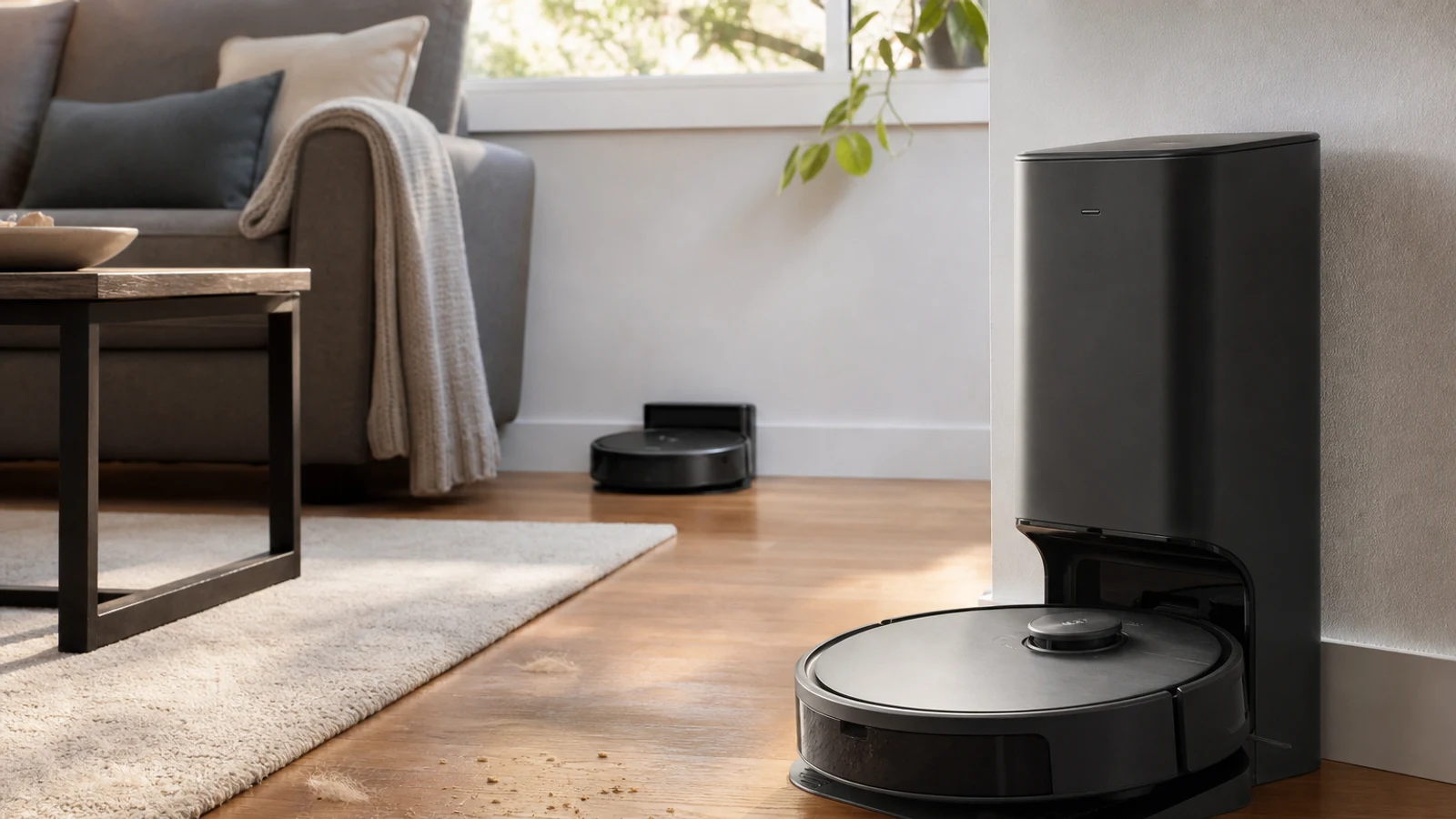
Self-Emptying Dock Vs Standard Robot Vacuum
| Decision Point | Self-Emptying Robot Vacuum | Standard Robot Vacuum |
|---|---|---|
| Hands-off operation | Automatically transfers debris to a larger dock bin or bag | Requires you to empty the robot’s small dustbin manually |
| Best for | Frequent cleaning, pets, larger homes, and busy households | Small spaces, occasional use, and lower-cost setups |
| Ongoing costs | May require replacement bags and extra dock filters | Usually fewer specialized consumables |
| Space needed | Larger dock footprint and clearance around the base | Smaller charging base is easier to place |
| Noise | Dock emptying creates a short, loud suction cycle | No automatic emptying cycle |
| Allergy considerations | A sealed bag can reduce contact with collected dust | Manual emptying may release more dust, depending on the bin design |
| Cleaning performance | Not automatically stronger; depends on the robot itself | Can clean just as well when the bin is emptied regularly |
The key difference between these two robot-vacuum types is not the robot’s brushes, navigation, or suction. It is what happens after a cleaning run. A standard model returns to a compact charging base, while a self-emptying model docks with a larger station that pulls debris from the robot’s internal bin.
That distinction matters because robot vacuums have relatively small onboard dustbins. If the bin fills during a busy cleaning schedule, the robot may stop, reduce pickup performance, or require attention before it can continue. A self-emptying dock removes much of that interruption, but adds cost, space requirements, noise, and another system to maintain.
The practical question is not whether self-emptying is technologically impressive. It is whether manually emptying a small bin is a frequent enough annoyance in your home to justify the larger dock. For many pet owners and frequent users, the answer is yes. For occasional users in a small apartment, it may be unnecessary.
How A Self-Emptying Dock Works
When the robot returns to its base, the dock uses a separate suction motor to pull dirt, hair, and debris from the robot’s internal bin. The material is stored in a larger container, commonly either a disposable bag or a reusable bagless chamber. The robot itself still performs the floor cleaning; the dock mainly extends the time between hands-on emptying.
Some premium stations add water tanks, mop washing, heated drying, or other automation. Those features should be evaluated separately. A dock that only empties dust is a simpler comparison than a multifunction station that also handles wet mopping and dirty water.
Self-emptying is also not the same as self-maintaining. You may still need to remove tangled hair, clean sensors, wash or replace filters, inspect the brush roll, and clear clogs. The dock reduces one recurring chore; it does not eliminate routine robot-vacuum care.
Where The Dock Makes The Biggest Difference
Pet Hair And High Debris Homes
Dogs, cats, children, shedding rugs, and frequently used entryways can fill a small robot bin quickly. In these homes, a self-emptying base can allow more frequent cleaning without requiring someone to check the robot after every run.
Choose self-emptying if: • You run the robot daily or several times per week
- You have one or more shedding pets
- Your floors collect visible hair, litter, crumbs, or tracked-in grit
- You want scheduled cleaning while nobody is home
- You often forget to empty the robot after it finishes
Busy Households And Reduced Maintenance
The biggest benefit is workflow rather than raw cleaning power. A robot that can complete several cleaning cycles before you intervene is more likely to fit into a busy routine. This is especially useful when the robot runs on a schedule, because the dock helps prevent a full bin from stopping the next cycle.
That convenience can also make the difference between using the robot consistently and abandoning it after a few frustrating interruptions. If the device is intended to maintain floors every day rather than perform occasional deep cleaning, fewer touchpoints generally matter more.
Allergies And Dust Exposure
A self-emptying model may be preferable if you dislike handling dusty bins. Many bagged systems enclose debris in a disposable bag, reducing the amount of dust released when the container is removed. That can be more comfortable than shaking out a small open bin over a trash can.
However, the allergy benefit depends on the whole design. Look for a well-sealed robot and dock, accessible filters, and clear replacement guidance. A dock does not make a robot a substitute for a high-filtration household vacuum, and it does not remove allergens from the floor unless the robot’s cleaning system captures them effectively.
When A Standard Robot Vacuum Is The Better Buy
Small Homes And Low Debris
A standard model can make more sense when the robot cleans a compact area and the onboard bin rarely fills before the end of a cycle. If emptying the bin takes only a few seconds and happens once or twice per week, paying extra for an auto-empty station may not improve your daily life much.
Choose standard if: • You live in a studio, small apartment, or compact home
- You run the robot only occasionally
- You have little or no pet hair
- You want the smallest possible charging setup
- You prefer to avoid disposable bags or specialized dock parts
Tight Floor Plans And Limited Dock Space
Self-emptying bases are often taller, wider, and deeper than simple charging stands. They may need open space in front of the dock so the robot can approach and leave reliably. Some stations also need additional clearance at the sides or above, depending on the design.
Measure the intended location before buying. Check the dock’s height if it will sit below furniture, its depth if it will occupy a hallway or cabinet edge, and the approach path required by the robot. A feature that sounds convenient is not useful if the dock must be moved between cleaning runs.
Lower Complexity And Lower Running Costs
A standard robot has fewer dock components and generally fewer consumables. A self-emptying model may require replacement bags, additional filters, seals, or dock-specific parts. Bagless bases avoid disposable bags but can expose you to more dust when emptied and may require more frequent cleaning.
Neither approach is automatically cheaper over the full ownership period. Compare the purchase-price difference with the expected cost and availability of consumables. If a replacement bag system is proprietary or difficult to find, that should influence the decision before you buy.
What The Dock Does Not Fix
A self-emptying base does not automatically mean better navigation, stronger carpet pickup, better obstacle avoidance, or longer battery life. Those characteristics come from the robot itself. A less capable robot with a large dock can still get stuck, miss debris, struggle with thresholds, or tangle on cables.
Prioritize the core robot before the dock. Look for navigation that suits your floor plan, effective brush design for your flooring and pet hair, reliable app controls, useful no-go zones, and a serviceable filter and brush system. If two otherwise similar models differ mainly by dock type, the dock becomes an easier value decision. If they differ in mapping or cleaning ability, those differences usually deserve more weight.
Noise, Bags, And Maintenance Trade-Offs
A self-emptying cycle is brief but noticeably loud because the dock uses high suction to transfer debris. Schedule it when noise will not disturb you, if the app allows that control. This matters in bedrooms, home offices, apartments with thin walls, or homes where the robot runs overnight.
Bagged docks are convenient because you can remove a full bag with limited contact with debris. They also create a recurring consumable expense and can stop working when the bag is full. Bagless docks avoid bag purchases but still need to be emptied and cleaned, so they may not deliver the same low-contact experience.
Regardless of dock type, expect to maintain the robot. A practical routine includes: • Clearing hair from the main brush and side brush
- Checking the filter according to the manufacturer’s schedule
- Wiping sensors and charging contacts
- Inspecting the dock inlet for blockages
- Removing cords, socks, toys, and other objects before scheduled runs
How To Decide Based On Your Home
A useful way to decide is to estimate how much debris the robot will collect and how often you want it to run. The more frequently the robot operates and the more debris your floors produce, the more value the dock provides.
A self-emptying model is usually the better fit for: • Homes with shedding dogs or cats
- Households with children and frequent crumbs
- Larger homes where the robot cleans several rooms per session
- People who schedule cleaning when away from home
- Anyone who finds manual bin emptying unpleasant or easy to forget A standard model is usually the better fit for: • Small apartments or single-level compact homes
- Light debris and minimal pet hair
- Occasional rather than daily cleaning
- Buyers with limited dock space
- People prioritizing simple ownership and fewer consumables
When Not To Upgrade
You may not need to upgrade an existing standard robot merely because newer models advertise self-emptying. If your current robot finishes its runs, its bin is easy to empty, and you use it only occasionally, the dock may not change your results enough to justify replacing a functioning machine.
An upgrade becomes more compelling when the current robot repeatedly stops with a full bin, struggles with pet hair, requires attention between scheduled runs, or is no longer compatible with the way you use your home. If you are already replacing the robot for navigation or cleaning reasons, compare self-emptying versions at that point rather than treating the dock as the only upgrade criterion.
Bottom Line
The self-emptying dock is worth it when convenience is the reason you want a robot vacuum in the first place. Frequent cleaning, pets, larger floor areas, and allergy-related discomfort from handling dust all strengthen the case. The dock can make scheduled cleaning more dependable by removing one of the robot’s main limitations: its small internal bin.
A standard robot vacuum remains a sensible choice when your home produces little debris, your cleaning area is small, or you want a compact and simpler setup. It can deliver similar floor-cleaning performance if you empty the bin consistently.
Treat the dock as a workflow upgrade, not a cleaning-performance guarantee. First choose a robot with navigation, brush design, and maintenance requirements suited to your floors. Then decide whether eliminating frequent bin emptying is worth the extra space, noise, and ongoing consumables.
Go Deeper Before You Choose
For more context, see Robot Vacuum Vs Cordless Vacuum.
For more context, see Bagged Vs Bagless Vacuum.
For more context, see Upright Vs Canister Vacuum.
Research References
These sources informed the factual background for this guide. BuyingView applies its own editorial judgment to the purchase decision.
Questions & Answers
Useful follow-up questions that often change the buying decision.
Does a self-emptying robot vacuum clean better than a standard model?
Not necessarily. The dock mainly removes debris from the robot after cleaning. Floor-cleaning performance depends more on the robot’s brush system, suction, navigation, filters, software, and ability to handle your flooring.
How often do you empty a self-emptying robot vacuum?
It depends on the dock’s capacity, household debris, pet hair, and cleaning frequency. You still need to monitor the bag or dock chamber and empty or replace it when the system indicates it is full.
Are self-emptying robot vacuums worth it for apartments?
They can be, especially for pet owners or people who run the robot frequently. In a small apartment with light debris, a standard model may offer better value and take up less space.
Do self-emptying robot vacuums still need maintenance?
Yes. You still need to clear hair, clean filters and sensors, inspect brushes, and keep the dock inlet free of blockages. Self-emptying reduces manual bin emptying but does not make the machine maintenance-free.
Are bagged or bagless self-emptying docks better?
Bagged docks generally offer lower-contact disposal and can be more convenient for dusty homes, but they require replacement bags. Bagless docks avoid that consumable but usually require more direct emptying and cleaning.
Should I prioritize self-emptying over better navigation?
Usually no. A robot that navigates reliably and cleans your floors effectively is more important than the dock type. If two models are otherwise similar, self-emptying can be a valuable convenience upgrade.